“It mus be that a** cause it ain’t your face. I need a tip drill. I need a tip drill.”
Hip Hop artist Nelly has reignited a 10 year old firestorm about his notorious Tip Drill video. About ten years ago, Nelly was set to launch a bone marrow drive for his sister at Spelman College. But his plans were foiled when a group of Spelman students confronted him on the issues of misogyny and the hyper-sexualization of Black women in his music videos. They invited him to speak on the issue and have an open discussion about it. Nelly wasn’t having it. He pulled his funding from the bone marrow drive and it was a huge media fiasco. However, the Spelman students did host a bone marrow drive of their own.
It tarnished Nelly’s career and he hasn’t recovered since. His sister also lost her battle with Leukemia. Over the past few years, the dust has settled and Nelly has slowly reemerged in the spotlight. However, he recently appeared on the Huffpost Live show where he basically blamed the students of Spelman for the death of his sister.
He believes that they should have left the issue of his misogyny alone and just focused on bone marrow. I’m surprised ( I don’t know why) that after all this time Nelly still doesn’t get it. Those students weren’t attacking his bone marrow drive efforts, they wanted him to confront the public spectacle that he created off of Black women’s bodies. The same bodies that he was seeking bone marrow from. For some reason, he can’t see that yes this is connected. Should we only care about his sister and not the other millions of Black girls and women that are being objectified and hyper-sexualized?
Before you go there, let me say this. Yes, those are Black women in his videos that willingly consented to being objectified. They do not speak for all of us, yet unfortunately they are viewed as a representation of Black women. And the promotion of this objectification through both song and video, participates in upholding a wide spread normalization of the degradation of specifically Black women. The degradation is so normalized that more often than not, Black women and girls have a hard time getting support after being molested, raped, and forced into prostitution (sex slavery). This normalization says, “It’s okay because they’re made for this.” Consequently, Black women are often blamed for the sexual abuse that they endure.
Just take a look at this trailer for the documentary Very Young Girls.
It’s deeper than Nelly would like to think.
Nelly is refusing to acknowledge the ghost of his Tip Drill video and what it stood for because he doesn’t have to. Treating women like property and refusing to acknowledge the right of Black women to voice their concerns outside of supporting male centered thinking is the norm. More specifically, if Black women dare to speak up for the ill treatment of women and girls, we’re viewed as somehow betraying our community.
The truth is, Nelly (as he not so eloquently pointed out) is not the only one. We know through our lived experience that almost every mainstream rap song and music video is embedded with the domination of women mentality. It was here before Nelly and it’s thriving after his short reign at the top of hip hop charts. Nelly isn’t pressed to truly think about this issue because our lived reality continuously reinforces his sentiments.
That is why what the Spelman students did is so important. They took a stand on an issue that is harming our community. And they did it despite how unpopular their stance was. We often talk about a plethora of issues in the Black community. However, things will only change for the better if we run towards our fears and truly confront the internal roles that we play. What those students did was a step in the right direction and can serve as a guide for how future generations can confront these issues head-on. One day I hope Nelly realizes this.
With the current controversy surrounding high-end retail store Barneys and racial profiling allegations, one thing stands evident. Harry Belafonte was right about Jay-Z. In the midst of this controversy, fans have called on Jay-Z to end his partnership with Barneys, in which his new holiday fashion line is going to be sold. Jay-Z’s response has been a calculated public relations effort in which he negates any real responsibility to his default, “I’m doing it for charity” statement. Currently, Jay-Z is continuing his partnership with Barneys with his collection set to launch next week.
This “doing it for charity” response only further highlights Jay-Z’s disconnect with the masses that he often claims to represent. This notion of accepting racism in exchange for charity is downright laughable. If a charity is supposed to be helping people, why work with a store that appears to marginalize his own fan base due to class and race perceptions. Now, Jay-Z claims he’s being demonized for his partnership with Barneys. He’s not being demonized. He’s being realized.
This is where Harry Belafonte comes in. Months ago Belafonte called on Jay-Z to play a more active role in social movements and help to drive social change. Jay-Z’s response was to refer to the 86-year old civil rights icon as “boy.” Jay-Z went on to state that due to his mega star status, his very presence was “charity.”
Harry Belafonte’s critiques were not superfluous statements. They were part of an insightful analysis of how star power can be used to affect societal movements. With over 50 years of civil rights activism, Belafonte can spot both genuine and superficial involvement. The latter, is what Jay-Z is often engaged in. This superficial support of “the people” is laden with corporate driven interests.
For example, during the height of the Occupy Wall Street Movement, Jay-Z decided to make a t-shirt line based on slogans from the movement. His plans changed, once Occupy Wall Street activists asked if he would share the profits. The idea of having to share the profits (which would have helped provide much needed financial support to activists) was unthinkable to the hip-hop mogul.
Then, there’s the controversy that surrounded 2010 tax records from The Shawn Carter Scholarship Fund. During that year he reportedly earned, over $63 million but only donated roughly $6,000 to his own charity. This is not a normal practice for charity founders, who often provide a large portion of their charities’ financial costs. Out of all donors, Jay-Z reportedly gave the lowest donation to his own cause.
Finally, there is the N*ggas in Paris fiasco in which his friend Gwyneth Paltrow, decided to tweet the title of the song after attending his concert. This resulted in Twitter backlash over her usage of the term. Jay-Z, who is an enthusiastic advocate for the usage of the N-word, was silent on the controversy. Having millions among his fan base embrace the N-word is a part of his crossover hood status appeal that provides further economic security.
According to the Recording Industry Association of America, in 2012 White/Caucasian audiences represented 79% of music buys, 81% of CD buyers and 80% of digital buyers. So don’t expect Jay-Z to engage in any significant dialogue with fans about using the word. With him it’s the same old, “people give words power” and “this is the least racist generation” excuse. It’s not economically feasible for him or any other corporately invested hip-hop artist to do anymore than brush off the issue. Yet this is someone people expect to fully grasp or care about race related issues?
The African American community has to get beyond this belief that just because someone from our community attains fame or wealth, that they’re somehow intellectually superior, a role model and someone to be admired. The same can be said for Russell Simmons with his Rush Card, Blood Diamond, and Harriet Tubman controversies. And Kanye West, who often laments about racism but strives to uphold the same materialistic values that help drive economic disparities. Do you really expect any of them to be deeply invested in activism against a classist system from which they benefit?
Harry Belafonte was right. Jay-Z isn’t genuinely standing up against racism or classism because this activism may affect profit margin (something he learned while selling crack).
Jessica Ann Mitchell is the founder of OurLegaci.com & BlackBloggersConnect.com. To reach JAM, email her at OurLegaci@gmail.com.
The influence of HBCU’s and education can be seen in the 105 historically black colleges and universities educating 135,722 male and 238,685 female students across the United States this year alone. A new school year is beginning for HBCU’s, students are preparing to return to schools across our nation. Students and their families are shopping, packing and scheduling for college or university trips to HBCU campuses either close to home or several hundred miles away. The traveling may be by bus, plane, family car, train, carpooling or other means, the objective is to get students back into school, preparing them for future careers. I have prepared to make sure my son gets back to Florida A&M University to finish his final undergraduate year and preparing him for Graduate school of his choice.
HBCU’s have been preparing for new freshmen and returning students, the process to prepare dorms, cafeterias and other facilities to support higher educational learning is nearing completion. The excitement is rising for a year of educational achievement, progressively striving for the goals of graduating and receiving a degree that was earned with hard work, sacrifice and dedication.
The history of HBCU’s is well known nationally and internationally, the service of Historically Black Colleges and Universities is not praised as much as they should be, this is excepted because HBCU graduates know they receive an education that has prepared them for excellence in their fields of study and passion to positively contribute to mankind like so many from the past.
A growing issue on campuses of HBCU’s are increasing female students. Visually there are more females than men. It is almost eerie to see so many female students and a small mixture of male students. Not only are there smaller numbers of male students, but male students are not graduating in the numbers like female students. To add insult to these academic injuries male students seem to be challenged academically more than females in the important areas of math and reading comprehension. HBCU’s see that Black male students are diminishing , this absence creates a vacuum of educated professional Black men serving as role models to Black males in high schools that strive to obtain higher education, but do not have a mentor or role model in their families or even neighborhoods.
The U.S. Department of Education: the national college graduation rate for Black men is 33.1 percent compared with 44.8 percent for Black women. The total graduation rate is 57.3 percent. Black men represent 7.9 percent of 18 to 24 year olds in America but only 2.8 percent of undergraduates at universities. President Obama has stated that, “HBCUs continue a proud tradition as vibrant centers of intellectual inquiry and engines of scientific discovery and innovation. New waves of students, faculty, and alumni are building on their rich legacies and helping America achieve our goal of once again leading the world in having the highest proportion of college graduates by 2020.” http://www.ed.gov/edblogs/whhbcu/
The question is raised are communities, schools, churches and businesses doing enough to encourage Black males to excel in academics? The school closures in Philadelphia, Chicago, Detroit and other cities show that educational resources are diminishing and parents in these communities need support and help. Condemning Black children also are weak Black Churches, what are Black churches doing, what impact does the clergy have in the 21st century educational realm and politics? At one time in history Black churches were the corner stone’s of education, they had schools, tutors and resources.
The discrepancies of attendance and graduation can be seen from data accumulated from the Department of Education where national college graduation rates of Hispanic men is 41.1 percent, Native Americans and Alaska natives 33.8 percent. The comparison in graduation to White males is 54.5 percent. Asian/Pacific Islanders have the highest rate, 60.6 percent, based on their cultural respect for learning and education. If theses discrepancies continue the education gap for Black males will create situations where Black males have less earning. The skill levels will be substantially low not allowing access to higher paying careers, lack of education influences political influence, low socio-economic levels and the in-ability to provide for a family. Because of statistical evidence HBCU’s still play a very vital role in educating Black males especially those that will need additional assistance in reading, literacy, comprehension and mathematics.
An example of the changes in college campuses can be seen at Howard University, undergraduate male enrollment dropped from 3,070 in the 1994-95 academic years to 2,499 during 2009-10. Female enrollment dropped by only 52 students, from 4,958 to 4,906. HBCU’s are still strong in encouraging Black males to attend college by providing services that address both academic and cultural uniqueness.
Complicating these efforts in high schools are the changes in the structure for mandated state assessments, increase in discipline policies at high schools that leave no room for counseling and mentoring. Incarceration policies appear to be the only option if a student makes a bad call in judgment and actions in high school. The key to success of Black male and female students is parental and community involvement. Parents must have a vested interest in their children’s success. The costs of not having a college education is seen in limited job opportunities, reduced earning potential, stunted career advancement and negative long-term economic and social downturns in the Black community.
Black males need solid careers with competitive wages, without solid incomes and steady careers,
young Black males chances for success diminish greatly. A question asked by Mr. Lowe from Courageous Conversations Ask A Teacher: “Why are certain elements in American society trying to keep Black children from being educated?” As a graduate of South Carolina State University, in the area of education I learned the skills to be an effective educator, the support that I received even struggling in math and science allowed me to build my confidence, abilities and even grow a love for science and mathematics. Inspiring me to obtain years later a Masters of Education degree in Educational Technology and teaching Engineering and
Technology at the elementary level.
“Black men and women need college degrees more than ever.” William Jackson, STEAM Educator Resources should be made available to help Black males be successful in higher education, but starts in public education at elementary schools to high schools. The lack of male role models, mentors and educators does play a role in diminishing enrollment of Black males in higher education. Research on Black males on campuses shows that having supportive relationships with mentors on campus plays a significant and important role in Black male’s success.
Parents as you take your children to college and university take the time to find out about mentoring services, clubs and organizations that can aid in your child’s success in college. It takes a village to raise leaders and the next generation of college graduates. The statement “Its more than about buying new clothes,” is important for parents to recognize and understand this school year, Hafeeza B Majeed
Courageous Conversations Ask A Teacher Dialogue: Listen in about key issues to help students succeed and parents take a more active role. Archived about Common Core, parental involvement and impact on children: http://InstantTeleseminar.com/?eventid=44200137
Cherise “Reese” Charleswell is a dynamic, ECLECTIC, self -and- internationally published author, poet/spoken word artist, entrepreneur, activist, bookworm, model, fashionista, penny-pincher, accessories designer, music lover, and sista-friend, host of “Wombanist Views” radio program; who has been described as the “Mad Scientist”, due to her varied interests and passions. She is of West Indian descent, with heritage from numerous Caribbean islands, such as St Thomas, St John, Puerto Rico, Tortola, St Kitts, and Anguilla.
Cherise is also the CEO of Eclectic Life and Liquid Whine Entertainment, as well as the Assistant Director of the Los Angeles Black Book Expo.
She is currently serving as the California State Representative for the National Black Graduate Student Association and the Editorial Intern for the American Public Health Association Student Assembly. She is also a member of the Southern California Public Health Association, National Women’s Studies Association, Society for the Analysis of African American Public Health Issues, California Caribbean Chamber of Commerce, and the Women of Color Research Network. Cherise is also the creator, producer, and co-host of Wombanist Views (www.facebook.com/wombanistviews) , a radio program that focuses on promoting and highlighting the achievements of women in various fields and social sectors.
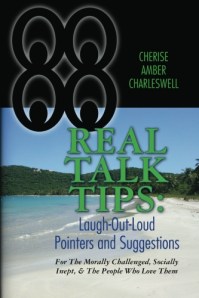
Cherise has recently published the satirical self-help guide Real Talk TIPS For the Morally-Challenged, Socially Inept, & The People Who Love Them (available at http://www.etsy.com/EclecticLivingOnEtsy) She is also currently working on a book project, The Link Between Food, Culture, & Health Disparities in the African Diaspora.
The controversy from the African American community surrounding Zoe Saldana playing Nina Simone in the upcoming Biopic is warranted, yet a bit hypocritical. Where was this uproar when Kerry Washington was playing Kay Amin or Jennifer Hudson was playing Winnie Mandela? The way in which Hollywood chooses to portray people of African descent is a real issue. But we must view this problem equally when an African American actress is hired to play roles that disenfranchise the upward mobility of African actresses.
Jessica Ann Mitchell
Jessica Ann Mitchell is the founder of The National Black Pages & Black Bloggers Connect. She also writes on her personal blog at OurLegaci.com. To reach JAM email her at info@OurLegaci.com.
Share the link to this article on Twitter and Facebook and let us know about it. We will give you a shout-out on our next article and we’ll link to your blog or website.
Where do we go after the second election of President Barack Obama?
I want it to be known, that I’m proud to have Barack Obama as the President of the United States of America. I’m proud of his ability to lead and to be a role model. That being said, Blacks Cannot Wait on President Obama to make things better for them. President Obama has written another historic chapter in American history. The shift of cultural acceptance has happened in the political spectrum of this country. The people have spoken by their votes. This will be the second term for President Obama’s administration and his family.
It should be known that even though America still has a Black President the House of Representatives and Congress may still be controlled by Republicans. This will make another four (4) years a challenge to make continued progressive change in our country. The reality is there is still prejudice and racism in America, not in the gross levels that the news media attempts to show. If racism was so bad I do not believe that President Obama would be our President for another four years, voting creates change. This shows that even the media must be scrutinized for their political views and the influence they try to generate in society.
My direction in the blog is: Where do Blacks go from here? Where do Blacks go, what direction economically, educationally and politically should be traveled? Blacks have the best role model that they could have, a Black President and truly unmistakably a Black First Lady in Michelle Obama. The most powerful Black man in the Free world, the Commander in Chief of the most technologically sophisticated and weaponized military in the world. He is a product of the educational system of the United States, struggled in school, was bullied, and not the best student all the time. He shares this with other students as he speaks at schools around the country, and takes the time to build students up to see their potential to become greater than he.
This is the ultimate role model, one who acknowledges his flaws and weaknesses and always works to pull the youth up to pass his accomplishments in the future. So why are too many Blacks still caught in mental and emotional slavery claiming there are no good role models? Even Jacksonville, Florida has a great role model in Mayor Alvin Brown; he is visible in the community, supportive of public education and sets a good example as a father, husband, community activist and supporter of progressive growth for all people, but Blacks should see him as a guide to the importance of education and self-improvement.
Similar actions and events took place in1964, Cleveland OH in a different venue, but with the same challenges for Blacks. What has happened to The Negro Revolt and Where Do We Go From Here? or What Next? This was stated by Malcolm X, the same person who went through a transformation from thug, hustler, drug dealer, gambler and other societal deviations to a man that educated himself, became a father, leader and role model.
Don’t look down on this man, because some of our politicians, priests, preachers, bishops and even educators have past lives that may remain hidden from us. Malcolm X statement that, “In my little humble way of understanding it, it points toward either the ballot or the bullet.” This reference is addressing the political situation of Blacks during the turbulent times of the sixties and seems to be present in the 21st century. What has changed?
During the sixties there was no Barack Obama making eloquent, intellectual and moving speeches there was Adam Clayton Powell Minister Abyssinian Baptist Church in New York, Dr. Martin Luther King, Atlanta, Georgia, Asa Philip Randolph, Jacksonville, Florida, Civil Rights Activist, Rutledge Pearson, Jacksonville, Florida Civil Rights Activist and Reverend Galamison Minister in New York to name a few involved in the school boycotts to eliminate segregated education. These were real people with dedication and a vision to make progressive change to benefit Blacks. Their legacy will live, but too many Blacks have forgotten them.
There have always been role models for Black men and women, but truth be told Blacks must take responsibility and accountability to make progressive change by unifying. Making a commitment that needs to last beyond street protests, religious radicalism, songs, dance, videos, raps and pledges.
The commitment that lasts beyond the doors of churches on Sunday mornings designed to make Blacks “feel good” and accept their plight of second class citizens, diminishing political power, and dwindling economic development. Where do Blacks go now that the jubilation and excitement is over? The time to work is now, the time to establish a vision and mission is now. Civic and community problems still are alive and well, in order to solve these challenges it will take the collective wills and hard work that was found during the 50’s to 80’s. That self-determination seems to have died; evaporated even as the lyrics of “We Shall Over Come” have evaporated from the minds of millions of Blacks because of their perceived freedoms that are as transparent as their abilities to seek to improve themselves. How can a people that died for the right to be educated look down and curse education?
Satisfied in too many cases to live month to month on welfare, food stamps and a third class education. Complaining because they are so use to getting a third class handout that their cries seem to sound like the cries of slaves that accepted their servitude with exuberance and satisfaction. The comments by Malcolm X rings truthful even in the 21st century, “it’s time for us to submerge our differences and realize that it is best for us to first see that we have the same problem, a common problem, a problem that will make you catch hell.” So called Black political leaders complain, blame, degrade and demean President Obama, but my question is after all these years, why have THEY not motivated Blacks to improve their lives instead of blaming President Obama? Why are they not visiting inner city schools, homeless shelters, welfare lines, food stamp facilities to work to give a hand up not lip service and empty promises?
How can our religious leaders lay claim to being like Jesus or disciples when they tear down President Obama, lyrically damning him just as Judas Iscariot sold out Jesus for 30 pieces of gold? President Obama is not Jesus, but he represents our country to the world. He should be respected, held accountable, but not openly disrespected. Why wait for a Black man that is supposed to be the President of the United States, not the President of just Blacks. Many people will disagree with me, but that is the beauty of living in the nation of freedoms, we can agree to disagree and not be jailed, beaten or killed like in other countries.
I agree that President Obama must be held accountable, but he cannot cure all the social ills that plague Blacks. Just as our economy was destroyed by someone else, Blacks have allowed themselves to be castrated physically, psychologically, economically and educationally by blaming others for their inaction, inattention, and ignorance. If you do not believe me, look at our inactive parents that refuse to come to parent-teacher conferences, look at the lack of support for school PTO’s, School Advisory Councils that need parents to participate and support, and listen to the excuses that drown out the cries of screaming babies as girls lay on their backs and make babies, but refuse to respect teachers and learn to read to improve their lives first before spreading their legs to become impregnated and again spreading the same legs to give birth to illegitimate children. Don’t be mad at me for the truth, what would Dr. King say now???
The cycle continues each generation, becoming a slave to welfare and drowning deeper in Hellfare and poverty. Too many Black boys would rather rap, dance, be comedians and sag than engage in learning. They bully their peers that want to be intellectuals, scholars, scientists, educators, politicians. Too many Black young men would rather be hard and ignorant instead of educated and empowered. Anthony Butler, Jr, Founder of E3 Business Group displays a unique change during his transformation in his unique presentation that shows how you can grow from thug to entrepreneurial. This empowering presentation should be seen by all Black youth, “Accuse Yourself of Success!” http://e3businessgroup.com/
Malcolm X made a profound statement that we all catch hell, ”whether you’re educated or illiterate, whether you live on the boulevard or in the alley, you’re going to catch hell.”
“We’re all in the same boat and we all are going to catch the same hell.” The idea is
“If we have differences, let us differ in the closet; when we come out in front, let us not have anything to argue about until we finish making progressive and lasting changes in Black people.
It should not take the death of Trayvon Martin or any more young Black men or women to unify people against injustices in the criminal system and self hatred in our communities. It should not take the threat of cutting welfare, diminishing of food stamps and elimination of governmental handouts for Blacks to finally get they need EDUCATION, Are Blacks like the Hebrews wondering the desert until several generations die before God can use them? IS that to be our legacy for the next centuries?
Blacks Can’t Wait On the President: The President has made numerous speeches to what end?
Blacks have to WANT to change, WANT to work to be better, WANT to have political and economic equality. Until then Blacks will be politically, economically and educationally weak and ignored. Blaming others even those they elect to fix social challenges that are decades old.
Change can only come from within, when Blacks are tired of being beaten into economic slavery of poverty, the slavery of psychological ignorance of accepting failure in schools, enjoying the self destruction of drugs in their communities, the visual slavery of music videos that glorify free sex, cultural violence, the slavery of producing children that are born into ignorance and taught ignorance, will learn ignorance and stay ignorant until they are jailed or killed and companies make money from them as incarcerated slaves… If you are angry good, go out and volunteer at a soup kitchen, a homeless shelter, the library to teach people to read. Go to your child’s school and support teachers not curse them out for trying to teach your child. Tutor and mentor a young person, take yourself back to school for a skill or a degree. If you cannot do these simple things to better a better person then you are always a part of the problem and not part of the solution.
The institution of slavery is still present and strong, but instead of the fields there is Hellfare, Drugfare, Sexfare, and denial ending in death and destruction.
Blacks Can’t Wait On The President
William Jackson, M.Ed.
Educator, Speaker,
Mentor, Father
Community Activist
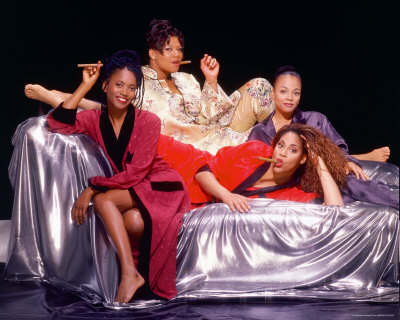
Maxine Shaw “Attorney At Law”, although my academic leaning would later be geared towards the PreMed track, you could not have told adolescent “me” that I could not be as fly, as funny, and as smart as Erika Alexander’s character on the television series LivingSingle. Sure, I appreciated the other characters on the show, the loony but lovable Sinclair, the seductive Regaine, and the witty and reliable Khadijah; but I saw myself in the assertive and intelligent Maxine. The magic of Living Single revolved around the fact that the show depicted the different types of Black women in our families and social circles, and not just in their personalities, but also their body types and complexions. I would watch every Thursday night, along with the other shows that made up my “Must See TV” line up: Martin and New York Undercover. Here was a collection of diverse Black women all being shown in a positive manner.
Even before Living Single first premiered, at a younger age, I would watch Claire Huxtable on the Cosby Show, and would marvel at how much she looked like my own mother, and was even more amazed by the fact that she carried herself like my mother too. She was educated, intelligent, calm collective, funny, nurturing, but strict! Like my mother, I found Claire Huxtable to be so classy and non-stereotypical. My mother was not the type to roll her eyes, raise her voice, snap her fingers, whip her neck, or use profanity. Like Claire she didn’t have to employ any of those “Angry Black Woman” tactics to be a respected disciplinarian and matriarch.
Then, what about the Spin Off, A Different World, where we were introduced to characters like Julissa, Whitley, Freddy, Denise, Lena James, and Kimberly Reese? Yes, Kim played by Charlene Brown, she was a PreMed major like I wanted to be, and she was the epitome of the statement Black Is Beautiful; with her dark chocolate skin, big eyes, full lips, and shapely hips. I can still remember the episode where those strikingly African features brought her to tears when she had to adorn clothing that reminded her of a “mammy”, only to later peel off those layers and proudly reveal the African beauty that she was.
I reminisce and can’t help but notice that something has happened. Turn on your television and you will have difficulty in finding a Black actress, particularly in a prominent role. You literally have to LOOK for us, and unfortunately when you find us, it will not be in traditional roles or in a positive light. Instead, Black “actresses” and pseudo-celebrities are being casted on surreal “reality” shows shucking for the camera. Gone are the talented and classically trained actresses, they have been replaced by Black women who would rather indulge in stereotypical and derogatory behavior for the world to see. The danger here is that life often imitates fiction (and yes it is fiction, because these shows are highly scripted), and the degenerative behavior will be emulated by viewers; particularly those who are younger and impressionable. Even more problematic is that these images are broadcast around the world, and gives a false view of the American Black woman. It helps to uphold long-standing stereotypes and misconceptions, and even affects the manner in which Black women are treated when they travel abroad.
We can only hope that the pendulum will swing the other way. Perhaps through letter writing campaigns, demands for more inclusive and positive programming, or simply turning the television off. Once again, we can only hope. Maybe the transformation will come about when we begin to pen our own stories and actually support these shows when they air. If not, we will continue to witness the inevitable demise of the Black television actress.
Cherise Charleswell
Eclectic Life Books
September 2012
Cherise Charlseswell is a published author, writer, poet, model, health researcher, contributing writer of Lady Influence; host, producer, & creator of Wombanist Views radio program, creator and lead designer of Eclectic Life, Associate Director of the Los Angeles Black Book Expo, and the California State Representative of the National Black Graduate Student Association. She is currently working on the book projects “The Link Between Food, Culture, & Health in the African Diaspora” and “Walking In The Feminine: A Stepping Into Our Shoes Anthology”.
I’m excited every time I learn about a new networking opportunity. I highly anticipate Networking Mixers and Happy Hours. Then the excitement slowly wanes as I remember, “I have to talk to people.” The dreaded talking to people fear is a staple personality trait that my sister, brother and I all possess. My mother recently invited my younger siblings and I to a holiday event. This led to my younger sister and I consoling each other as we both exclaimed, “Oh, God we’re going to have to talk to people.” Its not that we don’t like people. We love meeting new people and learning new things. The problem is we are afraid of exactly what we’re supposed to say.
Ironically, this doesn’t happen to me when I’m doing public speaking or performing. Its those darn personal moments in which people ask standard questions and you are expected to give standard answers. “Yes” “I work at…” “I live in …” “Its been raining at lot lately.” And then what? You’re forced with the dilemma of thinking of something that will either continue the conversation or end it, so that you can return to the safety of your solo corner in the far right of the room. The worst problem is saying the wrong thing. This is the unfortunate moment when your lips form and say the exact opposite of what your brain would have preferred. Its always easier to network online. All you have to do is click a button and abracadabra, you’ve “liked” someone or “joined their network.”. Networking in person is definitely an art. I find that I’m always better at networking in relaxed settings.
Our Legaci Question: How do you feel about networking and what are some of your suggestions for people that are apprehensive about the networking process?
Jessica Ann Mitchell
Jessica Ann Mitchell is the founder of The National Black Pages & Black Bloggers Connect. She also writes on her personal blog at OurLegaci.com. To reach JAM email her at info@OurLegaci.com.
Share the link to this article on Twitter and Facebook and let us know about it. We will give you a shout-out on our next article and we’ll link to your blog or website.
On a recent episode of The Unwritten Rules webseries, the main character Racey deals with negative attitudes of Black co-workers. She was teased for being a “whack” girl; a play on the racial descriptions white and black. The episode quickly became a hot topic of discussion as viewers expressed differing opinions on the subject.
One viewer stated:
I think the episodes are entertaining, but why do middle and upper middle class black people act as though all poor and working class black people are the same, This is just as bad as the white stereotypes they rail against. Many of the most accomplished ‘black” people came from humble beginnings, acting as though the only thing able to make one successful is money and a “white middle class” prospective seems quite ignorant to say the least. (Youtube viewer 9xxxxxxxxx)
A different viewer stated:
Stereotypes or not…there are black ppl who act like the employees downstairs, and there are black people like Racey. There doesn’t seem to be a biracial experience either, it’s just people who “look” the same, but act differently, the same can be said for white people who act like the family on full house or the family on Honey Boo Boo. People are people, they’re gonna act differently. The problem arises when ppl don’t show social ediquette or one group puts another down because of appearance.(Youtube viewer cycarter25)
Our Legaci question: Do you relate to Racey’s experience as the Black employee from “upstairs”? If so, how did you deal with the situation?
Jessica Ann Mitchell
Jessica Ann Mitchell has a M.S. in Public Relations and a M.A. in Pan-African Studies. Mitchell specializes in multicultural outreach and communications. She also writes on her personal blog at OurLegaci.com. To reach JAM email her at info@OurLegaci.com.
Share the link to this article on Twitter and Facebook and let us know about it. We will give you a shout-out on our next article and we’ll link to your blog or website.







 Our Legaci with J.A.M. Aiwuyor