How Climate Change Affects Black Women

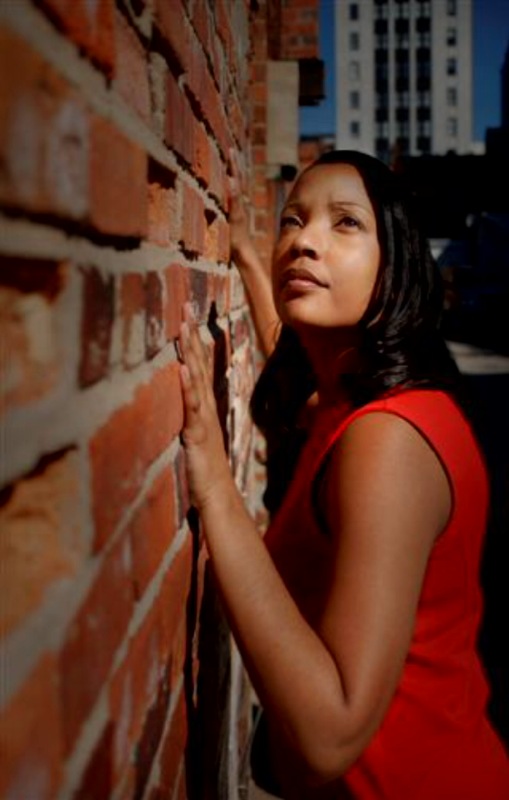
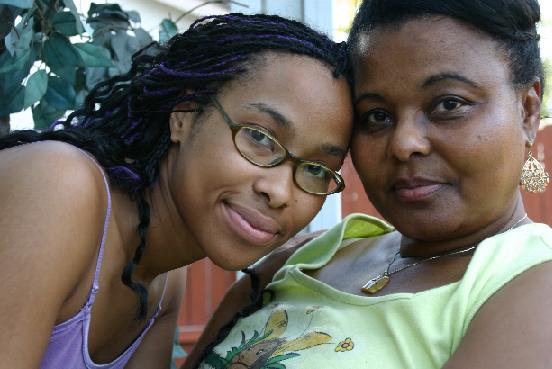
Photo © 2005 Anissa Thompson

How Climate Change Affects Black Women

By Jessica Ann Mitchell

In 2005, the Congressional Black Caucus Foundation and Redefining Progress released a research report called, African Americans and Climate Change: An Unequal Burden. The report noted that climate change is already in the process of attributing to 160,000 deaths annually. Furthermore, African Americans are prone to respiratory problems in that over 70% of African Americans live in districts that are violating “federal air pollution standards”(2005 p.5). There are 44 recognized major U.S. metropolitan areas. In all of them, African Americans are more likely to be subjected to levels of toxic air pollution that are higher than those whites maybe subjected to. Thus, hospital visits and deaths caused by asthma are more likely to occur among African Americans to the rate of 3 times that of other races (CBCF 2005). In the northern states it is predicted that heat waves due to climate change will affect New York City, Philadelphia, Chicago, and Detroit. As stated earlier, an increase in diseases such as malaria are predicted to affect the southern states. All of these areas are known to be inhabited by large concentrations of African American people. Yet white Americans are 50 times more likely to have health insurance than African Americans. Furthermore, African American homes emit fewer amounts of greenhouse gases into the atmosphere in comparison to other races at the rate of 20% less (CBCF 2005).

The same can be said for African and other developing countries whose CO2 emissions are profoundly lower than the emissions of European countries. All countries on the African continent combined only attribute to 3.5% of all CO2 emissions in the world in comparison to the 22% emitted by the U.S. alone (UNEP 2000, EIA 2005). Yet it is estimated that Africans numbering from 75 to 250 million will face water shortages in 2020 (IPCC 2007). This will also affect 50% percent of agricultural crops that are dependent on water for nourishment (IPCC 2007). In Latin America, there are 150 million African descendants, making them the largest group of Africans outside of Africa. In Brazil alone, there are 80 million African descendants. They make up 48% of the Brazilian population, yet 78% of these 80 million African descendants are below the poverty line (Morrison 2007). Twenty six percent of the Colombia population is African descendants, yet they make up 75% of the impoverished in Columbia (Morrison 2007). Due, to climate change, Latin America will also be hit by water and food shortages in the near future (IPCC 2007). The people mostly affected by these shortages will be the poor, meaning the African descendants.

Climate Change is an issue that is dramatically affecting the world as we know it but even more specifically, the Pan-African World. The problem here is that these issues have not been studied in-depth by those in the field of Pan-Africanism and Black Studies. Both Africans on the continent and African descendants throughout the Diaspora have already begun to unjustly reap the negative consequences of climate change; which has been mainly caused by the greenhouse gas emissions of industrially advanced and or developed nations. One of the causes of climate change includes the burning of enormous amounts of fossil fuel. (Uwaza, 2003). The earth’s atmosphere then becomes oversaturated with Carbon Dioxide (CO2) which causes an enhancement of the widely discussed greenhouse effect.

The greenhouse effect is described as the process in which heat is trapped in the earth’s atmosphere. This, in turn, causes a warming of the planet. Part of this process is natural and part of it is human induced through the burning of natural gas, oil, and gasoline (EPA 2007). Sixty four percent of the greenhouse effect is attributed to Carbon Dioxide levels (Uzawa, 2003). Consequently, the temperatures begin to rise to unusual levels (EPI, 2005). As Uzawa (2003) states, “an excess concentration of atmospheric carbon dioxide would warm the globe significantly” (p. 11). The top five countries that emit the most CO2s into the atmosphere are: the United States, China, the Russian Federation, Japan and India (Oak Ridge National Laboratory, 1998).

According to the Center for Disease control (2007), climate change is going to have damaging effects on the sustainability of humanity. The effects of climate change include stronger hurricanes and other storms, flooding, rising sea levels, droughts in some areas, and extreme rainfall in others (Uwaza, 2003). This will in turn cause a rapid spread of disease, heat strokes, drowning, asthma attacks, and etc. It is also noted that the people who will be affected by these changes the most are likely to be those with low socio-economic statuses (CDC, 2007).

Developing countries, with their low participation in contributing to global warming, will also be heavily affected. In fact, developing countries will be more affected than developed countries that sometimes benefit from global warming (Uwaza, 2003). Thus, people of color who have historically faced world wide discrimination based on racism and classism are even more at risk when it comes to climate change. Many communities with people of color have been marginalized globally and endure inequalities that affect the quality of their lives and the ability to sustain life. Any economic challenges or increases in economic disparities could have devastating effects on their everyday lives, especially in relationship to climate change. People with low socio-economic statuses do not possess the economic power to combat climate change. Furthermore, the burden of enduring the negative effects of climate change is placed on their shoulders by those nations, companies, and organizations that have contributed substantially to this problem and possess the economic capacity to stop this injustice.

Women of color specifically face a particular type of oppression when it comes to climate change because of the intersection of racism, sexism, and classism (Malveaux 1986). In the mist of Climate Change, for example, African American women in Atlanta, GA struggle against rising costs of living, including rising food prices and medical bills. Still, African Americans emit lower amounts of CO2 emissions than other races in the U.S (CBCF 2004). On the other hand, African women of Imbaseni village of Maji ya Chai, Tanzania struggle against the rising costs of living, including the cost of fertilizers, the inability to render crops for sale, and medical expenses. This is because irregular changes in the climate alter the success of agriculture. Yet, the entire continent of Africa is only responsible for 3.5% of the world’s CO2 emissions (UNEP 2000, EIA 2005). Thus, African and African descended women similarly face increased hardships due to climate change and already existing economic inequalities.

For more information about this topic, email Jessica Ann Mitchell at ourlegaci@gmail.com.

The Good Shepherds: African American Museums

The Good Shepherds

by Henry Duncan

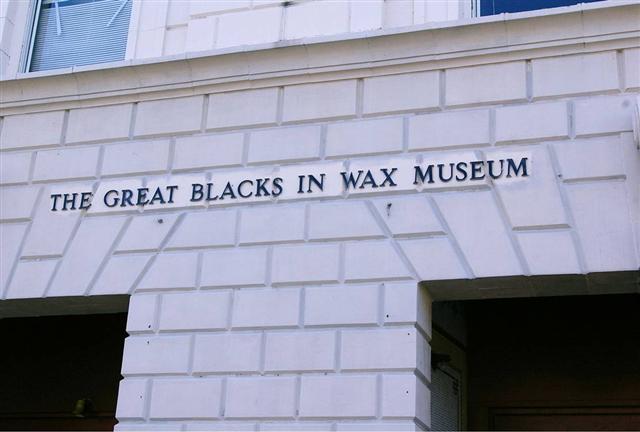
I have to thank Dr. Joanne Martin, co-founder of the National Great Blacks In Wax Museum and Mr. Ivan Henderson, curator of education & public programming of the African American Museum of Philadelphia for helping me with this article. Without their assistance this article would not be possible. Many of the names, dates and, statistics quoted in this article came from information given to me by Mr. Henderson and Dr. Martin. Many thanks for your help.

There are about 200 museums that specialize in the history of Black people here in America. However, these museums had very humble beginnings. Many of these museums started in the houses of their respective founders. For example, Dr. Margaret Burroughs who, along with her husband, founded the DuSable museum of African American History in Chicago on the ground floor of their house in 1961. Drs. Elmer and Joanne Martin did the same when they founded the National Great Blacks In Wax Museum, in Baltimore, MD in 1983. They only had 4 wax figures constructed with wax heads and mannequins as the body. Now these museums have evolved into institutions that have great exhibits that preserve our history. Though these museums have far surpassed there origins, they need our help before they are on par with museums that don’t specialize in Black history.

These museums have taken on the awesome task of gathering and preserving, not only our history in America, but our African history as well. The National Great Blacks in Wax Museum has over 135 wax figures and features the exhibit Into the Hold: The Slave Ship Experience which replicates the slave experience of the Middle Passage and includes a replica of a slave ship. The African American Museum of Philadelphia (AAMP) features an interactive exhibit called Audacious Freedom. This exhibit examines the history of Black people in Philadelphia and the surrounding areas from 1776 to 1876. African American museums also host many traveling exhibits like 381 Days: The Montgomery Bus Boycott Story currently at the AAMP which features a timeline of events that surrounds a small seating area that shows a documentary of the Civil Rights Movement.

Dr. Joanne Martin sent me an excerpt of an article by her late husband Dr. Elmer Martin; written around 2001 entitled Black Museums that articulates the past and current problems that Black Museums face. In this article, Dr. Martin identifies the problems Black Museums faced in their early stages and the problems they face today. After reading Dr. Martin’s article, it is evident that there are three major problems that Black museums face 1.) generating interest in black museums, 2.) acquiring the necessary funds to maintain themselves and, 3.) fighting the invasion of larger institutions into the realm of Black history. Though this article was written nearly 10 years ago you still find examples of this today. For example, here in Philadelphia, the Franklin Institute, a museum that doesn’t specialize in Black history, is currently showing the Cleopatra exhibit which The Franklin Institute estimates will generate 1.5 million visitors. Cleopatra was the queen of Egypt which means she is a part of our history, but how many Black museums have the resources and connections to host such a grand exhibit? The cheapest ticket to view the Cleopatra exhibit costs $19.50, which means this exhibit will potentially generate $29,250,000 in revenue. Let’s compare those numbers of the AAMP. According to Mr. Henderson, the African American Museum in Philadelphia averages about 60,000 visitors annually. Adult admission into this museum is $10 which gives them $600,000 in potential revenue. In other words, it would take 25 years for the African American Museum in Philadelphia to match the visitors of one exhibit of the Franklin Institute and about 49 years to generate the equivalent revenue. There is no lack of effort and sacrifice on the part of the staff of these museums, as mentioned earlier, many of these museums were started in personal residences and with personal funds. With so much dedication on their part why don’t we show more support? With over 40 million Black people in America the least we can do is pay the $10 – $15 admission and help to support the institutions that have sacrificed so much to preserve our history.

Written by Henry Duncan

This article is one of our feature articles in our newsletter, The Seed. The Seed goes out only once a month and features timely articles like the one you just read. To sign up for the our monthly newsletter Click Here. We also have a blog where often times we offer a chance to engage in dialogue about the topic in the article. Check out our blog here

The Drum As An Indicator of Cultural Unity In The African World

The Drum as indicator of cultural unity in the African World: from Hip Hop to Africa

By Remy Johnson


Introduction

Cultural unity exists throughout the African World. The cultural diversity in the African World can be contributed to regional conditions such as lifestyle, resources, and environment. In this way cultural diversity is closer to regional variations of ‘African culture’ rather than differences. It is imperative to focus on cultural unity in the African World to create the foundation for Pan African consciousness in the African World. To test this theory of “regional variations” in the African World I will compare the role of the drum in indigenous West/Central African cultures and Hip Hop in the United States.

Talking Drum in Africa  

            The drum is the oldest known instrument in the world dating back to 4000 BCE in Kemet on the northeast corner of Africa (Sowande, 1969). It is present throughout every region of Africa playing different roles amongst the various peoples (Bebey, 1975). Perhaps, more than any other object the drum has become a ‘cultural emblem’ of the African World culture. This is not a mistake, as Leonard Barrett states, “the drum is Africa” (Ani,1980). To understand the profound role of the drum in the African World we must consider it a tool of communication. The loud boom of a drum draws the attention of any person, but the ‘talking drum” speaks ‘to’ and ‘for’ African peoples.

The drum is used to communicate with the “supernatural” world as in the case of the Yoruba of Nigeria (Bebey,1975). Davis (1992) wrote, “Drums are known to transmit messages between God and people, and also an essential instrument in the ritual healing” (34). It is plays a prominent role in ceremonies, rituals, and rites as pace setter for dance and praise. The people follow the drum’s rhythm and their collective energies creates a ‘unseen’ link with the ancestors (Sowande, 1969).

Practical uses of the drum included signaling the start of the day, lead celebrations, and notifying the public of important information (Bebey,1975). The jeli (teacher/griot) uses the drum as musical backdrop to recite ‘historical poetry’ to educate the masses. The rhythm of the ‘drum’ forms a link between the listener and the griot while making learning as the child associates the knowledge with a particular rhythm. This is an effective form of education because children of African descent tend to retain information as result of their right brain cognitive learning style. (Hale, 1982).

Drums were used to communicate between villages and towns. This form of communication was not just random beats, but a ‘drum language’. Each group’s ‘drum language’ is influenced by the geographic topography, the style of drum, material, number of drums, size of the drum, and rhythm/beat pattern (Bebey,1975). Regional variations can be seen in the drum languages of African culture that are influenced by the peoples struggle with environmental conditions (Bebey,1975).

Talking Drum in the ‘New World’

Africans brought the knowledge of the “drum” to the Americas via the Maafa/Trans-Atlantic Slave Trade (Ani,1980). As a result many Diasporic traditions share fundamental cultural values with Africans from Sengambia, Central and Southern Africa (Bebey,1975). This includes the Oyo, Yoruba,, Dahomey, Fon, Bantu, and Ewe all of which are recognized by scholars as being the majority of enslaved Africans (Bebey,1975). The drum’s cultural “paper trail” is a virtual “Hansel and Gretel” type of deal where the Ancestors left cultural indicators as an inalienable way back to our origins.

Africans in the Diaspora also have practical uses for the drum similar to those on the continent. Maroon societies in the Caribean and Brazil used drums to notify, start a charge, and over long distances to synchronize guerilla operations (Rath, 2005). Africans in the U.S. played drums in public displays of dance, relief, praise, and expression the most notable of these places is Congo Square. The importance of the drum in communication is perhaps best judged by the establishment of the ‘drum laws’ in the 16th and 17th throughout the Americas as Europeans began to fear the ‘talking drum’ (Rath, 2005).

Diasporic religions worship similarly to African religions. Both use the drum to tap the participant’s inner spirit to induce a trance like state that culminates with a danced expression. The use of the drum to induce spirit possession is present throughout the diaspora: ‘Voodoo’ (Haiti, and Americas), Santeria (Cuba), Canbomble (Brazil), and Rastafari (Jamaica) (www.wikipedia.com). This phenomenon can also be seen in the southern Black church in the U.S. where it is known as catching the ‘holy ghost’, but similar it is brought on by a combination of drums and praise songs.

Diasporic music traditions including ‘Reggae’ in Jamaica, ‘Samba’ in Brazil, and Ramba in Cuba use the drum for similar purposes of African traditions. These genres share the basic musical concepts with African music traditions including the “2 – 4” beat pattern; syncopated beat rhythm that aims to emphasizes the lyrics; drum/beat maintain ‘timing’ relationship with vocals; initiating and synchronizing dancer; leads call and response; and repetition throughout the track (Sowande,1969;Davis,1992). This is known as the “heterogeneous ideal” where the core underlying concepts of the African world music are apparent in Diasporic music (Greenwald, 2002). If these core concepts survived in the ‘New World’ it is possible that knowledge of the drum as a tool of communication may have transmitted to the Hip Hop generation.

The Talking Drum in Hip Hop

Hip Hop was created on the streets of the South Bronx, NY in the 70s (George, 1998). Hip Hop developed as a cultural expression and medium for marginalized urban youth in the United States to express their disapproval of the government, poverty, police, violence, and as a means of collective resistance (George,1998). The genre has spread like wildfire as youth all over the world realize the source of their struggles, the system, and begin to communicate with each other across national and racial boundaries.

It follows the African American (e.g. B.A.M) artist/oratory tradition that demands the “orator” express personal and communal convictions while maintaining African aesthetic forms (Keyes, 1996). The godfathers of this genre are Kool Herc, Afrika Bambaata, and Gil Scott Heron (George,1998). It is important to note that each ‘god father’ employed drums in their performances. Kool Herc brought the drum knowledge from Jamaica, Gil Scott Heron contributed drum knowledge as a Griot of the B.A.M, and Afrika Bambaata ‘consciousness’ of African heritage as a historian are the material “links” of drum knowledge. These links forms the basis for the use of the drum as tool of communication in Hip Hop.

There are four elements of Hip Hop: (1) the emcee (MC); (2) the DJ (Producer); (3) graffiti (visual art); (4) and breaking (dancing). The most influential is the DJ. He is responsible for communicating with the remaining three elements (Greenwald,1996). He also initiates moments of call and response with the crowd. The DJ is able to accomplish this through the administering of the beat similar to the drummer in Africa (Greenwald, 1996).

It is important to understand the transformative process that the drum under went in the United States. Conditions in the U.S. were not accepting of African cultural forms. This is seen in the establishment of “drums laws”, lack of access to natural resources, and various forms of racism. Perhaps the skill of making drums was lost, or simply phased out during these times of infamy. However, technology has filled this gap by transforming drum into the ‘beat’ via the beat machine, e.g. 808 (George, 1998). Hip Hop share concepts and musical forms with the drum in Africa including: 2/4 beat pattern; syncopated rhythm to pace dancers; repeats in integral parts of songs; signal call and response; repetitive beat pattern, and relationship to emphasizing the words of the orator (Keyes, 1996).  

The DJ uses the beat machine, a keyboard shaped machine with hundreds of drum sounds, to make the ‘beat’. The beat machine allows the DJ/Producer to make an overlapping rhythm pattern that is guided by a variety of percussion instruments usually the bass, snare drums, and cymbals. The beat then forms the foundation for other instruments, sounds, and/or ad-libs that act as the musical backdrop of the Rap lyrics (Greewald,1996). The beat communicates to and for the MC as it serves to accentuates his lyrics/ punch lines and paces him throughout the song. This all contributes to Hip Hop’s reputation as percussion heavy music (Greenwald, 1996).

It is through the beat the DJ communicates with concert participants. This seen in ‘call and response’ moments that also allows the MC to rest. The ‘beat’ is also used to communicate by persons of the Hip Hop culture. ‘Hip Hop heads’ place huge speakers in their cars and the bass produced by the beat in the song signals their arrival at parties, events, clubs, concerts, etc. Telling the public ‘I’m here’.

The beat also communicates with the subconscious of listeners. This is accomplished through the implementation of excerpts from hit songs looped over a new beat. This is called sampling (Greenwald, 1996). The familiar ‘beat’ forms sparks ‘memory’ and forms an unseen link between the DJ and the listener. The DJ exploits this link as he wields power of suggestion over the crowd. He is able to coerce the crowd to the dance floor or settle a riled up crowd waiting for a late performance (Greenwald, 1996). Sampling used properly is very effective as it works as a Trojan Horse method of introducing new artist to fans under the past success of a predecessor. This is an affective method of communicating to the subconscious via the beat.

Conclusion

As a tool of communication the drum is Africa’s telegraph system (Bebey,1975). It is through the implementation of the drum via the beat that makes Hip Hop the CNN of Black community (Chuck D, 1997). The drum has allowed and continues to allow African peoples all over the world to communicate. In Hip Hop culture it’s called from ‘hood to hood’ (neighborhood) as the Ghetto Boys state, ‘the world is a ghetto’. Our ancestors used the drum to communicate from village to village across the savannahs, mountains, and deserts of Africa. Now the urban youth in the Diaspora use the beat to talk across the oceans, hills, prison bars, and urban concrete jungles throughout the world.

Works Cited

1. Ani, M. (1980). Let the Circle be Unbroken: The implications of African Spirituality in the Diaspora. New York: Nkonimfo Publications.

2. Bebey, F. (1975). African Music: A People’s Art. New York: Lawerence Hill Books.

3. Cullen-Rath, R. (2005). How Early America Sounded. New York: Cornell University Press.

4. Chuck D. with the assistance of Yusuf Jah. (1997). Fight the Power. New York: Delacorte Press.

5. Davis, S. (1992). Reggae Bloodlines: In search of the music and culture in Jamaica. New York: De Capo.

6. George, N. (1998). Hip Hop America. London: Penguin Books.

7. Greenwald, J. (2002). Hip Hop Drumming: The Rhyme may define, but the Groove makes you move. Black Music Research Journal. Vol. 22, No. 2. Autumn. pp. 259 – 271.

8. Hale-Benson, J. (1982). Black Children, Their Roots, Culture, and Learning Styles. Maryland: Brigham Young University Press.

9. Keyes, C. (1996). At the crossroads: Rap music and its African Nexus. Ethnomusicology, Vol. 40, No.2. Spring-Summer. pp. 223 – 248.

10. Sowande, F. (1969). The Role of Music in African Society. A speech given at Howard University in Washington, D.C.

Introduction

Cultural unity exists throughout the African World. The cultural diversity in the African World can be contributed to regional conditions such as lifestyle, resources, and environment. In this way cultural diversity is closer to regional variations of ‘African culture’ rather than differences. It is imperative to focus on cultural unity in the African World to create the foundation for Pan African consciousness in the African World. To test this theory of “regional variations” in the African World I will compare the role of the drum in indigenous West/Central African cultures and Hip Hop in the United States.

Talking Drum in Africa  

            The drum is the oldest known instrument in the world dating back to 4000 BCE in Kemet on the northeast corner of Africa (Sowande, 1969). It is present throughout every region of Africa playing different roles amongst the various peoples (Bebey, 1975). Perhaps, more than any other object the drum has become a ‘cultural emblem’ of the African World culture. This is not a mistake, as Leonard Barrett states, “the drum is Africa” (Ani,1980). To understand the profound role of the drum in the African World we must consider it a tool of communication. The loud boom of a drum draws the attention of any person, but the ‘talking drum” speaks ‘to’ and ‘for’ African peoples.

The drum is used to communicate with the “supernatural” world as in the case of the Yoruba of Nigeria (Bebey,1975). Davis (1992) wrote, “Drums are known to transmit messages between God and people, and also an essential instrument in the ritual healing” (34). It is plays a prominent role in ceremonies, rituals, and rites as pace setter for dance and praise. The people follow the drum’s rhythm and their collective energies creates a ‘unseen’ link with the ancestors (Sowande, 1969).

Practical uses of the drum included signaling the start of the day, lead celebrations, and notifying the public of important information (Bebey,1975). The jeli (teacher/griot) uses the drum as musical backdrop to recite ‘historical poetry’ to educate the masses. The rhythm of the ‘drum’ forms a link between the listener and the griot while making learning as the child associates the knowledge with a particular rhythm. This is an effective form of education because children of African descent tend to retain information as result of their right brain cognitive learning style. (Hale, 1982).

Drums were used to communicate between villages and towns. This form of communication was not just random beats, but a ‘drum language’. Each group’s ‘drum language’ is influenced by the geographic topography, the style of drum, material, number of drums, size of the drum, and rhythm/beat pattern (Bebey,1975). Regional variations can be seen in the drum languages of African culture that are influenced by the peoples struggle with environmental conditions (Bebey,1975).

Talking Drum in the ‘New World’

Africans brought the knowledge of the “drum” to the Americas via the Maafa/Trans-Atlantic Slave Trade (Ani,1980). As a result many Diasporic traditions share fundamental cultural values with Africans from Sengambia, Central and Southern Africa (Bebey,1975). This includes the Oyo, Yoruba,, Dahomey, Fon, Bantu, and Ewe all of which are recognized by scholars as being the majority of enslaved Africans (Bebey,1975). The drum’s cultural “paper trail” is a virtual “Hansel and Gretel” type of deal where the Ancestors left cultural indicators as an inalienable way back to our origins.

Africans in the Diaspora also have practical uses for the drum similar to those on the continent. Maroon societies in the Caribean and Brazil used drums to notify, start a charge, and over long distances to synchronize guerilla operations (Rath, 2005). Africans in the U.S. played drums in public displays of dance, relief, praise, and expression the most notable of these places is Congo Square. The importance of the drum in communication is perhaps best judged by the establishment of the ‘drum laws’ in the 16th and 17th throughout the Americas as Europeans began to fear the ‘talking drum’ (Rath, 2005).

Diasporic religions worship similarly to African religions. Both use the drum to tap the participant’s inner spirit to induce a trance like state that culminates with a danced expression. The use of the drum to induce spirit possession is present throughout the diaspora: ‘Voodoo’ (Haiti, and Americas), Santeria (Cuba), Canbomble (Brazil), and Rastafari (Jamaica) (www.wikipedia.com). This phenomenon can also be seen in the southern Black church in the U.S. where it is known as catching the ‘holy ghost’, but similar it is brought on by a combination of drums and praise songs.

Diasporic music traditions including ‘Reggae’ in Jamaica, ‘Samba’ in Brazil, and Ramba in Cuba use the drum for similar purposes of African traditions. These genres share the basic musical concepts with African music traditions including the “2 – 4” beat pattern; syncopated beat rhythm that aims to emphasizes the lyrics; drum/beat maintain ‘timing’ relationship with vocals; initiating and synchronizing dancer; leads call and response; and repetition throughout the track (Sowande,1969;Davis,1992). This is known as the “heterogeneous ideal” where the core underlying concepts of the African world music are apparent in Diasporic music (Greenwald, 2002). If these core concepts survived in the ‘New World’ it is possible that knowledge of the drum as a tool of communication may have transmitted to the Hip Hop generation.

The Talking Drum in Hip Hop

Hip Hop was created on the streets of the South Bronx, NY in the 70s (George, 1998). Hip Hop developed as a cultural expression and medium for marginalized urban youth in the United States to express their disapproval of the government, poverty, police, violence, and as a means of collective resistance (George,1998). The genre has spread like wildfire as youth all over the world realize the source of their struggles, the system, and begin to communicate with each other across national and racial boundaries.

It follows the African American (e.g. B.A.M) artist/oratory tradition that demands the “orator” express personal and communal convictions while maintaining African aesthetic forms (Keyes, 1996). The godfathers of this genre are Kool Herc, Afrika Bambaata, and Gil Scott Heron (George,1998). It is important to note that each ‘god father’ employed drums in their performances. Kool Herc brought the drum knowledge from Jamaica, Gil Scott Heron contributed drum knowledge as a Griot of the B.A.M, and Afrika Bambaata ‘consciousness’ of African heritage as a historian are the material “links” of drum knowledge. These links forms the basis for the use of the drum as tool of communication in Hip Hop.

There are four elements of Hip Hop: (1) the emcee (MC); (2) the DJ (Producer); (3) graffiti (visual art); (4) and breaking (dancing). The most influential is the DJ. He is responsible for communicating with the remaining three elements (Greenwald,1996). He also initiates moments of call and response with the crowd. The DJ is able to accomplish this through the administering of the beat similar to the drummer in Africa (Greenwald, 1996).

It is important to understand the transformative process that the drum under went in the United States. Conditions in the U.S. were not accepting of African cultural forms. This is seen in the establishment of “drums laws”, lack of access to natural resources, and various forms of racism. Perhaps the skill of making drums was lost, or simply phased out during these times of infamy. However, technology has filled this gap by transforming drum into the ‘beat’ via the beat machine, e.g. 808 (George, 1998). Hip Hop share concepts and musical forms with the drum in Africa including: 2/4 beat pattern; syncopated rhythm to pace dancers; repeats in integral parts of songs; signal call and response; repetitive beat pattern, and relationship to emphasizing the words of the orator (Keyes, 1996).  

The DJ uses the beat machine, a keyboard shaped machine with hundreds of drum sounds, to make the ‘beat’. The beat machine allows the DJ/Producer to make an overlapping rhythm pattern that is guided by a variety of percussion instruments usually the bass, snare drums, and cymbals. The beat then forms the foundation for other instruments, sounds, and/or ad-libs that act as the musical backdrop of the Rap lyrics (Greewald,1996). The beat communicates to and for the MC as it serves to accentuates his lyrics/ punch lines and paces him throughout the song. This all contributes to Hip Hop’s reputation as percussion heavy music (Greenwald, 1996).

It is through the beat the DJ communicates with concert participants. This seen in ‘call and response’ moments that also allows the MC to rest. The ‘beat’ is also used to communicate by persons of the Hip Hop culture. ‘Hip Hop heads’ place huge speakers in their cars and the bass produced by the beat in the song signals their arrival at parties, events, clubs, concerts, etc. Telling the public ‘I’m here’.

The beat also communicates with the subconscious of listeners. This is accomplished through the implementation of excerpts from hit songs looped over a new beat. This is called sampling (Greenwald, 1996). The familiar ‘beat’ forms sparks ‘memory’ and forms an unseen link between the DJ and the listener. The DJ exploits this link as he wields power of suggestion over the crowd. He is able to coerce the crowd to the dance floor or settle a riled up crowd waiting for a late performance (Greenwald, 1996). Sampling used properly is very effective as it works as a Trojan Horse method of introducing new artist to fans under the past success of a predecessor. This is an affective method of communicating to the subconscious via the beat.

Conclusion

As a tool of communication the drum is Africa’s telegraph system (Bebey,1975). It is through the implementation of the drum via the beat that makes Hip Hop the CNN of Black community (Chuck D, 1997). The drum has allowed and continues to allow African peoples all over the world to communicate. In Hip Hop culture it’s called from ‘hood to hood’ (neighborhood) as the Ghetto Boys state, ‘the world is a ghetto’. Our ancestors used the drum to communicate from village to village across the savannahs, mountains, and deserts of Africa. Now the urban youth in the Diaspora use the beat to talk across the oceans, hills, prison bars, and urban concrete jungles throughout the world.

Works Cited

1. Ani, M. (1980). Let the Circle be Unbroken: The implications of African Spirituality in the Diaspora. New York: Nkonimfo Publications.

2. Bebey, F. (1975). African Music: A People’s Art. New York: Lawerence Hill Books.

3. Cullen-Rath, R. (2005). How Early America Sounded. New York: Cornell University Press.

4. Chuck D. with the assistance of Yusuf Jah. (1997). Fight the Power. New York: Delacorte Press.

5. Davis, S. (1992). Reggae Bloodlines: In search of the music and culture in Jamaica. New York: De Capo.

6. George, N. (1998). Hip Hop America. London: Penguin Books.

7. Greenwald, J. (2002). Hip Hop Drumming: The Rhyme may define, but the Groove makes you move. Black Music Research Journal. Vol. 22, No. 2. Autumn. pp. 259 – 271.

8. Hale-Benson, J. (1982). Black Children, Their Roots, Culture, and Learning Styles. Maryland: Brigham Young University Press.

9. Keyes, C. (1996). At the crossroads: Rap music and its African Nexus. Ethnomusicology, Vol. 40, No.2. Spring-Summer. pp. 223 – 248.

10. Sowande, F. (1969). The Role of Music in African Society. A speech given at Howard University in Washington, D.C.
Abandonment In A Storm

Abandonment In A Storm
 By Vivian Dixon Sober

I lay in bed in a deep sleep well into the night, or early morning after midnight.  Suddenly awakened by a moving force starting inches below my belly button but creeping toward my esophagus slamming my air canal shut tightly like steel doors that couldn’t be opened.  My legs ached and I knew death had come for me.   “Let me take you to the hospital,”  daughter asked softly.”  She had come to spend the night with me, slept in the same bed with me; awoke simultaneously with me.  Knowing I’d never make it to the hospital, I said call 911.  I will save her from the realization of my death.  I ran outside to die as I did not want to die in the house.   Looking up, I thought, I can’t believe I died this way.  
I awoke confused.  It seemed like I was looking through a screen.  Drugged heavily I didn’t know it was me.  I breathe by machine.  With tubes down my throat and hands tied down–a mental hospital it had to be.  I spoke in complete sentences, though—I do believe.  Intensive care they call it. I see people staring at me.  I recognize one of them; why is my husband forcing me to watch science fiction it is not my scene.  I’d rather read my obituary as painful as it will be. 
Off the machine.  Peering in the mirror, I see the whites of my eyes; blood-red–no white at all.   I have no conception of time.  Where is my mind? 
Husband said, “He was there as a friend,” after, which, he abandoned me—emotionally–off with his kids and the child I, myself, bore but not before his kids knew their worth—they had drained the breath out of me.  I was hurt and lonely, but I could see the backstabbing users ’didn’t give a hoot about me.  They left me for dead and wouldn’t help me, instead, they including their father persecuted me.  All I wanted was a sparkling house, which I was too sick to achieve—those 3 kids lied on me, rejected me and 2 gave my mother-child dance to someone else at their graduation who did not help, did not support, or even take them there. 
I was good enough to raise his neglected kids; he destroyed the relationship I had built with them.  Now he has to protect them from me–the woman who raised them,  and  they stood  as four against me and watched as their father ranted and raved and called me names.  He put his kids before me.  The end I should have seen 
I hope you can see why I was in need.  With lack of oxygen to my brain, I wasn’t the same, but I prayed and I prayed and soon an angel came; two years or more he listened to me.  I needed him so desperately.  He rescued me and taught me many lessons I shall never forget.  I was down on my back looking up.   He talked me sensibly though this storm and helped me put fear behind, made me realize that I am alive and so is my mind, “Don’t believe what they say it’s not true. It will hinder you.” 
My mind in no shape for work, I went back to school, first angel is patient with wisdom backstabbing users will never receive as they are too busy trying to get rid of me–a negative experience, indeed, with positive results. People need people and sad to say, angel helped me up, and I don’t feel the same. 
Husband abandoned me in my time of need—with his thankless kids I, myself,  raised—good time wasted.  A pack of ingrates; I feel raped.  No one stopped to help those kids. Their family was too busy helping others and avoiding them as it was for too painful for them to grip–so you abandon your sister’s kids, and what happened to all of their friends?  Why did they run as though the kids had a gun?  I stepped up to the plate and accepted them with grace.  No one can raise them better than me.  My heart began to bleed, and now they can’t accept me. 
I hate my heart. I want one of steel, and then I can be cold and calculating  just like them.  Husband says he doesn’t feel the same—what am I suppose to say?  I’ve seen his play–close your eyes and you can’t see how you have humiliated me with your vicious scheme; watching TV and ignoring me emotionally. 
He left me when I was afraid to live. Yelled and screamed about everything I did and challenged my confidence in front of his three kids—which will end!  
I  was there for him in his time of need. I raised three kids and could have left him in the street.  He would be dead,  if I did to him, what he did to me. 
Thank you God for blessing me.  I’m up now and it’s a brand new day. I am up and well on my way. I don’t care if they stare at me.  I didn’t die.   I am Victorious in God’s eyes.  So when they stare at me, they see an eye full.  I’m what you call getting an eyeful. Their stares become glares, and who cares?   
I don’t need them to understand me.  They are not of my sort.  They abandoned me, and I found love in a special place.  Now!  I must identify I am a prisoner of my own deceits, and I will not obey because prison is not for me.  I will only be me.  That’s all I can be. 
Peering through the rearview, I see I was carried through my deluge.
I have come a long way, and must say, angels come in many ways.  Sometimes I wonder am I living life or is life living me for I am guided you see.   But angels can be people too. I know this to be true.  Human angels never kick you when you are down; they help you to get up when you want to drown, and they absolutely will not let you sit down 
Abandonment in a Storm something  I thought was the worst thing that ever happened to me turned out to be a blessing in disguise–’cause through it all–I want you to know; I saw you, I felt you; I know you; and I thank you.  I didn’t die.  I am Victorious in God’s eyes.
I see the light and choose to be an angel whom the truth sets free
Another Beginning
 
Vivian Dixon Sober
All rights Reserved
 
This is an editorial and black love speaking.
 

Visit Vivian’s blog at
http://victoriouswomen.wordpress.com

The Rebellious Vegetarian

The Rebellious Vegetarian

“if You Re-Bel With A Cause, You won’t be a Rebel Without a Cause” – Last Chance Charlie

‘Eat organic’; ‘Free Range & Cage Free’; ‘Grass fed – no steroids’; ‘wild caught – no nets – on lines‘. 

‘Cramped enclosures‘; ‘de-beaked and abused’; ‘over-farmed &; over-fished’; ‘outbreaks of disease’; ‘Tyson and Monsanto’.

Am I the only one that is getting a little weary of all the Preaching and the Guilt that pervades the Medias’ coverage of, ‘Food – Its Evils and Horrors’. 

That might as well be the Headlines.

Or why do they say things like, “Caught in the dastardly clutches of President Bar-Sinister, Food is the hapless victim in the battle of Good vs. Evil”…

… if what they really mean is “Bi-Partisanship, Cooperation, Compromise and Consensus”?

When they’re not making you feel Guilty, you are made to feel Un-Educated. I’ve heard people with advanced degrees say, “I have a PhD and I couldn’t even figure it out”, about normal everyday things.

That’s the real conspiracy, make everyone dependent on Them.

That is why you hear words like, “We Know that You are having a Difficult time adjusting to this change in Dietary Life-Style, which is why We are providing You with Prepared [pre-selected, pre-tasted, pre-tested, pre-demographed, pre-TradeMarked, pre-packaged and pre-sented] meals for your… entire Week/entire Month/entire Year/entire… Life

It is the same thing when I go grocery shopping. The media and mainly my wife, have me so paranoid and programmed, that I find myself doing the same things that I used to think only ‘fanatics’ do: 

Freak out over the news – Go to the library and read every book about it – Throw out all the meat in the freezer – Eat corn on the cob without butter – Map out a route of at least 5 different stores and 2 of those are Farmers markets – Tell Everyone that they Did and Do. 

So My resolution to reclaim my sanity, for the remainder of this year and into the next, and for ever long this lasts, is to stop listening and start enjoying. 

I have heard enough to make up my own mind and I agree with the things I agree with. I’ll reserve judgment on other things as the information becomes clearer, but that doesn’t mean I’ll be careless and overindulgent. Give me some credit for good sense.

But if I have to eat ‘wood chips’, I’ll eat them the way I want to eat them – with roasted red peppers, garlic and goat cheese – thank you very much.

It doesn’t cost more either with all the money we save annually buying our beans, rice and cereal in bulk – I’m talking 50lb bags.

Fresh local fruits and vegetables on par with major chain prices. The only things I pay a little bit extra for are ‘accoutrements’ like:

Mango salsa and powder, eggplant and garlic spread, feta with herbs, cumin seeds, Jamaican Curry powder and apple-wood smoked, salt and pepper.

I love to eat and I need to be happy about what I’m eating; and I am happiest when I can be creative.

So if you don’t mind, I’d like shaved Pecans, sliced Strawberries and Bosc Pears with my Pan-Seared Wild Alaskan Salmon salad: 

A skinless fillet, 

Marinated in a blend of extra virgin olive oil, fresh rosemary, basil, oregano, garlic, cracked pepper and sea salt, 

The garlic and herbs chopped and mixed together, blended with the olive oil, salt and pepper,

Rub into the flesh side only,

Let sit for 20 – 30 minutes in the refrigerator,

 Then place flesh side down in a hot nonstick pan for 45 – 60 seconds, 

 Until you get a nice golden brown searing and caramelizing of the fresh garlic and herbs; 

 Turn over and cook for another 90 seconds and remove. 

Cooked to perfection, the flesh flaky and moist, it is ready to be served on a tossed bed of mixed greens and spinach, mixed with Feta, red and yellow peppers, broccoli, cucumber, sliced cherry tomatoes and baby carrots, red onion, cilantro and avocado, then garnished with shaved Pecans, sliced Strawberries and Bosc Pears.

As an alternative to either a Raspberry Vinaigrette or Light Poppy-seed dressing, try a tablespoon or two, of Mango Salsa from Trader Joes.

I think I feel a cookbook coming on.

 Copyright ©2010 Anthony Hall

A Rose That Grew From Concrete: Singer/Songwriter Jarell Johnson

A rose that grew from concrete: Singer/Songwriter-Jarell Johnson

Written by: k-la

Baltimore, Maryland is where I resided for three years of my life. My apartment was in the middle of two different worlds.  Two blocks north of my apartment you would see beautiful brownstones and freshly cut lawn. Michael Phelps grew up not too far from here. Two blocks south of my apartment the people who could have inspired HBO’S “The Wire” resided in row homes that once were big and beautiful.   The one thing I found evident on both sides was that there was so much talent among the people. Some people I will never forget, because of their story alone or just because their voice told a story on its own.

While living in Baltimore looking for talent I came upon Jarell Johnson, who is a singer/songwriter, I thought about Tupac’s poem ‘’A rose that grew from concrete”.  Sometimes you find beautiful things in unexpected places.  It’s only right that I give you some insight on this talented singer/songwriter, so you can get a chance to see who he is and to hear what the world of music is missing.

The Legaci: Are you originally from Baltimore?

Jarell: Yes I am, I did grow up in North Carolina but I came back, and this is where most of my musical experience comes from.

The Legaci:  When did you know that singing and writing is what you wanted to do?

Jarell:  Around 10 or 11 I started to find my voice and I started writing poems it was between law and singing (laugh)

The Legaci:  Do you think it’s important for singers to be songwriters?

Jarell:  Well for me I think it adds a texture and honesty to your work I think if you can apply things that happened in your life to your writing it becomes more personable.

The Legaci:    I have talked to people that say some people from Baltimore have a defeated attitude and they don’t think they can achieve more… but I don’t see this with you. What or who inspires you to keep going?

Jarell:  I think it’s my passion and attitude… If it’s something you want to do you have to blaze the trail.

The Legaci:   I believe what you put out in the universe comes back to you, with that being said if you had your choice of record labels to be signed to  what label would that be? If you could collaborate musically with anyone in the industry presently who would it be?

Jarell: oh man! That’s hard, you know.  I don’t have a specific label but any label that will allow me to do what I want and be myself would be the right choice for me. You know, I want to be successful. I don’t want to be necessarily a superpower. I just want my work to have meaning. Ok so,  wow, who would I collaborate musically with?  (laughs )There is list I have  (ok then give me a few  ) …writing wise, Teedra Moses, Tank … Artist  with sick harmonies that I would love to work with  Brandy , Tweet, Bilal these are just a few.

The Legaci: Name one song that you could listen to everyday until the day you died?

Jarell:  OK! OK! Let me see… Maybe” Ready for love” by India Arie or “You love me” by Jill Scott.  These songs are beautifully written and honest, very honest. They have an amazing mood and ambiance. Admitting that you are ready to love is honest, but saying I need you AND I’m ready to love is something so pure about that. (I totally agree, Ready for love is one of my favorite songs the lyrics are so deep and honest!)

The Legaci: I took a listen to your song “Not interested” and I felt every word tell me a little about it?

Jarell: Thank you. I wrote that song about an older relationship and its basically straightforward. Sometimes you leave a relationship and you realize you’re not interested anymore and it’s ok. (AMEN! It’s a great thing to realize)

The Legaci :  Last but not least what do you want people to know about you as an artist?

Jarell: Just that I am an artist. I try to make music that I’ll be proud of.  I want to make lasting music. What’s hot for the moment might not be hot forever, so lasting music that people can feel.

Jarell’s truly a talent. I have seen him create from scratch while he worked with Kalada productions, a talented producer out of Baltimore. Currently he is working with another set of talented people, Firestarter Productions. He is also working on his album which is almost complete and working on a soundtrack with Derrick L. Gray. It is always refreshing to speak to an artist who has so much passion.

Contact Jarell at : Facebook.com/Jarell.johnson

jarell.johnson@yahoo.com

Is the phrase” No Homo” a form of gay bashing?

Is the phrase” No Homo” a form of gay bashing
By Qaadir Morris

Hip Hop has coined many words and phrases since its arrival into the homes of mainstream America. Hip Hop introduced to the world words like; “Shawty, Bru, and Real Talk” just to name a few. Youth have always been receptive to the style and originality of Hip Hop, and the lingo being utilized in songs can be found in neighborhoods all across the country. The influence of Hip Hop on pop culture has been criticized over and over again by many who do not have an understanding of the culture. The usage of the terms “bitches and hoes” have been condemned for quite sometime. These words are considered offensive and demeaning because they subjugate the value of black woman in our society. If that is the case is it fair to say that you can add the phrase “No Homo” to the list? Is the phrase “No Homo” a form of gay bashing?

The phrase “No Homo” originated in Harlem during the mid 90’s. The phrase was brought to the limelight by the rapper Camron who is the founder of The Diplomats. In the hyper masculine artistry which is Hip Hop homosexuality is not embraced. In Hip Hop holding true to masculinity is so important that stating your sexual preference is essential to the longevity of a lot of rappers. In some instances acts of extreme testosterone can propel an artist to superstardom. A rapper gets arrested or doing something that is equivalent to being a “street nigga” can propel him to rare air only occupied by a few. (Check out 50 Cent or even Gucci Mane if you don’t believe me) For example if a male were to say “I love you” to his friend he has to follow with “No Homo” before the statement is taken out of context. Is it really “homo” to show love to your fellow man or woman if they are of the same gender?

The phrase “No Homo” has evolved from its origins in Harlem. You can now hear many artists using the phrase. Lil Wayne has used the phrase on one of his biggest singles to date. On the platinum selling single Lil Wayne starts the track off by saying “No Homo.” If Wayne didn’t start the track off like that would he have been looked at differently? This was around the time that the infamous picture of Wayne kissing Baby dropped.

 Before the kiss do you think they told each other “No Homo”? The song “Lollipop” is light in content and harmonic in a more feminine way, so I’m sure gay men and women alike were in the club going crazy over the record. Kanye West and Soulja Boy have also used the phrase on some of there latest material. If you listened to the first single off of Jay Z’s Blueprint 3 “Run This Town” I’m pretty sure you can recall Ye’s verse. “It’s crazy how you can go from being Joe Blow/ to everybody on your d*** no homo.” Soulja Boy has even used the phrase. “I’m pretty boy swaggin in the club I feel sexy, (no homo) No homo shawty but my chest is straight flexin.”

One person in particular has already spoken out on the vernacular. Dr. Marc Lamont Hill wants the word to cease and desist. Dr. Hill is a television personality on Fox News and is an associate professor of education at Teachers College in New York. Dr. Hill states the following to address his views; “More importantly, the no-homo discourse is further evidence of hip-hop’s obsession with queer identity. After all, in order to punctuate even the most sexually non-suggestive sentences with a homophobic disclaimer, one has to constantly be thinking about homosexuality.”

The phrase “No Homo” is widely used and will continue to be used. I spoke to a friend about this saying, and I could understand his rationale behind his viewpoint. “When we as men say “No Homo” I don’t feel as if it is gay bashing. I personally think of it as clarification.” Clarification is important, but I feel that we as men should be comfortable in our own skin. True indeed sexual preferences are that of the individual, but at the same token I feel that we do have to be mindful of our surroundings and the people we say things in front of. Do I bash the phrase “No Homo?” I honestly do not, but I can understand how a person could feel a certain way. The phrase could come off as insensitive and judgmental to a person who practices acts of homosexuality. The phrase “No Homo” is not going to die anytime soon, so I feel that people should take the time to enlighten themselves. What do you think?

The Power of Black Love

The Power of Black Love

By Guest Writer Dr. Shanessa Fenner 

There is nothing more beautiful than the love between a Black man and a Black woman.  The security and love that a Black man gives the Black woman is breathtaking. 

We are living in a society that focuses on the breakdown or dismantling of the Black Family structure instead of focusing on the positive aspects.  Black love does exist and will live forever despite the depiction of what society says about Black love. 

Black love exemplifies strength, forgiveness, communication, growing together, trust, reciprocity, unconditional love, and loving each other until your very last breath.  There are couples that are the epitome of Black love such as Bill and Camille Cosby, Will and Jada Smith, Ossie Davis and Ruby Dee, President Barack and Michelle Obama, and the list goes on.  There is a certain chemistry that Black love emits and others can see and feel it too.

It is important for our children to see the power of Black love so they can have a healthy knowledge of what true love represents.  With 60% of Black households being led by Black women, many children are not able to see healthy relationships between a man and a woman.  Healthy relationships are comprised of trust, honesty and respect.     

Some Black men are reaching out and marrying women of other ethnicities for various reasons.  This action decreases the chance of the Black woman to love and marry a Black man.  It also poses the question is our race giving up on Black love?  Is there a feeling that love and happiness is found elsewhere as in other races?   

We are a beautiful race with a history that should have cemented our people to learn how to stand together, support, and love our own.  The power of Black love is amazing and I do believe it will stand the test of time.         

Dr. Shanessa Fenner is an educator, writer, radio personality, and has her own TV show.  She is a multifaceted Black woman who is motivated and cares about her people.  Her passion is motivating our future youth to be all they can be.     

How Gay is Your Black?

How Gay is Your Black?

By J.L. Glenn

Both before and after the shackles came off, African Americans have been fighting the battle to learn, love, and even drink water freely. The struggle for freedom through nonviolent protest continues on even today.  However, on this path to freedom, it seems as if some have forgotten what the Civil Rights Movement was all about and what the word equality really means. They have forgotten that discrimination does not just apply to race; it applies to all other human rights as well.

On Monday, March 8, 2010, Time Magazine Online published an article entitled, “Being Gay in Uganda: One Couple’s Story,” written by Glenna Gordon. The article is about one lesbian couple’s struggle to be themselves in Uganda, where the social and political climate is hostile towards its GLBT citizens.  Gordon writes, “Last year a member of Uganda’s Parliament, David Bahati, introduced a bill that, if it becomes law, will further criminalize homosexuality in Uganda. ‘Aggravated homosexuality,’ according to the bill, will become a capital offense and anyone who doesn’t report a known homosexual within 24 hours will be subject to punishment of up to seven years in jail.”

When did it become socially acceptable for us, as a people, to ignore injustice and allow discrimination?  When did it become tolerable for we who were drowned by the firefighter’s hoses, tackled by the bloodhounds, and hung from trees by bigoted men, to stand by and do nothing as others lose their birthright of freedom? At what point, after we gained our freedom, did we decide that it was all right for anyone outside of what we individually deem as “normal” to be subjected to mistreatment? We are all worthy of the same constitutional truths. When did love—the one thing that has brought this world together after war, slavery, genocide and terrorism—become so terribly immoral?  When did love become an insufficient fund?

Discrimination is Discrimination and it’s criminal.  So the question remains: How Gay is Your Black?

Works Cited

http://www.time.com/time/world/article/0,8599,1969667,00.html Monday March 8 2010, Glenna Gordon.

Time magazine in partnership with CNN.

J.L. Glenn is a poet and playwright living in Washington D.C.

Is Cocolo the Dominican N-Word?

  Is Cocolo the Dominican N-Word?

From Dominican Chronicles Vol 12: “Cocolo By Claudio E. Cabrera

Two weeks ago, I was eating dinner with a group of neighborhood friends. One of my friends is Dominican and he was talking about the color issues amongst us.

We spoke for a bit and it was an interesting conversation. But he used one word that has puzzled me forever: ‘Cocolo.’

He said: ‘I’m a Cocolo.’

I didn’t really know how to react to it because he embraced the word and saw no issue with it. Plus, it was the first time I heard someone of my complexion call himself that (he’s actually a few shades lighter).

Throughout life, friends, family members and my own ears told me that word is offensive. I hear it at restaurants, on trains, and in barber shops when talking about someone who is Black. I’m sure some of my readers have heard it and either cringed or wondered what it meant.

Here is one definition I found online:

COCOLO

Now, whenever I hear the word it’s in two contexts – a bad one and a harmless/proud one.

Maldito Cocolo’ (Damn Black)

‘Eso cocolos me tienen cansao’ (I’m tired of Blacks)

Then its used in a way that doesn’t sound so harmful.

Que eres tu? Yo soy un cocolo (I’m a Black)


Que era el hombre? Un Cocolo. (He was Black)

From the definitions and examples I provided you, you’ll see that it can be used as a prideful word or perceived as a hateful one. Thing is, I’ve only heard one person say it in a prideful way my whole life. Most of the time I hear it, it’s used in a negative sentence.

One day, I pressed one of my friends about it and he said: ‘It’s not the N word. It’s just a way of calling people who are your complexion. Sort of like Gringo.’

I’ve never said Cocolo in my life (not once), but I have said Morenito to describe someone of my skin color whether Spanish speaking or not. I shouldn’t be using that word because it’s offensive in nature as well.

But Moreno lost its negative connotation with me. I’ve been called a ‘Morenito’ by my Grandma and others close to me. I never looked at the word Moreno as an offensive word because I felt it described people of my complexion – and I guess when I heard it – I heard it from people close to me so never took offense (wasn’t said in an offensive manner either).

Whenever they say it it’s: “Mi Moreno tan bello o mi Moreno tan buen mozo.” (Handsome/Beautiful)

But I’m here to say that both Cocolo and Moreno are both negative to me. Whether they are to you, is on you. But I’ve had Black friends and other Latino friends of my complexion ask me what I thought about it. My dad said he doesn’t accept Moreno or Cocolo now or when he was growing up in DR. He says call me a Negro. My Uncle let’s people call him Moreno all the time and doesn’t have an issue.

I just think if you’re Latino, you should call people ‘Negro’ which is the equivalent of Black. I would say ‘Afro-Americano,’ but some people are too lazy to say so many words.

I know this was a bit confusing, but it’s because it’s almost like the N word. Some Blacks say it to each other, but aren’t too fond of other races saying it. In most cases, cocolo is used to describe American Blacks. But what makes it extra confusing is that it’s used by Dominicans to describe other Dominicans or any other Black who is Latino.

This stuff gives me a headache and I’m sure it provides you with one too.

*Pops an Advil*

Have a good weekend…

Source

About the Author:

Claudio E. Cabrera

is a 26 year-old award-winning writer based out of the Inwood (Northern Manhattan) section of New York City.

He’s a son of Dominican immigrants and graduate of Brooklyn College, which the Princeton Review recently coined “The Poor Man’s Harvard” in their 2008 Best Colleges Edition. Cabrera graduated in 2008 with a Bachelors Degree in Journalism.

In 2005, Cabrera began his journey in journalism. He’s written for community newspapers, daily’s, and magazines. He’s profiled the likes of Shaquille O’ Neal, Alonzo Mourning, Mayor Michael Bloomberg and Rev. Al Sharpton to name a few.