Still Haven’t Been Able to Pass that Darn Paper Bag Test

By Khristi L. Adams

Photo Credit:
Spekulator -BSK

Colorism rears its ugly head again. Twice in one week has the issue (and yes, I dare say, issue) of color complexion among African Americans come up in conversation. The first time was in reference to an old article that some very witty young writer wrote asking the question, “Why Does Alicia Get a Pass and Fantasia Doesn’t?” She was questioning the publics scrutiny of Fantasia’s alleged infidelity and Alicia Keys who, prior to marrying Swiss Beats, was in the same position but to many it seemed…cute. She dared pose the question, “Is there a color complex at play in this infidelity circle?” Alicia and Swiss are superstars. Who was Antwan Cook anyway but a tatoo on Fantasia’s body?

Color complexion discrimination was the furthest thing on people’s minds because we’re supposed to be PAST that! Well, after putting it out of my mind a bit, while having a conversation with an old friend, he mentioned to me that he knew a gorgeous actor in the media that most women have been gawking over since his on screen debut a few years ago. And when I playfully asked him to “hook me up” he simply (and without effort) responded, “Well you’re not really his type. He likes the light brights.” So I stopped for a minute and thought to myself, “Wouldn’t you know, I still can’t pass that darn paper bag test.”

Just as Michael Eric Dyson has asserted that racism is intrinsically located within the DNA of America, I say, that complexion discrimination is intrinsically located within the DNA of Black America. (and America in general of course) Light skin, in. Dark skin, out. And in some cases it’s vice versa. There has been someone who has looked at someone with lighter skin and thought, “Now she think she better than er’eybody.” And like racism, we need to stop pretending like it doesn’t exist within our subconscious.

In the book The Color Complex, the authors write, “Most Blacks are careful about letting Whites in on their dirty little secret.” Yep folks…while we’re crying racism on every corner of the American Flag, this reality is our dirty little secret. Of course brought on by racism, but nonetheless an issue that has historically pervaded our culture. And yes…it shows up in the media too. Look at how Usher’s ex-wife was vilified. Don’t tell me it was because she was a “bad person.” I can count the number of times on my hands people kept pushing the “she’s not cute enough for him button.” And Loreal’s convenient lightening of Beyonce’s skin for their magazine ads. I think they even got sued for that one.

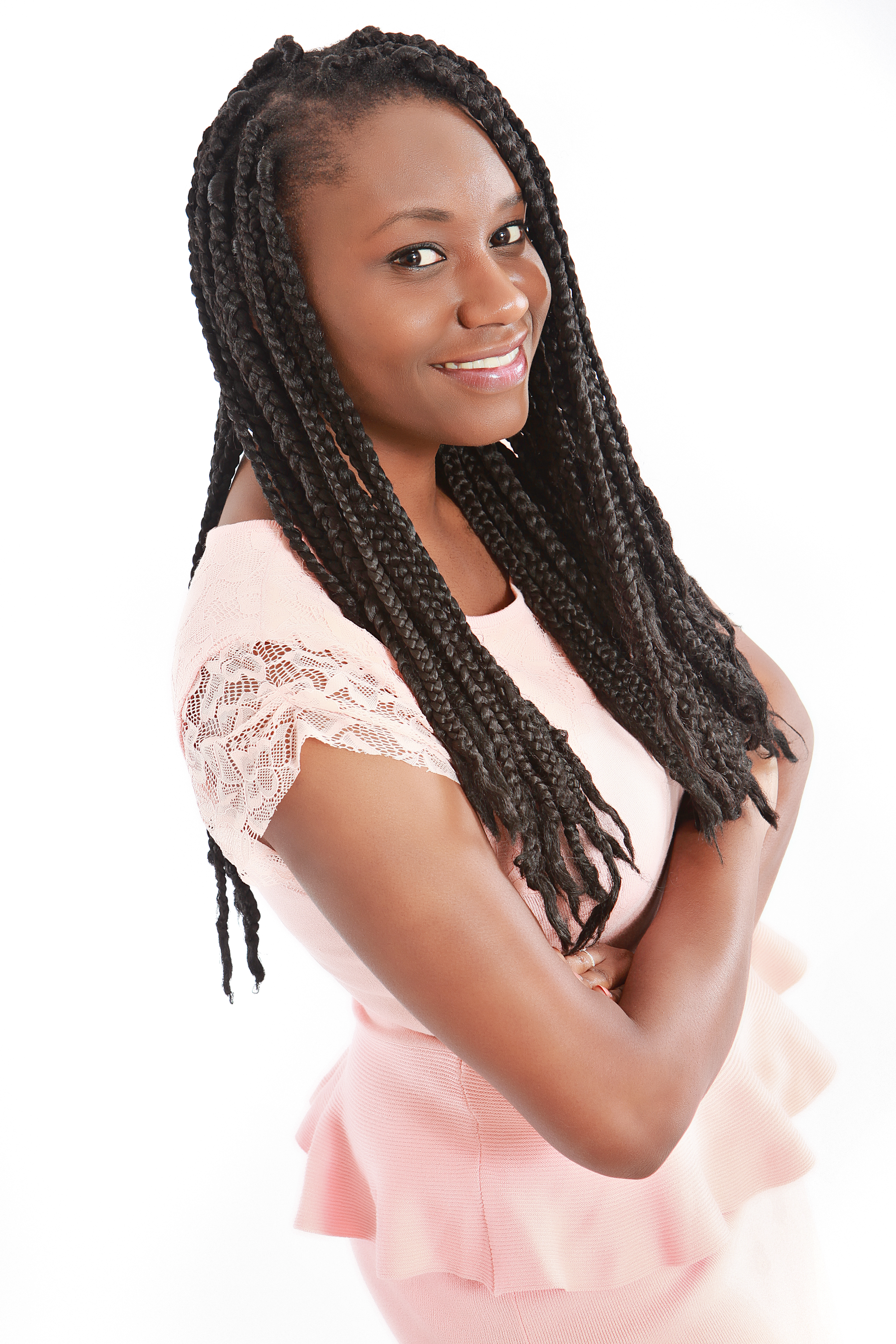
I’ve gotten comments as bad as people wanting me to “get with” a light skinned brotha so that we could have cute kids…anything so that the kids aren’t dark. God forbid! Don’t get me wrong, I know i’m cute. Maybe not to everybody, but there is somebody out there who thinks my skin is my greatest asset…me being the first one because it always starts with you. For 30 years i’ve had to be the “cute dark skinned girl” representing on behalf of underprivileged other dark skinned girls without those features that were identifiably able to be exchanged for their darker skin. It took me a really long time to look at black and see beautiful….to look at Dark chocolate and appreciate its beauty and milk chocolate and appreciate its beauty too and vanilla chocolate and appreciate its beauty three. I get that people have their preferences in beauty and look, but must we still limit it to such disdain for ones skin complexion?
Twitter: @KhristiLauren

Blog: www.48ways2spellkhristi.blogspot.com

“48 Ways to Spell Khristi is a smorgasbord of reflections on faith, beauty, relationships, pop culture and other thoughts that go through the head and heart of this newly turned 30 year old single woman.”

Share the link to this article on Twitter and Facebook and let us know about it. We will give you a shout-out on our next article and we’ll link to your blog or website.

Being The Only Black Person At Your Job

Being the only Black person at your job can be a daunting and highly interesting experience. For those of us in the corporate world, we’ve all dealt with the awkward silences, the “hair” conversation, the name pronunciation lesson and much more. For those of us that have experienced being the only Black person at work, we often have to hide our inner feelings and thoughts in order to survive. Thankfully a web series called the Unwritten Rules, focuses on this very situation. The web series is based on a young Black woman named Racey who has just started her new job as a manager. Her first day is full of common instances that Black people deal with in the work place. After its first episode, this show quickly went viral.

Spread The Word. Share This Post!


IMG_0054-ZF-7906-35913-1-001-006Jessica Ann Mitchell is the founder of OurLegaci.com & BlackBloggersConnect.com. To reach JAM, email her at OurLegaci@gmail.com. Follow Jessica @TweetingJAM.

Follow OurLegaci at Facebook.com/OurLegaci.


The Difference Between Africans and African Americans

The difference between Africans and African Americans…

Africans and African Americans/Black Americans have deep connections. During slavery, many African cultural attributes among enslaved Africans in the Americas were retained but some were also lost (in-part) such as (language and religion). Africans, on the other had endured colonialism (slavery by another name) which presented a new dimension of issues. Due to slavery and colonialism, these connections between Africans and African American or Black Americans have been strained. Much of the tension is based on conflicting and stereotypical media portrayals that have been cross promoted among the two groups.

For the most part, many members of both groups would consider themselves Black (based on color) but at times descents of enslaved Africans in the Americas, do not view themselves as African. However, there are many African Americans that embrace their African heritage and make trips to Africa to learn more about their ancestors. There are instances when Africans do not view African Americans or Black Americans as Africans due to differences in cultural backgrounds. This is not always the case. Often times Africans bond with African Americans. In many instances both groups are essentially linked and do have cultural, economical and ethnic similarities that will forever bond them. In fact, many Africans and African Americans work together towards fighting racism and the oppression that plagues Black/ African descendants around the world.

Light Skinned Versus Dark Skinned

This issue of colorism has plagued Black communities around the world, in the Caribbean, Latin America, Africa, and North America. The debate still rages on as many believe that Black communities divide themselves based on skin tones with lighter skin tones (closer to European shades) possibly considered more beautiful. Consequently, in many circles light skinned women are often considered more beautiful. Hip hop culture specifically, is flooded with adoration of beautiful light skinned Black women. Commonly referring to them as Red Bones, Yellow Bones and etc. This has sparked controversy around the notion of self-hatred which is often linked to slavery, colonialism and the overall mis-education of the negro across the Americas.

However, there are many circles in which beautiful dark skinned women have been adored and praised as well. They are commonly referred to as Chocolate, African Queens and etc. The proverb, “the darker the berry the sweeter the juice” is often used in association with dark skinned women/people.

For Black men, darker skin tones are associated with manhood and imagery of hyper-masculinity. Such as thugs, gangsters, pimps and etc. Light skinned Black men are often associated with professionalism and at some times femininity. This is because skin tones have not only been racilized, they’ve also been gendered. Which is why darker skinned women and men face similar yet different experiences.

However, there are many members of the Black community that do not divide themselves based on skin tones. There is also an on going movement to put an end to the colorism in the Black community.


Email Newsletter icon, E-mail Newsletter icon, Email List icon, E-mail List icon
Join Our Legaci Mailing List

Stop Apologizing For Being Black: Natural Hair In The Workplace

BlackWomanArtist

During this recent dip in the economy, many Black people have been forced to endure the dogged job hunt chase. Many of us are qualified (or over-qualified) citizens with plenty of talent and credentials. However, by being Black we are placed in a unique situation of double-consciousness. In the case of black women, we face a somewhat triple- oppression having to deal with our color, sex and socio-economic statuses. One key factor in the job hunt fiasco that specifically affects Black women is our hair. On countless blogs, websites and forums the questions continue to be asked, “ Is natural hair unprofessional?” or “Should I straighten my hair or wear a wig to get a job?” I have seen a plethora of answers and there is always the dreaded conclusion that we must alter ourselves in order to gain employment.

However this issue is much deeper than being about employment. When are we going to realize that the more we continue to alter ourselves to please “others”, the more we are succumbing to the sub-human state of existence that is being placed upon us? This is an issue of forcing the world to recognize our humanity, our God given right to exist the way we were created. When we change our hair, skin or body to please other people we are in essence saying, “You’re right, there is something wrong with being Black.”

When is the last time you saw a discussion about Caucasian women afraid to wear their hair straight for fear of unemployment?

You’ve never seen it because it doesn’t exist. European phenotypes are unfortunately perceived as normal. Meanwhile, African phenotypes are viewed as abnormal in a society that is predominantly Eurocentric. This is why multi-million dollar companies such as Nivea can create advertisements referring to Black hair as “uncivilized” without seeing anything wrong with it. However, this can change and it’s changing more and more everyday. It takes persistence, even in the face of hardships, to make the world respect our right to humanity. We are not three fifths of a man. We are human beings on this planet and we have a right to exist fully and completely.

The more we allow ourselves to be disrespected, the more we will continue to face blatant and overt discrimination concerning our hair, skin and bodies. Furthermore, do you really want to work for a place that does not respect you or your heritage? Wear your hair kinky, curly, straight, bald, twisted or braided but please do your hair the way it pleases you. Not someone else. Let us stop apologizing for being Black. We have to make the world recognize and respect who we are, as we are, unapologetically.

Jessica Ann Mitchell Aiwuyor is a writer, social justice advocate and the founder of Our Legaci. Learn more about her work at JAMAiwuyor.com. Email JAMAiwuyor@gmail.com.

@TweetingJAM – Facebook.com/JAMAiwuyor 

The N -Word in Black and White

The N -Word in Black and White

Why would anyone of any race, including Blacks, utter a word that has brought pain and humiliation to millions of African-Americans?

A Black writer talks candidly about the N-word. WARNING: If you freak out at the sound of all things controversial, reading this article could seriously damage your analytical expertise, so proceed with caution.

By Peggy Butler

When dealing with highly controversial issues, we often allow our emotions to over shadow our mind-set. Thus, the use of the N- word, has resulted in a three-ring circus, regarding which races are prohibited from saying it, and which groups can utilize this racial slur without fear of reprehension.
This observation came to life three weeks ago, while having lunch at a local fast food restaurant that shall remain anonymous. As I recall, I was enjoying a delicious salad, when I overheard a conversation between two Black females who appeared to be in their early 20s. They were talking about who was more attractive, Usher or Will Smith. One woman said that Usher was so good looking it hurt. To which her friend nonchalantly mumbled “Ni..er Please,” as they burst into laughter and gave each other high fives.

Listening to their conversation, I couldn’t help but wonder what would have occurred, if a person of European origin had uttered the N- word. No doubt, harsh words would have been exchanged, blows thrown and a few nerves rattled. Case in point: Comedian Michael Richards’ racist tirade against two Black men who allegedly heckled him during his act at a Los Angeles comedy club in November 2006. Can anyone say catastrophe with a triple C?

For years, society has pondered the age old question of why it is perfectly acceptable for African-Americans to call each other Ni..er, but unacceptable for Caucasians to call, or even think of calling us that derogative term, detested by Blacks of all cultures and socioeconomic status.

Blacks contend that the reason it is perfectly harmless for them to call each other Ni..er, is because it is said in a playful gesture, as opposed to the sadistic tone conveyed by non-Blacks. And while Blacks maintain that calling each other the N – word is perfectly natural, there are millions who vehemently disagree. They maintain Blacks should have enough love and respect for each other to stay as far away from the word as possible.

A glaring example of this controversy took place in 2010, when researchers at The Galvanic Institute of Sociology interviewed 400 men and 600 women, ages 16 to 80, to determine their thoughts regarding the N word. When asked if they would be offended if they were called Ni..er by another African-American, 86% of the respondents said no, with 14% saying they would be offended. However, when asked if they would be offended if a White person did the same thing, a whopping 98% said they would respond negatively. Surprisingly, 2% said that being called a Ni..er by Whites had no effect on their morale or self-confidence.

The poll further noted that college educated Blacks found the term less offensive than Blacks with 11 years or less of education. Experts contend, the former represents those African-Americans who view themselves as color- blind and are oblivious of bigotry. Theoretically, they fall under the same category as others who adhere to this bogus concept, like conservative columnist Armstrong Williams and Supreme Court Justice Clarence Thomas. Ah, isn’t denial awesome?

And speaking of negative words, it has been noted with much dismay, that if you want to make a timid individual or religious fanatic angry, have a person of European origin, walk up to them and shout “Hey Ni..er.” They argue the shy introvert will raise enough hell to wake the dead, and the bible-toting-Jesus-spouting-holier-than thou church goer will “lay a cursing” on you that will leave you speechless.

Ni..er Please. How many times have you said that to your spouse, friends, co-workers, even your children? And when you said it, did you stop and think why you said it? For one moment did you think about the hurt and embarrassment this word has brought to millions of African-Americans? Moreover, how you would feel if the person calling you that dreaded word was White, instead of Black?

To reiterate, it’s ironic, isn’t it? We laugh when calling each other Ni..er, but clinch our teeth and bring out the fangs when called that by Caucasians. Is there really a difference? Or do we feel less vulnerable when we are put down by each other, instead of those other folks?

Peggy Butler is a freelance writer based in North Central Florida. She has written for various magazines and Internet publications including Africana.com. and TimBook Tu. Moreover, Butler who lists collecting 60s memorabilia among her hobbies; writes news, features, sports and entertainment articles, as well as commentaries and humor pieces.
Visit her website at peggysbutler.com or track her at Twitter.com/peggybutler647.

In The Company of Smartness: Black vs. White Intelligence

In The Company of Smartness: Black vs. White

Brain Power Funkdafied. Who has the monopoly on intelligence? The answer will shock you.

by Peggy Butler

Americans enjoy having a wealth of information at their fingertips. Interested in knowing who was the first African-American granted a patent? The answer can be found via books, magazines and the Internet. Based on our massive databases, one would be hard pressed to find anyone who still clings to the theory that Blacks are intellectually inferior, right? Wrong. Welcome to Reality Complex 101. This organization is comprised of millions of Europeans who are convinced, that when it comes to academic prowess, White reigns supreme.

This asinine theory was depicted in the 1994 best seller “The Bell Curve.” The book’s authors Charles Murray and Richard Hernstien concluded, there is evidence suggesting “Blacks are genetically less intelligent than Whites.” This long held belief, remains one of America’s most disturbing myths. The Bell Curve created an uproar among African-Americans who characterized the book as literary garbage, cleverly concocted by two White males, as a gesture of racial superiority.

The Age of Pre-Civilization

Prior to the 20th century, this erroneous perception may have appeared true, based on the fact; Blacks were denied an education. During slavery, Whites felt that slaves were less likely to create problems if they remained illiterate. Sound familiar? Plantation owners were fond of saying, “The best slave is a dumb slave.” So determined were Whites to keep slaves from learning, schools were burned down, and teachers were sent packing. In putting education in its proper perspective, a few owners taught their slaves to read the Bible, but any education beyond that was forbidden.

Throughout the ages, questions regarding Black versus White intelligence continue to surface. If you ask the average Caucasian who’s smarter Blacks or Whites, you will in all likelihood hear a myriad of answers. However, An emphatic NO, would be the logical response, if the person asking the question was of European origin and the person responding was African-American.

Nonetheless, among each other, experts contend Whites are wholly convinced, they are smarter than the average African-American. “ Historically, this is a stereotype that is fervidly entrenched in the Caucasian race,” says Laura Morton, a retired English teacher whose roots are tinged with Irish and German genetics. “There are two things that Whites are absolutely certain of,” she stressed emphatically. “The first is that blond haired, blue-eyed women, are the most beautiful creatures in the universe. And the second fallacy, is, Whites are smarter than Blacks.” She further noted, “Although studies have proven that the latter is false and without merit, secretly, Whites still cling to this myth.”
For those who cling to the notion that intelligence is the result of genetic factors, this is nothing new. Traditionally, some groups are perceived as being smarter than others. In The Bell Curve, Murray and Hernstien ranked Asians as being the most intelligent race.
In accordance with their logistics, they assessed Asia and China as having the smartest inhabitants. And why shouldn’t they be smarter? Kids in Asian countries generally spend longer hours in school than Americans. But what about Blacks and Whites? Is there really an intellectual imbalance between the two races?

Coping with Racial Differences

In my travels down America’s Mean Streets, I am convinced that intelligence is simply a state of mind. Nonetheless, there are things about the intellectual skills of Blacks that disturbs me in comparison to other races. For example, I get discouraged when year after year I notice that few of the national spelling bee champions are Black. I also find myself getting upset, when I ask a 16-year-old to name the seven continents, only to have him respond sarcastically, “I don’t know.” Only to have a 12-year-old White youth recite them alphabetically, and in 15 seconds no less. Does that mean the 16-year-old has a lower IQ than the 12-year-old? Not necessarily. What it does mean, is that parents must embark on the awesome task of placing more emphasis on academics. Is that a thud I hear? Or the sound of brains evaporating from their idle cells?

I am also puzzled as to why African-Americans spend more time watching TV than reading. This is true of both children and adults. Such arrogant disregard for knowledge reminds me of a quote I once read: “If you control a man’s thinking, you control every fiber of his overall being.” Hello! Are you feeling me now?

Another theory involves environment. In homes where there’s an abundance of books, and everyone in the family is an avid reader, there is a strong possibility the child may develop a potent interest in learning. At the other end of the spectrum, if a child lives in a household where books are inaccessible, and reading is considered a chore rather than a pleasure, the child may show little interest in receiving a quality education.

But can intelligence be measured? Some people think so, while others argue it’s highly improbable. As for me, I say it’s all in the brain stem. There are smart Black folks and smart White folks. Feeble-witted Black folks and Feeble-witted White Folks. The only difference between them and us experts contend, is that when they pick up a book they read it from cover to cover, beginning with the Table of Contents and culminating with the Appendix. Whereas, Blacks maintain we pick up a book, simply to see if it’s worth browsing. Yes, I enjoy being in the company of smartness. Too bad the line is so short, and the good intentions a tad too long.

Peggy Butler is a freelance writer that specializes in topics that affect African-Americans.
http://www.peggysbutler.com
twitter.com/peggybutler647

They Say Hispanic…I see Black: The 21st Century and the DuBoisian Color Line is Still An Issue

They Say “Hispanic”…I see “Black” :The 21st Century and the DuBoisian Color Line is Still An Issue
By Timothy Aaron – Styles c2011

According to all indicators, the “Hispanic” population grew by 43% over the last 10 years pushing the actual numbers to over 50 million. Now, according to sources such as The Census Bureau, one out of every six North American (United States citizen) is “Hispanic.

I keep hearing this statistical, numerical and quantitative fact reported however there is one historical and cultural truth that I am not hearing, except in my own head and out my own mouth: many, if not most, of the people classified as “Hispanic” are actually of African descent and “Black.” With this in mind, my logic says if the Afro-Hispanic population is increasing in numbers, so are the number of regular ole “Black” folks which means – Black folks, overall, are becoming the “new” majority. Then why don’t they just say that?

For the record, there is really no such thing as a Hispanic “race.” As an aside, I must say that I am one of those reluctant to use the term “race” to distinguish (between) various peoples. If one believes that there is only One Human Race, then how could there be other races? How could you have sub – races? Wouldn’t a “sub – race” mean that there are “sub – humans”? Personally, I prefer using either of the following terms to classify and differentiate human beings: ethnicity, culture or nationality. But, that’s another narrative deserving more exploration and discussion at a later date.

Hispanic (or Latino) peoples are people comprised of indigenous Native North, Central and South American nations including the Caribbean (e.g. Taino, Arawak, Carib, Aztec, Mayan, Calusa, etc.); Africans; and Europeans (Spaniards and Portuguese). Their ethnic and cultural origins are traceable to either or all of these groups.

As it is well documented, the Spanish and Portuguese presence in the Americas is primarily due to colonialism – what some euphemistically refer to as, “exploration” and “discovery.” Later.

It is the Spanish and Portuguese presence that put the “Latin” in Latin America. While there are remnants of indigenous/Native and African culture throughout the “Hispanic Diaspora,” primarily, it is the Spanish language that defines, connects and “unites” Hispanic people. Put another way, the major commonality and criterion used to classify “Hispanic” peoples is the Spanish language. The term “Hispanic,” then, is primarily based on linguistics and secondarily on culture. Again – ethnically, there is no such thing as “Hispanic.”

Interestingly enough, Spain owes so much to Hannibal the African for the development of its civilization and culture. Oh, the complexities of history, culture and identity. Another topic for another time.

In nations like Panama, the Dominican Republic, Puerto Rico, Argentina, Brazil, Ecuador, Cuba, Peru, Mexico and Columbia – you will find many Black people, as well as clear African cultural influence in and through food, music, religion/spirituality, architecture, art and language. In some cases, probably rare, I will admit, you will find that the African culture is the dominant culture such as in Brazil, Cuba, Panama, Puerto Rico and The Dominican Republic.

So I find it interesting and sad when I hear of African – Americans taking anti-Hispanic positions as they are apparently unaware of the ethnic, cultural and historical commonalities between them and African – Hispanics.

Case in point, in an NPR story about “New NAACP Leaders Broaden Group’s Missions,” an AME ZION Minister in Waterbury, Connecticut, by the name of Leroy Perry, stating his opposition to a Hispanic person serving as chapter President based on the fact that the NAACP was started for “Black people in particular.” I shook my head as I listened to this leader of an African Methodist Episcopal church. Emphasis on “African.”

Oh, this Queens, New York – born and raised person is not naive. I know that many, if not most, Hispanic folks are just as unaware, or in denial, about both their Africaness/Blackness and their ethnic and cultural ties to African-Americans as are African – Americans about theirs to their Hispanic cousins. Yet another topic to discuss at another time. Neither African – American ignorance or self denial or Afro – Hispanic ignorance or self-denial can change the historical truths.

Black people are not just African – American. Nor can “Black” continue to merely be defined by skin color and locality. Being “Black” is just as global as globalization. And no longer can narrative and discourse about being “Black” and “what is Black?” be intelligently and honestly engaged in without mentioning a simple six letter word: “A- F- R – I- C- A.”

About the author:

Timothy Aaron-Styles has worked in media, strategic communications and entertainment in New York, Georgia, South Carolina and Bermuda. Majored in Film and Video at Georgia State University while minoring in Marketing.

He has worked with CNN Headline News, 16 The Library Channel and City 5: Atlanta City Hall’s cable television station. Has advised political, corporate and non-profit clients in New York, Georgia and Bermuda. Co- screenwriter of “Akwaaba” a a romantic comedy set in Ghana reflecting the multi-faceted fabric of Ghanaian life. His one-act play, “Shhhh!!” was adapted into a screenplay and shot and is post-production. The piece has a very interesting and unique perspective on sexual abuse.

He can be reached at Timothyaaronstyles@yahoo.com.

Positive Change and Transformation

Positive Change and Transformation

By Zhana

We have amazing power.

Every day, we experience racism and racist oppression.  For example, this morning on the BBC News, I saw a Louisiana brother who had been imprisoned on death row for many years before a retrial reduced his conviction to manslaughter.

Many people have been completely exonerated for crimes for which they have been convicted and sentenced to death.  Not all of them are Black, but a  disproportionate number of them are.

We work so hard to battle these injustices. Yet they never seem to decrease. So what can we do?

My work is all about creating a more positive future.

The Law of Attraction tells us that whatever we put our energies into, increases in our lives. This is very similar to the Law of Increase, which I write about in my book Success Strategies for Black People.

Although our intention is to bring about positive change, we need to be aware that these universal laws are constantly working. They can work for us or against us. We can use them in our favor – or not.

In other words, the more energy we put into battling a problem, the more energy we are giving to that problem.

Blame then becomes a distraction from what will bring about the real changes we deserve.

We need to turn our focus to the solution rather than the problem.

Cases of people who have been wrongly convicted may often respond to Spiritual Response Therapy (SRT). I write about SRT and the Higher Self in Success Strategies.

I also write about Nonviolent Communication (NVC) as well as other highly effective methods.

These are transformative methods. I have seen miracles happen in my life and in the lives of others. This is why I wrote Success Strategies. I want to make these methods available to as many people of African heritage as possible. We can use these methods and other things I cover in Success Strategies to heal ourselves, our families and our communities. And we can use them to achieve much, much more.

I am passionate about the work I do because I have seen the difference it makes in people’s lives.

As Black people, we often get into victim mentality. This is because we have been victimized for so many generations.

Those of us of a political bent say, “Organize! Fight back!”. And of course, there is a time to organize. There is a time to fight, to defend our communities.

However, in order to bring about real positive, effective change and transformation, we need to turn our focus inward.

Human beings in general tend to blame others for our problems, difficulties and issues. This is a basic human tendency. And others are often to blame.

The problem with this is that it locates the solution outside of us. If only “they” would treat us better. If only he, she or they would stop doing whatever it is they are doing and do what we want them to do. Then everything would be okay.

Please note, I am NOT trying to take the blame for racism and racist violence off of white people.

I am just saying that, whether we blame ourselves or other people, blame is not a solution. And I am interested in solutions.

Instead of focusing on what is going on on the outside, and what others are doing, we need to focus within.  That is where our power lies.

As I said at the beginning of this article, we have amazing power. We need to use this power to bring about the changes we need.

I am a pragmatist. I am committed to doing what works.

Zhana is a writer, publisher and Transformational Growth Consultant.
To read her book Success Strategies for Black People, go to:  http://www.blacksuccess1.com/achieveyourgoals.htm
To keep in touch with Zhana, join the Nurture Success online community.  http://nurturesuccess.multiply.com/

The U.S. Black Woman Experience

The U.S. Black Woman Experience

by Zakiya Lasley

In truth, specific oppressions (male domination, white supremacy, class exploitation, etc.) rarely work singularly. Instead, oppressions feed off of each other, their dynamics changing according to specific contexts. The current challenge for anti-rape organizers is to develop solid analyses of rape and rape culture that recognize a multiplicity of oppressions that constantly shape and influence each other.

Throughout history Black women have taken deadly risks in confronting rape under extreme fear and terrorism. Black women who were slaves participated in concentrated and deliberate instances of retaliation of rape by their white male slave owners. Documented in many autobiographies and biographies are horrifying accounts of female rebellion manifesting itself in the poisoning of rapists, burning of property, and assassination of their white slave owners. Also in instances of desperation enslaved rape survivors who were mothers often killed their girl children as a form of resistance to slave rape.

Looking at anti-rape activism done on the part of Black slave women forces us to think about rape in a much more complex way. Rape is not only a tool for male domination over women; Rape is also a tool for economic exploitation and white supremacy. The example of rape survivors killing their babies to keep them from being raped is also resistance to the use of rape to promote the institution of chattel slavery after the banning of the Mid-Atlantic slave trade. We can see the dominating forces of capitalist and white superiority dynamics within rape not only in the case of the rape of thousands of black slaves, but also currently in global issues such as “mail-order brides” and global sex-trafficking.

Another anti-rape movement headed by Black women is the anti-lynching movement in the late 19th and early 20th centuries. During post-Reconstruction, southern white people were determined to regain control over Black people. As a result, they instituted a system of lynching Black women, men, and children when they “got out of line.” Lynching was a sexualized form of murder. Often, the justification for lynching Black men was that they raped white women. The issue of rape was utilized as a scare tactic geared directly towards white women. As a result, many southern white women supported lynching efforts instead of recognizing that sexual violence towards white women, by anyone, is deeply connected to sexual violence towards Black people (as well as other forms of oppression). When Black men were lynched, the mobs would often torture them before hanging them, cutting off sexual parts of their anatomy in particular. When Black women were lynched, they were often raped first.

Ida B. Wells-Barnett, an activist and writer during this time, spoke openly against rape and did not defend Black men who were, in fact, guilty of rape. But after she researched and investigated 728 lynchings that had taken place during the 1890s, she found that only a third of murdered Black people were even accused of rape, much less guilty of it. Spurred by her investigation, hundreds of Black activists at the time, (including the NAACP and Black intellectuals) developed an anti-lynching movement for which activists were burned out of their homes and businesses, run out of town, and murdered.

In my assessment of the anti-lynching movement, I never stopped to look at the moment as an anti-rape movement because the goal of these activists were not specifically to end rape, but to end lynching. Nonetheless, it is so profoundly an anti-rape movement because the theory and activism work the organizers produced challenged all forms of racialized sexual violence. Deconstructing the myth that Black men are overwhelmingly “more desirous” of white women was critical in order for white women to eventually reflect on the sexual violence being done to them by white men as well as their own sexual freedom. Most importantly the anti-lynching movement forced America’s hand in recognizing that other manifestations of oppression are inseparably linked to sexual violence. There is no genuine way to discuss rape and organize against rape without being committed to deconstructing complex ways that race, ability, religion, age, economics, and sexuality are integrated into rape.

This next phase of anti-rape organizing in the 21st century must be able to hold on to the complexity of rape culture with all of its degrees of oppression. The time for thinking about rape as merely a tool of male domination is over. We must be able to mindfully articulate spaces where anti-rape organizing is inseparably linked to organizing against police brutality, for labor rights, and for immigration rights. And we must show up to these other types of organizing work as allies moving towards liberation.