Dismantling Collective Amnesia

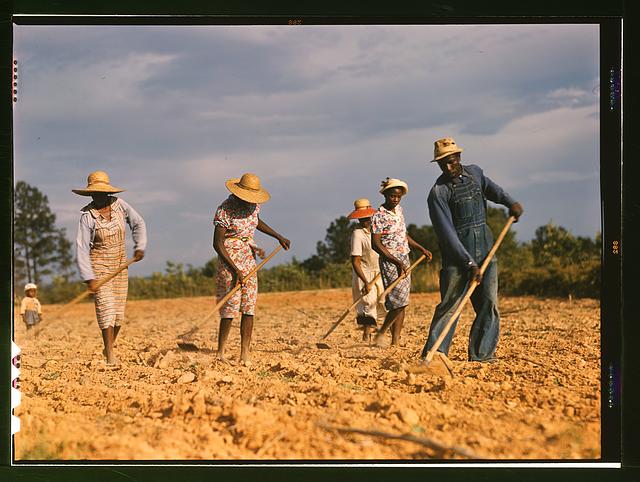
ChoppingCotton-GroupGA
Library of Congress 1941 – Chopping cotton on rented land near White Plains, Greene County, Ga.

When I was a little girl my grandmother told me about how my family came to Augusta, GA. Her parents were sharecroppers in Warrenton, GA. At the time, it was illegal to quit and you could be killed for doing so. The klan was alive and well. But my great grand parents, Flossie and George had a plan. In the middle of the night Flossie packed up the children and fled in a buggy. My grandmother was about 4 years old at the time of the escape. Afterwards, the overseer came knocking on the door asking, “Where are they?” George gave a convincing response declaring, “My wife left me and took the children.” He later quietly escaped, reuniting with his family in Augusta to build a new life for themselves.

This was my first personal Black history lesson.

They escaped a few decades before Martin Luther King Jr. discovered there were people living in Albany, GA that had never seen a dollar bill. Hangings were real, escaping was necessary, money was scarce.

Flossie and George are not people from an imaginary story.

I remember sitting on Flossie’s lap in her rocking chair. Sometimes she would chew her snuff and spit into an old can. She’d say in defiance, ” I chew my snuff and he don’t like it. But I chews it anyway.” At five years old I’d smile at her mischief…my first lesson in feminism.

Meanwhile, George would check my mouth for missing teeth. He’d then demand that my parents and the toothfairy, “Give this baby her money! Make sure they give you your money!” I’d smile at his concern…my first lesson on economics.

Anyone that reads Ta-Nehisi Coates’ masterpiece on  The Atlantic will realize that it goes beyond the traditional conversation about reparations. It’s a beautifully woven story that works towards dismantling collective amnesia.

Conversations about reparations, entitlements, and the public welfare are often scoffed over and quickly dubbed as unfounded, unrealistic and unnecessary. Then rhetoric such as Paul Ryan’s, “culture of laziness” and Rick Santorum‘s “I don’t want to make black blah people’s lives better by giving them somebody else’s money,” is quickly inserted as an effort to switch focus from the root causes of poverty in America.

Again and again we meet in battle the advocates of collective amnesia, that seek to not only ignore history but also change it.

Us descendants of the unpaid, indebted labor force are often told the past is irrelevant. Our attempts at coherent discourse are subdued as the world flashes before us and we see the hand writing on the wall. We’re told that remembering is “divisive”, this history is “non-existent”, and that most all “nobody owes us anything.”

It’s not really about owing. It’s about fixing and creating a country that is no longer mired in disparity or profitable through disenfranchisement. Recognizing that many of the current policies towards wages, education, healthcare, and housing are guided by a historically racist, classist, sexist discriminatory framework.

For me, that’s the most important aspect of Ta-Nehisi Coates’ piece…remembering and using this memory to guide us towards a more just nation.

This is why I’ll never forget the escape of Flossie and George.

– Join My Mailing List – 

Jessica Ann Mitchell Aiwuyor is publisher and multicultural communications specialist. To reach JAM, email her at JAMAiwuyor@gmail.com or visit JAMAiwuyor.com.

Follow her on Facebook at Facebook.com/JAMAiwuyor.

Is My HBCU Degree Worthless?

That is the question I asked myself as I stared at the following tweet:

Ignorant-Tweet

No shade?? Honey, you threw shade all the way back to my forefathers with this tweet. Although her page is now private this very public tweet caused a major firestorm that I am sure @med_school12 did not anticipate when she tweeted this. A little research informed me that she is an undergraduate student at James Madison University, a PWI. This means that she in no way is able to make such a broad, sweeping opinion and present it as fact. No ma’am.

The debate over PWIs and HBCUs is nothing new. Every year as thousands of black students pack up and head to college, we debate the nuances of both. I am aware of the backlash blacks receive for being “sell outs” for choosing to attend PWIs just as I am aware of blacks being accused of having “Hillman Syndrome” because they attended a HBCU. Personally, I do not care. All I care about is that black students are given the chance to sit in a classroom and receive an education at the collegiate level if they so choose to.

That is why I have shied away from this debate. But this tweet…rubbed my spirit wrong. So wrong that I broke away from a term paper to tweet my concerns for why this young woman of color would make such a statement. Then I realized that she, along with those who defended her, have no idea that they bought into the superiority of “whiteness.” That whiteness equates to rigor. Although she did not mention race, it is implied in the nomenclature: Predominately WHITE Institutions versus Historically BLACK Colleges and Universities.

We all know the legacies of HBCUs. But the legacies of PWIs need another reexamination. The legacy of PWIs, particular southern PWIs are clouded in racial segregation and white supremacy. The legacies of HBCUs are the response to that racial segregation and white supremacy. Black students were routinely denied admittance to PWIs because of COLOR. Black students who could not afford the migration north were left with no opportunities at the collegiate level, especially in the American South. This means that @Med_School12’s grandparents would have received a denial letter from the institution she attends now. Also, PWIs would routinely hand over “scholarships” to black students to attend an out of state school, just so they would not apply to theirs. But it gets better! I can imply from her twitter handle that @Med_school12 either loves the BET show “The Game,” or she wishes to attend medical school one day. I would hope it’s a desire to attend medical school. I wonder if she knew that states HAPPILY gave money to HBCUs to establish graduate and professional programs so black graduates would not apply to theirs. Yes, HBCU presidents (shoutout to Dr. James E. Shepard) lobbied states for money to establish professional and graduate programs so their students would not face rejection from PWIs. Lastly, let us not forget the violence that black students were subjected to for attempting to integrate PWIs. Does anyone remember James Meredith? I am pretty sure that was not mentioned in freshman orientation. But it was an ugly stain on University of Mississippi’s otherwise “glorious” Dixie southern past.

HBCUs are not without issues. However, that had NOTHING to do with the education I received. My tenure at North Carolina Central University was indeed rigorous. NCCU put me through the ringer before it let me snatch that degree. I anguished over failed exams, cried over classes I could have done better in. I watched my friends fight over the right to not only graduate but graduate with honors. When I graduated, I did a little shout right on the field. Yes, while my parents watched, I had a “Won’t He do it?” moment. I must have been a glutton for punishment because the following fall; I was back for that Master’s. In reality, I knew there was no better program for me. This M.A. in History program was top notch. I learned and was cultivated by the best. We were required to take a Foreign Language Exam, sit for Master’s Comprehensive Exams and successfully defend a thesis of original research before our professor allowed us to hope that graduation was possible. I know PWIs who never even heard of a comp exam until their doctorate program. My cohorts and I walked around like zombies in the months leading up to graduation. By the time I snatched that degree from NCCU (again), I knew that I was well prepared for life at the doctorate level at Morgan State Univetsity. I have a friend who received the same master’s degree from a PWI, yet called me freaking out about writing a historiographical essay as a doctoral student, a skill I learned in undergrad. So yes, the path to my degree was rigorous.

I commend any person who makes the decision to attend college. It is not an easy feat, no matter the instituion. I am not one that buys into exceptionalism, the notion that an institution is sooooo great that it’s above criticism. But HBCUs are constantly attacked for their “perceived” inferiority and I am over it. Sick of it actually. Let us be great! Even though she did not intend to throw shade…she caused every person reading that tweet to take pause. The degree comes from the GPA. The GPA comes from the grades and the grades comes from the ability to perform. So when she questioned the weight of the GPA…she called into question the entire academic experience at HBCUs.

Recently, a young black high school student was bashed for his decision to turn down an Ivy League school in favor of an HBCU. At the end of the day, he made a decision based on proximity to his home and funding. There were no racial issues in his decision. I know black people who chose PWIs because it’s “better” but could never tell me how. Let’s be clear…being black does not mean you have to attend a HBCU…choose a PWI as long as you are making a decision not clouded by mythology. Or that you think that because you attend a PWI that you are given a slice of “white privilege.” Oh and before I’m hit with the “employers choose applicants from PWIs over HBCUs” statement…allow me to flip it this way. What is a black student and a white student from the same PWI were up for that same position? At the end of the day your PWI will not shield you from racial discrimination. It will not protect you and give you special powers. Sorry.

A friend of mine pointed out that HBCU students trash each other. Ummm yes…this is true (HEYYY AGGIES!!!!) but that trash talk is limited to football games and who has the best “yard” or homecoming. But when it comes to its central core mission, and the education of young black scholars, we stand united. I was inspired by the rallying of black scholars in the Twitterverse who came to the defense of not only their HBCUs but the legacy of HBCUs in general. I understand that in the process some people tweeted things that were deplorable and disrespectful to this young woman. That is unacceptable behavior. But I wish this young lady would understand where the sensitivity comes from. It comes from a legacy that we are taught and will defend. It is a legacy that we are proud of.

HBCUs are important because it gave us a chance at the same education that PWIs had to be forced by federal law to give us. If you want to have this debate then I welcome it. I am open to an exchange of dialogue that will foster growth and development. There is much that PWIs and HBCUs can teach each other. But what I will not allow are advocates of PWIs to come to the table with feelings of superiority…and I will not allow them to leave that table feeling victorious because they left HBCU alums and current students feeling inferior. Because when I snatch that degree (for a third time) I will proudly proclaim that ALL my degrees belong to a the “rigor” of a HBCU.


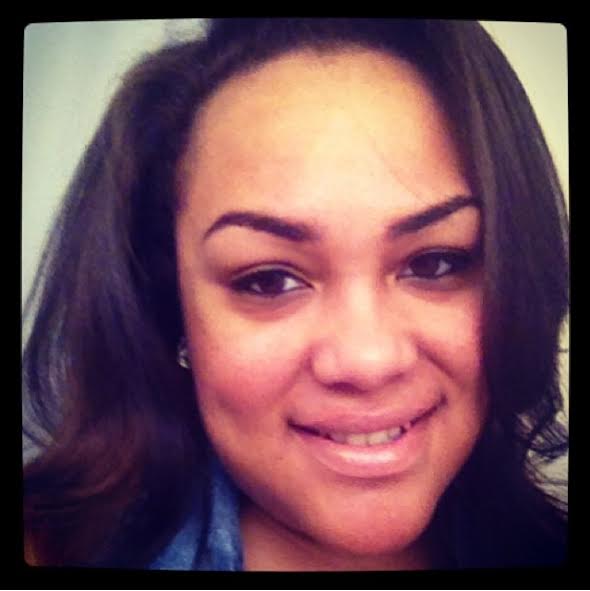
Bridgette-RobinsonBridgette Robinson is a graduate of North Carolina Central University where she received both her B.A. and M.A. degrees in history. She is currently enrolled in doctoral studies at Morgan State University in Baltimore, Maryland. She is also an adjunct professor at Prince George’s Community College and Howard Community College, where she teaches American and European history courses. Her research interest includes gender and class issues as it intersects with minority groups. Her blog, “The Misadventures of a Black Woman Scholar,” can be found at tmbws.wordpress.com.

I Just Called The Cops On A Group Of Young Black Boys

I wasn’t expecting my walk home to be like this at all.

“I just called the cops on a group of young black boys. I feel horrible.”

I’d just entered my house and was getting to ready to tell my sister and mother about what just happened to me walking home from the train, when my sister blurts out those words to me.

“Why? You were helping someone. What if they killed the boy, how would you feel then?” my mother replied.

Right now, I’m feeling a bit disheveled and visibly teary-eyed. My heart is pounding. I feel sad. A slow, aching type of sad.

Let me rewind a few minutes.

It’s about 6:45PM and I’m about two blocks away from home.  A cop car races past me and joins a cluster of other cop cars that are parked near a group of apartment buildings up ahead.

“Oh no, what happened now?” is what I’m thinking to myself.

As I get a little further head, the scene is much clearer.

About four black boys are sitting down with their backs against a fence, feet drawn in front of them,  and their hands in their laps. I can’t tell if they are handcuffed. Two cops are standing over them.

“Excuse me, can you please walk to the other side?” asks one of the officers.

I realize what’s happening. These boys, who couldn’t have been more than fourteen are about to get arrested.  I stop for a second and turn to look at the boys in their faces.

I see a range of brown, fear leaking from their  face. To me, they look like babies. What are they doing on the floor? What did they do in the first place? I shake my head so they can see me and give them the “there’s more to life than this” look.

I walk a few feet ahead to where another cop car is and I say to the officers, “Isn’t this a shame? Young black boys getting arrested.” I must have annoyed  one of the cops because he replies, “I thought you had something  important to say. As you see, we’re in the middle of an investigation right now.”

Oh, I get it. What I’m saying really isn’t useful to their “investigation”.  I mutter a quick, “It’s just on my mind” and keep it moving.

I walk about fifteen more feet and stop. I’ve been trying to hold back the tears from when I first looked at those baby faces. I’ve been trying to hold back the tears but I can’t hold them in anymore.  I turn around. The boys are still lined up along the fence.

I start to cry.

The lights on the police cars flash.  My vision is blurred from my tears. The lights look purple.

A cop approaches me. I see his badge twinkle in the light. He’s Black.  I wonder, “What made you become a cop?”

“Are you okay?”

I reply, “No.” I then go on to tell this cop how much seeing those young kids lined up on the floor affected me. I tell him that because of the work I do now at my job (and did in college), I’ve been to prisons.  I’ve seen firsthand the life once you’re booked and sentenced.

If I had a little brother, they could have been my brother.

I saw those boys’ lives flash before my eyes, but I didn’t see success. I saw more handcuffs. I saw prison fences. Orange uniforms. Black men. Lots of them.

I told him that coming home from work to see this was like shooting a bullet into my heart. It’s not what I wanted for my community. Why are these kids allowed to be out here getting in trouble? Where are their parents? I told him I didn’t know what they did, but the fact still remains these are little boys.  It hurt me deep.

 He sympathized with me. I apologized for my rambling. We parted ways.

I had to talk about this. I tried calling my best friend. No answer. I called a woman I know whose son was in prison. No answer.

By this time, I’m home. I sit in my couch in the living room for a while and then walk to the kitchen where my mom and sister are.

“Oh my gosh, guys…. I just had an emotional breakdown,” I start out.

And then this is  where the story first began.

My sister, unusually loud, says, “I just called the cops on a group of young black boys. I feel horrible.”

She  tells me the story. She’s on her way home from work and she sees a group of boys chasing another boy. The group is holding up traffic on the main street. Cars and pedestrians are annoyed. The group crosses over the busy intersection.

They’re attacking another boy. The mob starts to take off their belts and repeatedly whip  and stomp the boy.

“I was scared. I called the cops. By the time the operator was on the phone, they told me someone was on the way. A cop got there and tried breaking them up. I asked the operator if she needed me to stay on the scene. She said no.”

By the time she reached home, she asked a group of young children who were passing by if they had seen what went on. The children told her that the boys were a part of a Haitian gang called “The Gate Boys.” Then, they saw some of the members of that gang coming their way and said they had to go.

For the next few minutes, my mother, sister and I had a brief conversation about what had just happened.  My sister talked about the lack of social and emotional supports that are provided to kids in urban communities such as ours (Orange, NJ).  I talked about wondering what’s going to happen next for those boys.  She knew my sister did the right thing by calling the cops but she couldn’t understand why we were so affected by it.

How angry would a group of fourteen year-old boys have to be to beat another young person in such a manner? Think about the peer pressure. Maybe even the psychological term “group think” at its best.

She really felt bad that she had to call the cops on the boys.

I couldn’t help but to think of those baby faces I saw as I walked home. What’s next for them? More than likely, they’ll be sent to the town’s holding cells for juveniles. Charges may (or may not) be pressed. They may be shipped to a juvenile facility.

Will they be angry? At whom? The cops? The boy? Their parents? Themselves?

I don’t know. Walking home from the investigation scene, I had this feeling come inside of me.  A feeling of injustice for those kids.

From the story I was told, they did something wrong, but I couldn’t help but feel this deep pang in my body for what comes next. For what will be repeated. Over and over again.

My mind flashes  to the face of one the boys lined up on the fence. I’d seen him before. I’m coming out of the corner store. He’s walking up to another guy his age. They do an elaborate handshake, and I think to myself “baby gangbangers.”

I wanted to go up to the boy and ask him what he thought of himself. What his dreams were. If he thought he could actually achieve them.

But, I didn’t. I walked past him.

It’s crazy how things come full circle.

Now back to that second where our eyes lock again and that same thought crosses my mind. This time, I want to walk up to all of them and ask them these questions.

But I don’t.

My heart pangs, and I realize that maybe one day I will get that opportunity to do so.

Then, I think about the work I already have in my arsenal. The beginnings of what could be important work for my community. My Princeton Senior Thesis: Policing in Orange New Jersey, my documentary Lost Boy.

I don’t know what today meant for me, but I was compelled to write about it and share.

I don’t know if I’ll ever save or help a brown baby face, but today showed me just how much they need it.

This is not about whether those boys were guilty or not. It’s about our future and what we can do to positively affect it.

So why am I ending this with a sigh instead of a smile?

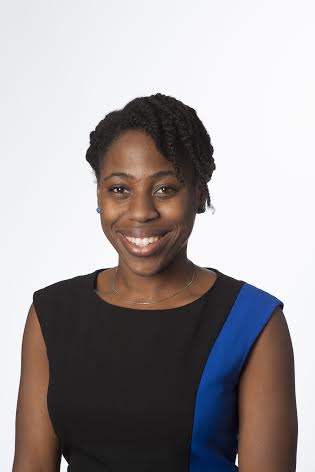
Rana-CampbellRana Campbell graduated from Princeton University in 2013 with a degree in Sociology. She is currently completing a one year fellowship at the Vera Institute of Justice in NYC, where she works on the Pathways from Prison to Postsecondary Education Project. Rana is also a freelance content and branding strategist, specializing in copywriting/editing, branding strategy, and email marketing for growing businesses. Fun fact about Rana: Her favorite color is Turquoise and she loves a good workout mixed with dancehall music. Her interests include inner city community building, portrait photography, and fitness blogging. Follow her on Twitter/Instagram @rainshineluv. For more information, visit ranacampbell.com.

Fairy Tales of Reverse Racism Race Baiters

reverse-racism-450

It’s really disturbing when injustices that are linked to racism are brushed aside and we’re called race baiters for bringing it up. As if I’m imagining things. As if I created race. As if being silent is going to make everything okay. And the coup de grâce is that some unfortunate souls actually believe that by pointing out racism, that makes someone a racist. I find this to be a signifier of the failure of the education system. So many people know how to throw around the term, but so few know what it really means.

For everyone that’s confused, racism is a historically rooted systematic structure based on the creation of racial hierarchies. It’s racially based prejudices reinforced by systematic power structures that design global economic disparities, social guidelines for imprisonment, medical apartheid, and the socially determined value of life.

Just being born a Black woman in this current state of affairs, I simply do not have the structural power or capacity to be racist. And if it’s hard for you to grasp this information from me, please do Ask The White Guy and this really cool Bangladeshi Australian guy who gets it:

Still, I don’t deny that as an African American woman in the current world, I am born with a certain level of privileges that my ancestors didn’t have. For one, I wouldn’t be writing on this blog because it would have been unlawful for me to read or write. I wouldn’t have gotten two master’s degrees (that I’ve been told Affirmative Action paid for) because that too is a punishable offense. For being an uppity negro wench, I would have been hanged and buried in some unknown location and it would have been deemed justified because I didn’t know my place. That fact is the disturbing root of this discussion. These seemingly innocent demands of my silencing are born out of that same legacy. These are “be quiet or we’ll reprimand you” statements. 

Instead of trying to silence discourse, just admit that you’re a coward. Just admit that comfort and dare I say privilege is more important to you than justice. No we can’t talk about the prison system, the fall of the middle class or the military industrial complex without race. No, no, no! To exclude race from these topics is to participate in the erasure of reality and to disregard the validity of millions of lived experiences. These “reverse racism” and “race-baiter” accusations are built on nothing more than modern day fairy tales.

The racial divide is real:

Unequal prison sentencing: Check
Exclusion from the workforce: Check
Sexual abuse: Check
Segregated education: Check
Insufficient medical attention: Check

Pointing out all of these issues is not divisive, but ignoring them is.  It prevents us from fully exploring and understanding the crux of the problem. You’re not really for social justice if work ends when you feel uncomfortable. Perhaps you should ask yourself why your comfort is so dependent on avoiding the deconstruction of racism. If you’re not ready to have this discussion just admit that and move on. Remove your activist, social justice title and just “get to steppin.” But don’t try to silence people because you feel uncomfortable.  Those times are long gone. Mammy retired, leaving us very detailed instructions…being quiet is not on the list.

– Join My Mailing List –

A Man With No Land

iStock_000006274328Small-2

Today at work I sat discussing heritage with three of my coworkers: a Haitian African, a Jamaican and a Dominican. They all conversed about revolutions, events and people from their homelands who are stapled into their histories. They spoke with such pride because various people and situations have helped to shape their people’s identity and culture. Whatever happened on their land happened in their history. I sat a bit envious, for though they are like African Americans in which most of them were brought to their respected lands; they and their lands are one.  They are tied to their old-new homes. They love it, and it claims them. These thoughts led me to ponder what land do African Americans associate themselves with? And what land claims the African American? From my experience, it is clear that African Americans are not deeply connected to any land.

When I consider each of my coworkers land heritage, I am troubled with my lack thereof. In African American history we have many heroes who have, on American soil, fought for us, descendants of slaves, to attain many freedoms. In a land where we were brought to as slaves, we now have rights, liberties and representation in the highest office in the free world. But does America really claim the African American as his brother, or are we simply overstayed visitors? From slavery to lynching and the countless murders of minorities throughout the years among other things, I presume that the land of the free hasn’t truly accepted the free slave. When so many injustices are allowed against us, it’s hard to feel like America is really our home. Well, I know that’s how I feel. So, if America seems unsure of our kinship, where do we call home? Where are we connected to?

At times, it seems like nowhere.

Both my parents are from the south and came north to escape the tumultuous south of the 50’s. My mother was born in Savannah Georgia, and my dad was born in Lee South Carolina. Neither of them, nor I, have ever traveled outside of the country. We don’t go visit cousin so and so in Nigeria. When we go visit family, we go down south. When West Indians or Africans ask me where my family is from, I often say the south because I have no other point of reference. I was born and raised in the New York; I have no connection to the south or Africa. I tried reconnecting with my family from the south, and as pleasant it was it left more questions. Who are we really as a family? Where are we from? I learned that one of my great grandfathers was a musician and that excited me. I felt a sense of rootedness.

I realized that I wasn’t an island, but that men who came before me excelled in similar ways and shared similar pains. Still, questions like where certain relatives got specific strengths haunt me. Not having a home land that is filled with my people, my heritage and my culture leaves me a bit misguided about who I am. It also concerns me of who we are as black men and women. Does our legacy end with jazz and the civil rights and a certain black vernacular? Or is there more? Though my parents are from the south, we are so much more than southerners. My parents themselves do not claim to be from anywhere else but the south. They have, like many of our parents and people, no connection with who they really are and where they really from: Africans from Africa.

Many attempts have been and are being made to mend the lack of identity and culture that resulted from slavery. Kwanzaa, created by an activist and scholar named Maulana Karenga, was conceived to give Afro-Americans their own holiday: a sense spiritually individuality. The Pan-American Flag was crafted with a similar intent: to give us culture and identity. With all these attempts, the thirst for a home hasn’t been quenched within blacks. Recently, many celebrities have begun to participate in DNA analysis that traces back ones genealogy. African American Lives, hosted and narrated by Henry Louis Gates Jr that premiered on PBS in February of 2006, is an example of this. It is a documentary that explores the history of men like T D Jakes, Chris Tucker, and Dr. Ben Carson as well as women like Oprah Winfrey, Whoopi Goldberg, and Dr. Mae Jemison through genealogical research. It married these Africa Americans to various countries and tribes in Africa which us remarkable.

Unfortunately, this isn’t the norm. Most blacks, if not in financial constraints, are at least misinformed about their access to such options. Many black men like me live either in the state of creation or in a state of assimilation. We either try to create an identity and culture for ourselves or we simply put on the American self. We align ourselves with American values, belief systems and ambitions ignoring any connection or reflection to our damaged past. We are a people whose culture continuously changes, for we have no foundation. Land-heritage brings foundation.

Going back to live in Africa can prove to be problematic, for we have no trusted relatives there.  However, finding out where our families originate from, give each of us a better context than what many of us have as African Americans. We are able to associate with outstanding music, attire, and spiritual practices that outdate our Kwanzaa, jazz, hip-hop, pan African flag creations. It is not a matter of better or worse but context. I believe saying to be extremely true: “you don’t know where you’re going, unless you know where you come from.”

On February 6, 2008, African Ancestry posted a video on YouTube of Judge Hatchett discovering her roots and she told this story while speaking to a young man:

I went to Africa with my sons last summer. And there was a Massai warrior who’s a little bit older than you are. And he said ‘where are you from?” And I said, naively, I said I’m from the United States. He said ‘nah nah nah nah nah no! Where are you from my sister?” And I didn’t know. And so when you got tested I got tested, so you have my results which I have not said I have been dying for this to come back today so I can have my result because never ever do I want to say again I don’t know.

Ask African Americans where they are from, and they will tell you some state or county, but the truth is most of our answers are like Judge Hatchett’s: we don’t know.

For black history month, I want my African descendant brothers and sisters to consider going home. Consider investing in these DNA genealogical tests because with land-heritage comes a stable culture and identity and most importantly wholeness which our people so desperately lack. Imagine finding out that your people are from Morocco, Egypt, Kenya, Namibia, Cameroon or Liberia, not from Savannah Georgia or Boston or Mississippi but Africa. Wouldn’t that be something? One real way that we can begin to rid ourselves from the evils of slavery is by reconnecting. It is by going back home. With the new advancements in science we can at least know where to start. It’s better to be a man a long way from home than a man with no land.

corey-spencerC. Lionel Spencer is a New York resident and writer, who is devoted to using his talent of writing to move our world community forward.

How Politics, Racism and Facebook Ended My 16-Year Friendship

facebook-racism

This Christmas I will not be speaking to my friend of 16 years.  Why???  Well after years of reading his Facebook posts I slowly and painfully discovered that my white friend was a racist. Initially I tried to ignore it but as an African American man I could no longer stomach his increasingly toxic, race fueled comments that were initially veiled as just boisterous, conservative rhetoric. After debating him online for years over politics, race and social topics I finally had an epiphany. I could no longer excuse “Adam” by brushing him off as being a hyper-conservative republican. His truth was undeniable. However, I chose not to confront Adam about it, instead I quietly un-friended him on Facebook. Weeks later he confronted me and unloaded a barrage of online insults accusing me of being the actual racist and a “radical” for calling out discrimination, something I’ve aggressively done for years on Facebook, Twitter, Youtube and on my personal blog/website.

Initially I blamed Facebook and the bold frontier of social media, a place where like-minded individuals are able to find strength in numbers in pack like mentality as the source of Adam’s racism.  But after deeper reflection I believe it is the rising public influence of social media combined with an unconscious internal racial/class angst within Adam and many other white Americans that has now spewed to the surface with the election and re-election of the nation’s first Black President, Barack Obama.

Our Friendship
handshake

Adam and I are about two years or so apart in age, both from the state of Alabama, both attended The University of Alabama although we didn’t know each other in college.  Four years later we bumped into each other in Atlanta where we both worked for the same company.  We vaguely recognized each other, discovered our mutual roots, college friends and quickly bonded as friends ourselves.  Oddly, our racial differences didn’t seem to matter especially since we both hailed from a state richly steeped in a tradition of hatred, slavery, Jim Crow segregation and racial discrimination.

Our twenties quickly turned into our thirties as we both chased our careers crisscrossing the nation with eight moves and five cities between us but we always stayed in touch. I remember once when I was going through financial challenges in Los Angeles, Adam gave me a financial gift to keep me going.  So we weren’t just causal buddies, we were genuine friends.

The Change Began in 2008

2009 Armed Forces Inaugural Committee

It was the election of America’s first Black President that was the initial trigger.  Adam’s criticism of the President, the economy and its sluggish growth, high unemployment along with his 2012 staunch support of Mitt Romney for president and his criticism of Obamacare is what blew open the divide between us.   Although these online conflicts are common between social media users and their “friends,” our conflict was much different and far deeper.

We weren’t just men hiding behind computer screens and mouse pads.  We were real life friends who shared secrets, hosted each other in our homes, supported, advised and even prayed for one another.  Now we were at odds with each other via social media and it was about to get much worse. As the great recession lingered, Adam became unemployed for a long time and felt significant angst about his place in the world and ability to sustain himself. He increasingly blamed Pres. Obama for not fixing the economy fast enough.  Meanwhile I was forced to completely abandon my media consulting small business in order to run back to a corporate 9-5 job when my client base dried up.  But instead of blaming Pres. Obama I blamed his predecessor Pres. George W. Bush along with the Republican led filibustering within the US Senate which blocked crucial jobs bills which would have grown the economy faster.  So our initial online clashes were over who really was to blame for our forced and dramatic career changes and life shifting situations.

By 2012 Adam was unabashedly lifting talking points from far right leaning FOX News network and spewing them across his Facebook feed without an ounce of criticism towards his own Republican party for its constant obstructionism, filibustering of key legislation and judicial nominations along with its gerrymandering of voting districts to seize control of the House of Representatives. He never addressed the conservative led 36 state Voter-ID “suppression” efforts which sought to reduce early voting, the number of hours to vote, plus stopped voter registration drives and blocked students at private historically black colleges and other universities from voting in the states where they attended school.

We soon became caricatures or perhaps archetypes of Facebook.  He was now a reliably grouchy Republican poster child stating how he wanted his country as he posted a picture of how red America’s voting districts really were but how we have a Democratic President and controlled Senate.  And I would fly in on his Facebook posts like a true blue Liberal Superman countering that much of the red on his voting map represented land based districts and NOT people filled districts not to mention the epic 2010 republican gerrymandered districts on federal and state levels. He soon started to attack immigrants and specifically Latinos when he posted how it felt being a white minority living in certain parts of Los Angeles and seeking out other white people.

But then it really got ugly!! In another post he tried to bash current day immigrants stating how his family migrated to America several generations ago and became productive citizens and that he demanded better from others in “my” country today. I angrily countered that my family had been in this country far longer than his since my descendants came on the slave ship Clotilde which docked in Mobile, AL in 1859. I informed him that Blacks have been in America since the 1600s in Jamestown, VA as slaves and that America really wasn’t “his” country but that he and his family were the true immigrants in America.In another Facebook rant Adam went after the poor chastising them for having too many children and for being on welfare, forgetting that he too was unemployed for a very long time and needed assistance. He also went after a women’s right-to-choose and gays with same-sex marriage stating there were far more important issues to tackle.True to red-state formation, Adam embraced only fiscal issues, rejected social justice topics and the hyphenation of America and instead longed for an era in which white straight men ruled America; an era which Adam never lived however generations later he unknowingly reaped the benefits of it through his white privilege.

Similarly I never lived in an era where blacks were captive to slavery and segregationist Jim Crow laws but I still felt the disadvantages and hurdles growing up and becoming an African American man trying to understand why it seemed so much harder for me to succeed even though I tried, worked and networked three times harder as my white counterparts both in business and within the workplace.Adam and I both felt internal angst about America and achieving the American dream but in two very different directions.  While Adam’s angst and path is often sympathized, even lauded at times, my angst and path is often discounted, demonized and scoffed as being simply excuses.

Were we really ever friends???

Adam and I represent a microcosm of American society and its growing chasm and obsession with race and class.  It’s a battle between a dying demographic (white conservatives) versus a young, growing, dynamic, multi-ethnic, multi-racial demographic which when combined with women, gays, elderly and the poor are finally having their issues and voices heard and addressed.

There’s a belief by the former group that somehow they are losing something when other groups gain their rights or have their grievances addressed.  They fear they might be retaliated against once all avenues of politics, business and social dealings are no longer brokered by themselves.  It is a fear I believe is striking at the center of Adam’s heart.

Today neither one of us is swayed by the other’s arguments and we exist as polar opposites in the world. So is our 16 year friendship worth saving? The answer for me  this Christmas is I’m not so sure.

HerndonDavisHerndon L. Davis is a former media activist turned corporate schmuck .  He can be reached at herndondavis@aol.com and at www.youtube.com/HLDATL.

Article originally posted on: http://herndondavis.blogspot.com

Why Black Children Can’t Trust The Police

KaliefBrowder
This is Kalief Browder. Thanks to the NYPD, three years of his life are gone forever.

[Article updated on August 12, 2014]

It’s something I wish I didn’t have to say. One of the first things we teach children is to respect authority. Listen to your elders. Go ask a grown up. When there’s trouble, dial 911. But, what do you say when the people they are trained to look up to as protectors, too often end up being aggressors. I realize that millions of police officers across the country put their lives on the line every day. Their jobs are hard. It’s not easy. Yet, no one can deny the heartbreaking reoccurring reality of innocent Black youth being killed, neglected or abused by police officers and other people in positions of authority.

I often wonder how to truthfully explain police interaction to children. I image it would go like this:

1) If you’re ever in a car accident, don’t run towards the police for help. They might shoot you. RIP Jonathan Ferrell

2) If you are ever being unlawfully arrested or detained, forget your rights. Don’t speak up for yourself. Even with your hands behind your head, they might shoot you. RIP Oscar Grant

3) Try not to be at the wrong place at the wrong time, like at home when police raid it. Try to disappear into thin air. But, whatever you do, don’t be seen. By standing in the hallway, you might get shot. RIP Aiyana Jones

4) If you’re ever with an adult that is in trouble with the law, you may not be recognized as the child that you are. In fact, you may have to carry a sign with you specifically for traffic stops. They can read, “I’m a child, please don’t bash in the window next to my head,” or  “Please don’t shoot at the van that I’m in.” Ask Oriana Ferrell’s children.

5)  If you’re ever walking home and you’re stalked by a (non uniformed) neighborhood watchman, don’t try to defend yourself. Or else they’ll feel threatened and have the legally upheld right to shoot you. RIP Trayvon Martin

6) Never. Never. Never Walk home at night (or day). They will think you’re a criminal and accuse you of any crime they see fit . You might go to jail for 3 years, only to be released without any explanation. Ask Kalief Browder.

7) If you ever get lost or missing. Don’t expect them to come looking for you immediately unless you’re blonde haired and blue eyed. Just find your own way home. Ask Amir Jennings, Phylicia Barnes and countless others. RIP Latisha Frazier.

8) If you’re ever abducted and forced into sex slavery, don’t expect to be rescued. If they happen to see you, you  will not be taken to the hospital. You will be arrested for prostitution… even if you’re 13 years old (the average entry age for sex trafficking victims).

9) If you’re ever acting up at school, don’t worry about what your mother will do when you get home. You might not even go home. Jail could be your next destination, even if you’re 6 years old. – Ask Salecia Johnson.

Updates

10) If you’re ever in a car accident, don’t knock on someone’s door for help. You might get shot and labeled a criminal. RIP Renisha McBride

11) If you’re walking down the street…Nevermind. Don’t walk down the street. Don’t breathe. Don’t do anything “normal” because—> you might get shot, even with your hands raised. RIP Mike Brown

12) If you’re ever in Walmart, don’t hold a toy gun. They won’t asking any questions, even though there shouldn’t be a need to. The police will just shoot you down and come up with an excuse later. RIP John Crawford III

The list could go on and on. Though it may seem outlandish, everyone of these circumstances are a part of the everyday realities Black youth face in America. The ever present fear of Blackness robs Black children of the opportunity to have their adolescence and innocence recognized. Even as children, they’re both feared and criminalized. Though the police should be protecting them, historically racist irrational beliefs presume that Black children aren’t in fact children. This breeds serious child endangering consequences like false imprisonment, abandonment and death. Too often police officers believe their job is to protect the public from Black children and not the other way around. It’s sad to say. But right now, Black children can’t trust the police. And why should they?

The Demise of the Black Television Actress


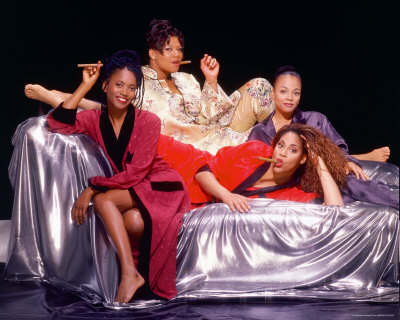
Maxine Shaw “Attorney At Law”, although my academic leaning would later be geared towards the PreMed track, you could not have told adolescent “me” that I could not be as fly, as funny, and as smart as Erika Alexander’s character on the television series Living Single. Sure, I appreciated the other characters on the show, the loony but lovable Sinclair, the seductive Regaine, and the witty and reliable Khadijah; but I saw myself in the assertive and intelligent Maxine. The magic of Living Single revolved around the fact that the show depicted the different types of Black women in our families and social circles, and not just in their personalities, but also their body types and complexions. I would watch every Thursday night, along with the other shows that made up my “Must See TV” line up: Martin and New York Undercover. Here was a collection of diverse Black women all being shown in a positive manner.

Even before Living Single first premiered, at a younger age, I would watch Claire Huxtable on the Cosby Show, and would marvel at how much she looked like my own mother, and was even more amazed by the fact that she carried herself like my mother too. She was educated, intelligent, calm collective, funny, nurturing, but strict! Like my mother, I found Claire Huxtable to be so classy and non-stereotypical. My mother was not the type to roll her eyes, raise her voice, snap her fingers, whip her neck, or use profanity. Like Claire she didn’t have to employ any of those “Angry Black Woman” tactics to be a respected disciplinarian and matriarch.

Then, what about the Spin Off, A Different World, where we were introduced to characters like Julissa, Whitley, Freddy, Denise, Lena James, and Kimberly Reese? Yes, Kim played by Charlene Brown, she was a PreMed major like I wanted to be, and she was the epitome of the statement Black Is Beautiful; with her dark chocolate skin, big eyes, full lips, and shapely hips. I can still remember the episode where those strikingly African features brought her to tears when she had to adorn clothing that reminded her of a “mammy”, only to later peel off those layers and proudly reveal the African beauty that she was.

I reminisce and can’t help but notice that something has happened. Turn on your television and you will have difficulty in finding a Black actress, particularly in a prominent role. You literally have to LOOK for us, and unfortunately when you find us, it will not be in traditional roles or in a positive light. Instead, Black “actresses” and pseudo-celebrities are being casted on surreal “reality” shows shucking for the camera. Gone are the talented and classically trained actresses, they have been replaced by Black women who would rather indulge in stereotypical and derogatory behavior for the world to see. The danger here is that life often imitates fiction (and yes it is fiction, because these shows are highly scripted), and the degenerative behavior will be emulated by viewers; particularly those who are younger and impressionable. Even more problematic is that these images are broadcast around the world, and gives a false view of the American Black woman. It helps to uphold long-standing stereotypes and misconceptions, and even affects the manner in which Black women are treated when they travel abroad.

We can only hope that the pendulum will swing the other way. Perhaps through letter writing campaigns, demands for more inclusive and positive programming, or simply turning the television off. Once again, we can only hope. Maybe the transformation will come about when we begin to pen our own stories and actually support these shows when they air. If not, we will continue to witness the inevitable demise of the Black television actress.

Cherise Charleswell
Eclectic Life Books
September 2012

Cherise Charlseswell is a published author, writer, poet, model, health researcher, contributing writer of Lady Influence; host, producer, & creator of Wombanist Views radio program, creator and lead designer of Eclectic Life, Associate Director of the Los Angeles Black Book Expo, and the California State Representative of the National Black Graduate Student Association. She is currently working on the book projects “The Link Between Food, Culture, & Health in the African Diaspora” and “Walking In The Feminine: A Stepping Into Our Shoes Anthology”.

Dealing With Negative Feelings From Black Co-workers


On a recent episode of The Unwritten Rules webseries, the main character Racey deals with negative attitudes of Black co-workers. She was teased for being a “whack” girl; a play on the racial descriptions white and black. The episode quickly became a hot topic of discussion as viewers expressed differing opinions on the subject.

One viewer stated:
I think the episodes are entertaining, but why do middle and upper middle class black people act as though all poor and working class black people are the same, This is just as bad as the white stereotypes they rail against. Many of the most accomplished ‘black” people came from humble beginnings, acting as though the only thing able to make one successful is money and a “white middle class” prospective seems quite ignorant to say the least. (Youtube viewer 9xxxxxxxxx)

A different viewer stated:
Stereotypes or not…there are black ppl who act like the employees downstairs, and there are black people like Racey. There doesn’t seem to be a biracial experience either, it’s just people who “look” the same, but act differently, the same can be said for white people who act like the family on full house or the family on Honey Boo Boo. People are people, they’re gonna act differently. The problem arises when ppl don’t show social ediquette or one group puts another down because of appearance.(Youtube viewer cycarter25)

Our Legaci question: Do you relate to Racey’s experience as the Black employee from “upstairs”? If so, how did you deal with the situation?

Jessica Ann Mitchell

Jessica Ann Mitchell has a M.S. in Public Relations and a M.A. in Pan-African Studies. Mitchell specializes in multicultural outreach and communications. She also writes on her personal blog at OurLegaci.com. To reach JAM email her at info@OurLegaci.com.

Share the link to this article on Twitter and Facebook and let us know about it. We will give you a shout-out on our next article and we’ll link to your blog or website.

Racism Is So Utterly Ridiculous

Racism Is So Utterly Ridiculous By Jessica Ann Mitchell

In less than the span of a month citizens of the U.S.A. have endured multiple deadly public shootings. These horrific acts of violence took the lives of innocent people who were living their daily lives until they ended up in the wrong place at the wrong time. One of the latest massacres occurred in Wisconsin where a gunman with a 9 mm semiautomatic handgun walked into a Sikh Temple on their day of worship and went on a shooting spree, shooting at men, women and children in the congregation. Six people were killed.


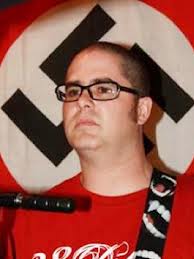
The murderer, Wade Michael Page, was a white supremacist that often hung up swastikas and Nazi paraphernalia. Additionally, he spent is days singing about how much he hates non-whites. But low and behold, when the cameras started running and the tv analysts began to talk with “acquaintances” of Page about this brutal murder, what did they say?

“He was a nice guy.” CNN
“He always seemed happy and smiling.” CNN
“What could have made him snap?” CNN
“Police are still looking for a possible motive.”MSNBC
“Hate Rock groups lure in veterans.” MSNBC

I wanted to throw my shoe at the television screen. I was outraged, but not surprised. When an Arab person commits an atrocity like this, before any investigation takes place it is promoted as an act of terrorism. When a Black person is suspected of committing a crime, it is promoted as “Gang” or “Drug” affiliated before any investigation takes place. But when a white male goes on a shooting spree for the world to see, people somehow find a way to say something good about him. The newscasters stumble upon their words and can hardly bring themselves to say what is the glaring truth to the rest of us. He Was A Terrorist. This Is An Act of Terrorism.

They even went as far as trying to break down his mental state. MSNBC brought on a former hate group member that started saying he joined a hate group because of his sad childhood. That’s when I really had enough. So now they’re making excuses for a murderer. Not just any murderer, but a known white supremacist. He was so well known that civil rights organization, Southern Poverty Law Center had been tracking him for over ten years. But were the police tracking him? No. The B.S. that he might have been lured in because of his rough past is overwhelming.

If so called Muslim Terrorists and Black Criminals do not get this same “psycho” analysis, why are they doing it for this bottom barrel hideous murderer, Wade Michael Page? I’ll tell you why. It is because America still refuses to believe that white men are capable of acts of terrorism. They don’t want to believe it because it would force them to be held accountable. It would also force America to come to grips with the overwhelming truth. Criminal behavior is not racially based. The fact that people of color have been arrested for crimes means nothing because the police are not stalking and paying the same amount of attention to white communities. Thus, we have this current situation where Wade Michael Page can be a member of a hate group, openly sing hateful lyrics, express his deep disdain for anyone non-white to hate group scholars and is still free to roam free with no surveillance murdering 6 innocent people. And they are still “looking” for a motive.

Racism is so utterly ridiculous.

Jessica Ann Mitchell

Jessica Ann Mitchell has a M.S. in Public Relations and a M.A. in Pan-African Studies. Mitchell specializes in multicultural outreach and communications. She also writes on her personal blog at OurLegaci.com. To reach JAM email her at info@OurLegaci.com.

Share the link to this article on Twitter and Facebook and let us know about it. We will give you a shout-out on our next article and we’ll link to your blog or website.