“How could you be afraid of a little boy?”

Toni-Morrison

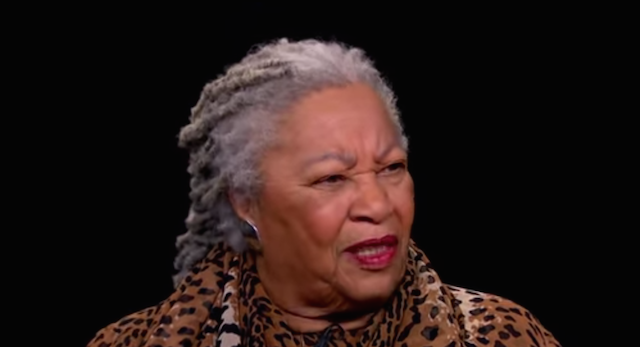
In an interview with journalist Charlie Rose, Toni Morrison discussed police brutality and violence against African Americans. She asked a series of questions that point to a key issue in America, the criminalization of Black skin and the white supremacist values cloaked in cowardice that leads to the deaths of so many unarmed Black victims.

She asked:

How are you afraid of a man running away from you?

How are you afraid of someone standing in the grocery store, on the phone with a toy gun, that you could buy in the store?

How could you be afraid of a little boy?

And who are these people calling who call 911? Who are they?

You look out the window and you see a kid with a toy gun and you get on the phone?

Her usage of the term “cowardly” speaks volumes in describing how institutionalized the dehumanization of Black people continues to be.  The so called “fear” is based on creating a worldview of African descended people as less human in terms of intellectual prowess and super-human in terms of physical strength (especially when referring to criminality). This animalistic perspective has been at the center of anti-Blackness for centuries. Examples include when “scientists” debated the brain size of Blacks and religious leaders debated whether or not Africans had souls in order to deem slavery justified. It was the central theme of The Birth of A Nation, the 1915 propaganda film that overtly warned white Americans that free negros were a threat to society.

This would explain why someone could believe they have a logical explanation for shooting a person running away from them or gunning down a child and refusing to provide the child with medical attention.

They truly believe this unarmed person is “dangerous.” Officer Darren Wilson even described Mike Brown as a “demon” with the strength of WWF wrestler “Hulk Hogan.” That’s the thought process.

Super-human

Violent

Animalistic

It never changes.

Though Jonathan Capehart imprudently asserts the mantra “hands up don’t shoot” was built on a lie, the premise behind Mike Brown’s death follows the same superhuman negro/must be put down like an animal aggression trajectory. Whether or not his hands were raised, does not alter the key issue behind why Brown’s death was deemed justified. Simply put, he was perceived to be another dangerous negro.

Through this lens:

Mike Brown wasn’t a 17-year teenager. He was a raging gorilla loose on the streets.

Rekia Boyd was not an innocent bystander. Her very presence was violence as a potential threat.

Tamir Rice wasn’t a little boy. He was a roaming gunman looking for a victim.

Aiyana Stanley Jones wasn’t a sleeping little girl. She was a member of a familial mob the required brute force at first encounter.

With each death of an unarmed Black person, especially at the hands of police or people in assumed positions of societal authority, the cowardice and the fear is a reassertion of white supremacist beliefs, even if the victim dies at the hands of a Black police officer. Many members of mainstream media happily overlook this. Just as women can be patriarchal misogynists, Blacks can internalize Black inferiority and white supremacist beliefs.

Police have been given the authority to uphold laws and societal norms. While at the same time, the collective fear of Blackness operates as a U.S. societal norm. Thus the deaths of unarmed Black victims ensues, regardless of the ethnicity of the officer. When this occurs, the officers are then protected by the society that continuously protects and rebirths this norm.

Within the communities of the victims, they are seen as they are…human beings deserving of protection.

Mike was a teenager walking.

Rekia was a teenager standing.

Tamir is a 9-year old playing.

Aiyana was a 7-year old sleeping.

Amongst their communities, these victims are seen through a different lens..the lens of humanity. So when Toni Morrison asks, “How could you be afraid of a little boy?”

This question is very layered and could be interpreted as, “When will you see the little boy that I see?”

When will the lens be corrected?

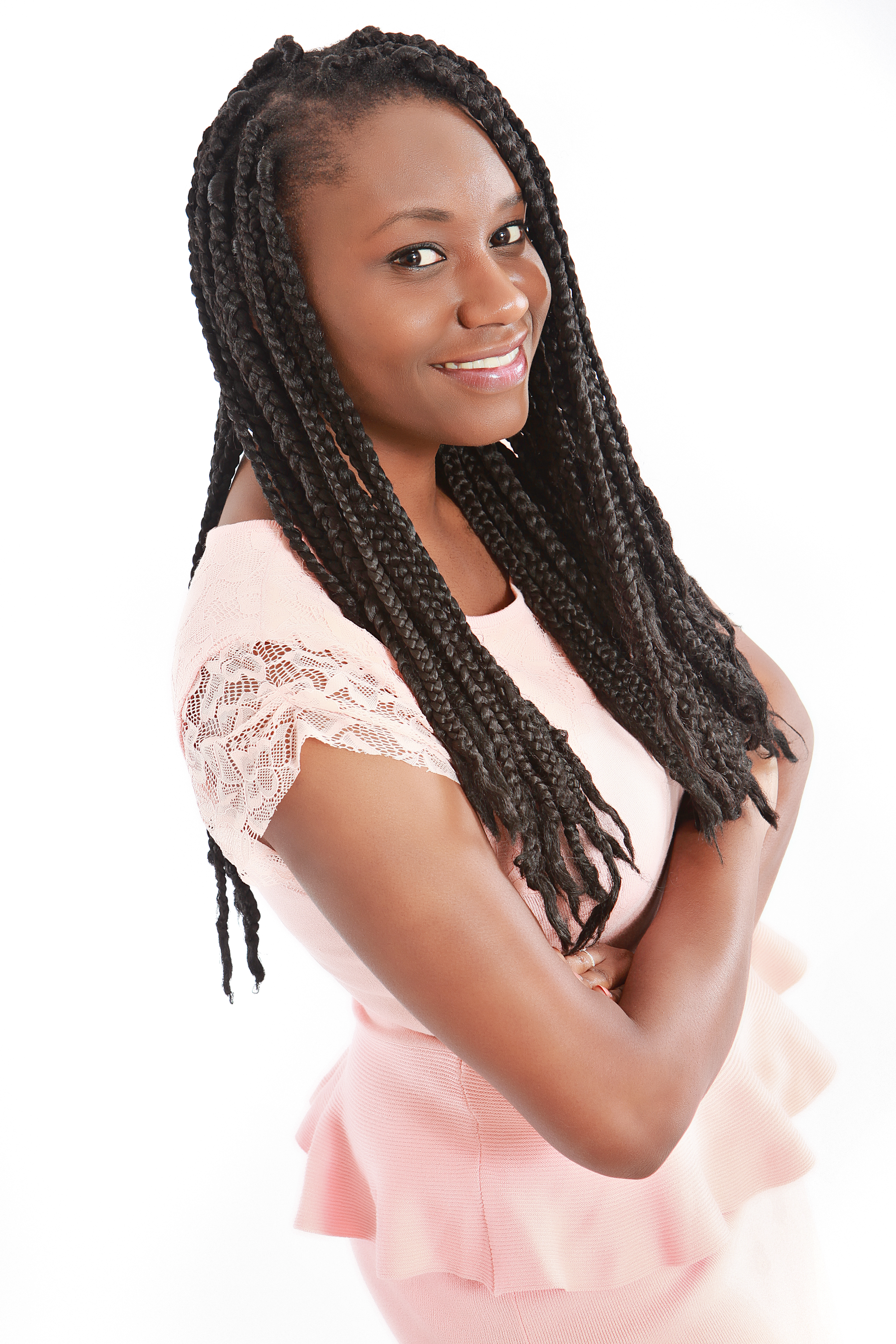
JamAllen2-nb-smallJessica Ann Mitchell is the founder of OurLegaci.com & BlackBloggersConnect.com.
To reach JAM, email her at OurLegaci@gmail.com.

Follow Jessica @TweetingJAM.
Follow OurLegaci at Facebook.com/OurLegaci.


Watch Toni Morrison’s interview below:

Breaking Down Privilege, Light Skin and Beyond

Precious-2
Precious wasn’t a 110-pound light skinned girl for a reason.

As NPR described, “the writer known simply as Sapphire, tells the story of a dark-skinned, heavy-set, illiterate African-American girl who has survived multiple pregnancies by her father.” In other words, the character Precious was created by Sapphire to depict one of the most rejected, unprotected, less privileged demographics.

In an interview, Sapphire explained,

I wanted to show that this girl is locked out through literacy. She’s locked out by her physical appearance. She’s locked out by her class, and she’s locked out by her color.

There were similar reasons behind the creation of  characters Pecola Breedlove in Toni Morrison’s The Bluest Eye and Celie in Alice Walker’s The Color Purple. Because of denied privileges to women fitting their characteristics, Black women writers felt a need to share these stories. Three things these legendary characters all had in common: poverty, dark skin and sexual abuse. This was not an accident.

It has been known for a very long time that people with dark skin have often been treated with the utmost disdain and abuse. This is not a new discovery. Yet still, a few of my readers had a digital meltdown when I discussed light skin privilege.

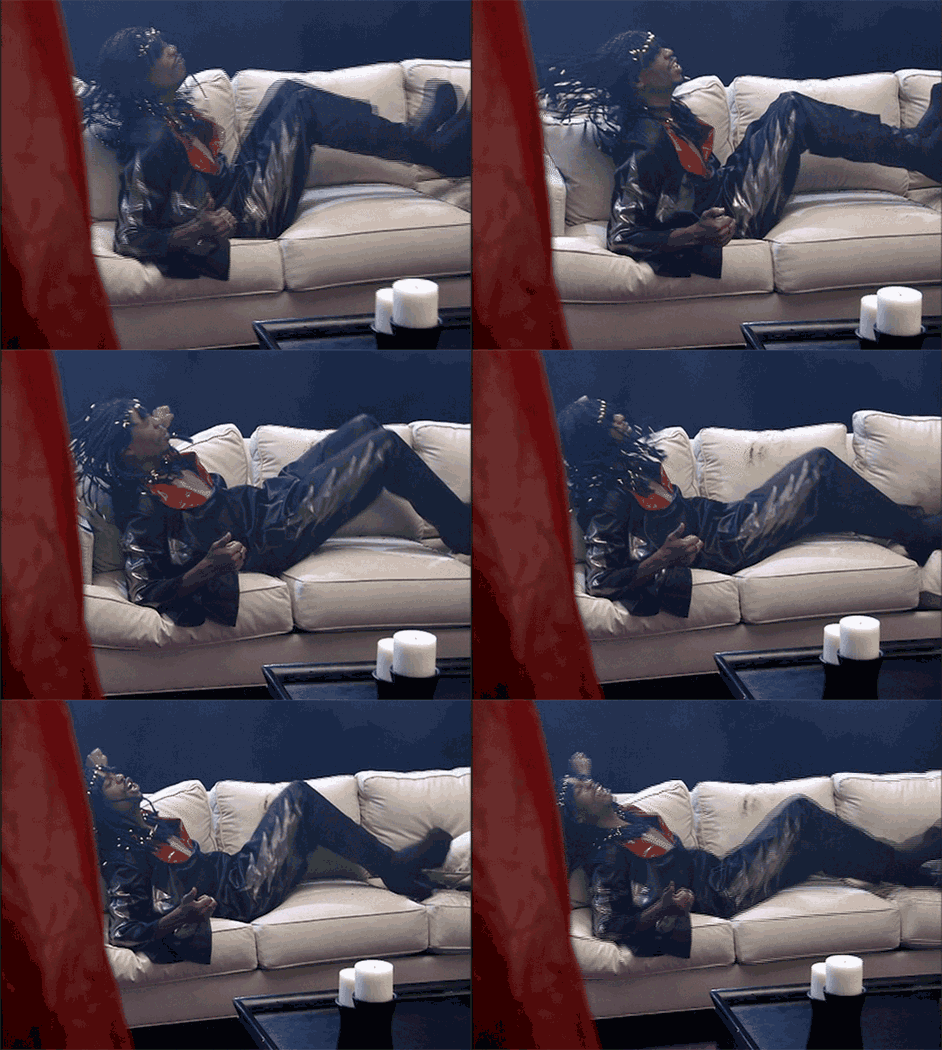
Dave-Chapelle-Rick-James

At first I was surprised but then I remembered how difficult recognizing privilege can be. After all, a huge component of privilege is not realizing it exists.

So I’m going to rewind and thoroughly explain what privilege is, how it works and who has it.

It wasn’t until I was older that I realized I had privilege. Even as a little girl, when a white class mate (afraid of my Blackness) refused to come near me, I had privilege. Even in middle school when a group of Black girls compared me to a gorilla, I had privilege. Even in the 9th grade, when I was bullied to the point of crying in class by other Black kids because of my permed but still nappy hair, I had privilege.

It wasn’t until I was older, when I saw some of these same people and their lives, that I realized the privilege I had. I grew up in a two parent household. Both of my parents were college graduates. The concept of college was never a question. Never had I ever been asked, “Are you going to college?” It was a given. Not only was I going, I had already begun writing, playing instruments, learning modern dance, and performing in theater productions. When I wanted to do something, my mother wrote a check.

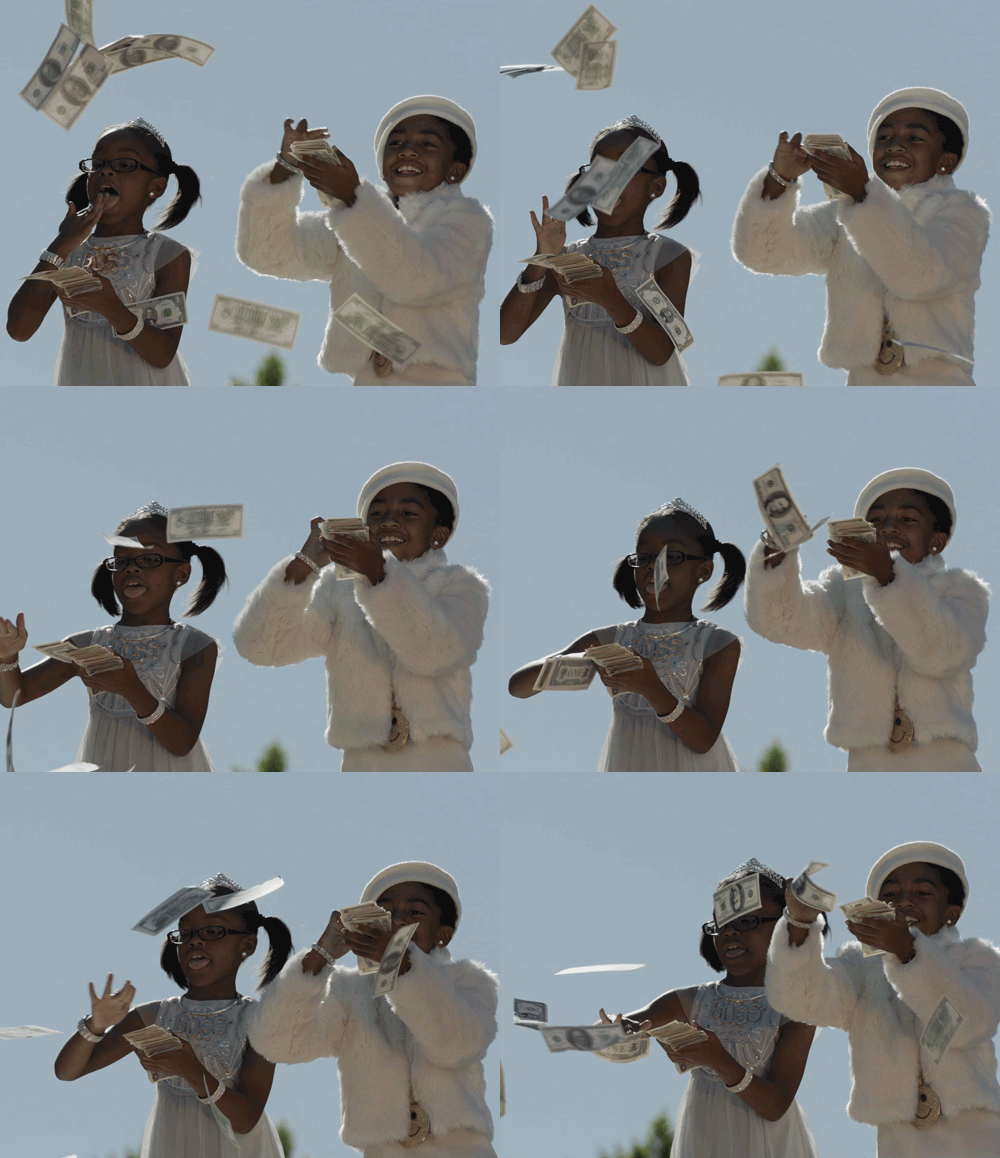
Black-ish-money

We were not rich, but she was able to pay for every school activity I wanted to do.

My mother was very busy, but still had time to go over my school work. During the summer, I would get mad at her for forcing me to complete workbooks before I could go out and play. I didn’t know that any of this was a privilege. It was always assumed that everybody was able to do all of these things. In my mind, everybody’s mom read them stories, gave them books, made home-cooked dinners every night, and helped them apply for financial aid to attend college.

I later learned that some of those same people that bullied me so badly, were living in abject poverty. Baldwin County, Ga has a poverty rate double the national average. Many of their mothers were working overtime in service and fast food industries trying to make ends meet. I realized that those playground wars, where I had been called such horrible names, were their own attempts to feel better about their status in the world. If they could succeed in making someone else feel the way they felt, then they could feel powerful (even if it only lasted for a few hours.)

If you had told me at the time I was being called a gorilla, that I had privilege, it would have been hard for me to believe you. I would have said, “But my feelings are hurt, what privilege?”

It wasn’t until my senior year of high school, when so many Black kids failed to pass the Georgia High School Graduation Test, that I started to realize the disparities. It wasn’t until I saw members of my senior class receiving a certificate instead of a diploma that I realized what happened. Their lives were cheated, opportunities had been denied and it was systematic. I recalled how certain students were automatically put on the technical track while others were put on the college track. The state of Georgia had predetermined who was going to college and who wasn’t.

But not me. I was going to college. I was going to leave and study whatever I wanted to. In high school I worked at McDonald’s, Sonic and Papa John’s. Quitting these jobs was never a make or break situation for me.

half-baked-job-quit

I had no problem saying, “I quit,” because, I was college bound. Fast food or retail wasn’t going to be my future. Hence my confusion when I saw other students dropping out of high school once they finally got their highly coveted job at Walmart.

Later in college, I saw how girls that were darker than me in skin tone were treated by men. I saw first hand how their deep brown skin was used a prerequisite for excessive abuse or utter disregard. I’ve seen their love interests dodge them and pursue me or other girls. I’ve also seen how they were treated by faculty members and staff. They were under constant attack. My lighter skinned friends also faced hardships, being not considered Black enough or having to deal with people’s assumptions about them. But what our other friends were going through was undeniable.

We were also treated differently according to body type.

Coming-To-America

Dark skin plus thicker body equaled additional problems. It was during this time that I also realized thin privilege. And yes, that’s a real thing. I had never thought of this before either, but it existed and I benefited from it.

Later I learned about abelism and the privilege I have as a person with no physical or developmental disabilities.

So here I am a Black middle class, 2nd generation college graduate, with two educated parents, with no known disabilities, that wears a size medium. I have a lot of privilege that other people don’t have. That doesn’t mean I’ve never experienced racism or bullying.

So when I wrote about the documentary Light Girls, referencing its avoidance of privilege, the commentary was out of a real need to address historical facts that affect the Black community. Light skin privilege is real. It has been studied and documented throughout history. It is a subsidiary of White privilege, where people of hues closer to white on the racial hierarchy are afforded with certain advantages. Over the past 300 years, it has become a part of the fabric of Western society.

Here are the 6 most common responses when discussing Light Skin Privilege:

draya-bye-felicia

1. But I’ve experienced racism. I don’t have privilege.

2. But other Black people picked on me because I’m light skinned. I don’t have privilege.

1-2: Your concerns are valid. However, it needs to be remembered that this issue isn’t about individual situations or circumstances. Light skinned privilege isn’t about anybody’s assumptions or hurt feelings. Race is a social construct that was created to sustain a hierarchy. In the Western world “whiteness” has been used as a measuring stick for human value. People of lighter hues have been treated with less “disdain” than other Black people. This is a historical fact, not an idea or assumption. It doesn’t mean that light skinned people never face racism or colorism. 

3. But I went to prison or had some other horrible experience in life. I don’t have privilege.

Light skin privilege does not mean that people labeled as light skinned never experience hardships or adversity. However, it does mean that at times, certain hardships will have less of a blow if your skin tone is lighter. For instance, a recent study showed that among Black people in prison, those perceived as light skinned received shorter sentences than those perceived as dark skinned.

4. Stop making assumptions about my character. I don’t have privilege.

Privilege isn’t about making assumptions on someone’s character. People need to understand the concept of light skin privilege is not an indictment on light skinned people, but instead an indictment on how racial hierarchies operate. Challenging this issue, is necessary in order challenge the false concept of white supremacy.

5. I don’t believe it. Show me the receipts! Where is this privilege?

Whitney-Receipts-1

For all naysayers, part of “privilege” is having the ability to not “see” the problem, because it has become so normalized.

Here are the requested receipts:

http://www.theroot.com/articles/politics/2011/07/color_bias_do_lightskinned_blacks_get_shorter_sentences.html

http://www.multiculturaladvantage.com/recruit/diversity/bias/Skin-Tone-More-Important-Than-Educational-Background-African-Americans-Seeking-Jobs.asp

http://www.huffingtonpost.com/2014/01/14/skin-tone-bias_n_4597924.html

http://www.theatlantic.com/education/archive/2014/01/study-people-associate-education-with-lighter-skin/283086/

http://thegrio.com/2014/01/16/study-light-skinned-black-men-perceived-as-better-educated/

http://www.cnn.com/2010/US/05/13/doll.study/

http://jezebel.com/368746/study-men-are-more-attracted-to-women-with-lighter-skin

http://www.sentencingproject.org/detail/news.cfm?news_id=1136

6. Why are you talking about this? What good does it do? This is just divide and conquer.

Talking about Light Skinned Privilege does not promote “divide and conquer.” Ignoring it does.

Divide and conquer can only exist in a state of confusion. Right now, confusion exists because we haven’t learned how to effectively pin point and deconstruct the inner workings of racial oppression. By rejecting the privilege of light skin or at least calling it out, we are also rejecting the concept of white supremacy. We are saying that all Black lives are just as valuable as the others. This same thing can be said we we reject homophobia and sexism in our communities. We’re saying all Black lives matter the same, despite our perceived differences.

Last but not least

Part of the normalization of privilege is not being aware it exists. Even as a former landlord happily called me her “new pitch black friend,” I had privilege at various levels. In other words, this isn’t about your or my hurt feelings. Transforming society hinges upon our ability to proactively breakdown privilege: white, light skinned, class, economic and beyond.

In the case of racism and colorism, recognizing light skin privilege is a step towards understanding how to dismantle white privilege and Black oppression. The recognition of light skin privilege is not an indictment against light skinned people, it’s an indictment on the currently normalized role of false white supremacy and how it plays out in our lives.

JamAllen2-nb-smallJessica Ann Mitchell is the founder of OurLegaci.com. Email JAMAiwuyor@gmail.com.

Follow Jessica @TweetingJAM.
Follow OurLegaci at Facebook.com/JAMAiwuyor

Light Girls, When Documentaries Get It Wrong

darkorlight
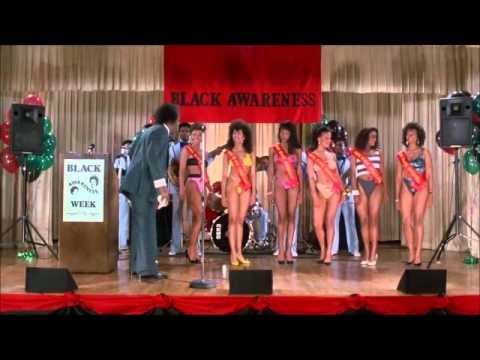
A scene from Spike Lee’s School Daze

“If you love yourself, don’t watch Light Girls.”

This is what I told a dear friend of mine after watching the documentary. The film was a sequel to Dark Girls, a documentary about colorism in the African American community. Light Girls was supposed to show the other side of the coin and share the views of women that society labels as “light-skinned.” Instead, it turned into a living rendition of light skin vs. dark skin battles paralleling the epic scenes from, School Daze. Why the disdain? There isn’t enough time to cover everything but here are my top sources of contention with Light Girls.

1. The Denial of Light Skin Privilege

Light Girls perpetuated the stereotype that dark-skinned girls are jealous, angry, and violent. Rarely was there any nuanced or guided discourse behind light skin privilege. In fact, the topic was carefully avoided. If not for Soledad O’Brien’s brief acknowledgment that her color helped her career, one would think that light skin privilege is a figment of evil dark-skinned imagination.

This is mostly because a discussion surrounding white privilege was painfully absent from most commentary. Light skin privilege exists as a subsidiary of white privilege. This is not a concept made up out of simple jealously. We cannot discuss one without the other. Light skin privilege is when people with skin color closer to what is associated with phenotypically “white features” are granted certain privileges relative to superiority over darker-skinned people.

Consequently, light-skinned women get lighter jail sentences, are more likely to get hired for a job, and are even disciplined differently as children. These are just a few examples backed up by data.

Understand that acknowledging light skin privilege is not about finger-pointing. It’s about understanding racial hierarchies determined by structures of white superiority and the role that it plays in Black lives.

If we deny the existence of light-skin privilege, we deny the existence of white privilege.

2. Black Men are not the gatekeepers of Black women’s value

The documentary spent an agonizing amount of time featuring the scattered thoughts of random Black men as if Black male scholars were unavailable. Dr. Steve Perry was very much alone in his contribution to the discussion. There were so many cringeworthy moments where men discussed their color “preferences” like a bunch of drooling 8th graders. I thought to myself, “Are we in middle school?” Along this line, the film completely ignored the possibility of Black women in same-sex relationships. The film placed the value of Black women on the heterosexual, patriarchal male gaze. One commentator even exalted the faulty belief that dark-skinned Black women are better than light-skinned women because they will do more for you. This type of unchallenged thinking reaffirms stereotypes of darker-skinned Black women being built for work and lighter-skinned women existing solely for the purpose of being a trophy.

3. The assertion that light-skinned girls are molested or raped more than dark-skinned girls is disturbing

Two commentators in the film recalled being molested and raped. One of them even boldly stated that light-skinned girls are a prime choice for pedophiles. My mouth dropped open. “Is this really happening?” The film just continued onto the next topic.

To leave such an assertion unchallenged or glossed over is grossly irresponsible. Not to discredit her personal experiences, but that assertion deserved a very nuanced follow-up discussion.  No way should this have been included without expert analysis. It was cruel and damaging to the film participants and the audience.

Yes, pedophiles have varying preferences. They often take advantage of the more vulnerable segments of society. Yes, light-skinned girls get raped, molested, and sexually trafficked. However, because dark-skinned girls are often less championed for, dark skin is often a determinate in sexual abuse and sex trafficking.

Society’s refusal to protect dark-skinned girls is what lead to Toni Morrison’s decision to create the character, Pecola Breedlove. Pecola who was both sexually abused and ignored, continually prayed for blue eyes believing it would be a type of salvation from the societal ills associated with her dark-skinned Black identity. This is not a contest on who is sexually abused more.

This is more about understanding the power dynamics of sexual abuse and how it intersects within racial hierarchies. It deserved a fuller conversation.

4. Who are these people?

Raven
Raven-Symoné

Apparently, every person with an agent made it into this film except the leading scholar on the one-drop rule, Yaba Blay. It was as if they carefully avoided her input. And it showed. She was featured on Soledad O’Brien’s Who Is Black In America. You can learn more about Yaba Blay’s work here.

Light Girls turned out to be a mess of a documentary because it was filled with commentary from a slew of third-tier comedians and entertainers. Additionally, the film included remarks from pseudo doctor Farrah Gray. Of course, there were also a few notable scholars and commentators. Michaela Angela Davis, Goldie Taylor, Jamilah Lemieux, and Soledad O’Brien were among the slim pickings of truthful and knowledgeable commentary. Yet, by the end of the film, many of them were also tweeting disgust concerning what the film had become. I’m still baffled by Raven Symone’s appearance as well, considering her ideas on “colorless” as an identity.

5. It’s not about jealousy

I shudder at the thought of having to say this but dark skin girls are not all lurking in the bushes waiting to ponce on the nearest light skinned person. This notion is ridiculous but was highly purported throughout the documentary. We’re not all crying in a corner somewhere filled with rage and jealousy. It reasserted the false narrative that all dark skinned girls are unwanted, hateful, mean and violent. The film made it look like we were all derivatives of the boogeyman.

Rarely did the documentary truthfully discuss playground wars and issues of Black children in general calling each other “too Black,” “ugly Africans,” or “high yellow” and using these learned internalized sentiments in hopes of feeling more superior to each other in the face of constant societal dehumanization.

It’s all a part of white supremacy and learned internalized racial hierarchies,  not simplistic hatred or jealousy.

6. Sisterhood Does Exist

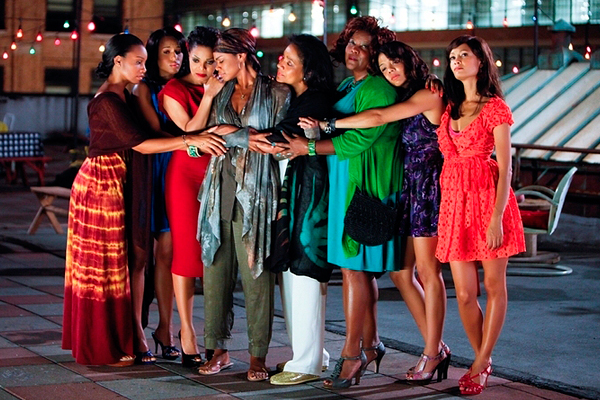
for-colored-girls

There are issues of colorism throughout our society. However, this belief that Black women in predetermined skin-tone categories are genetically predisposed to hate each other is down right preposterous. As I’ve written before, it’s important to remember that there is sisterhood among Black women that has historically been a source of safety and empowerment. It has thrived, even in the midst of racism and colorism. This sisterhood bond continues to be the salvation for many Black women in need of support and love.

7. Colorism cannot be changed through positive thinking 

Pharrell-Happy

At one point “Dr.” Farrah Gray asserted that light skinned and dark skinned girls simply need to learn to get along and stop “blaming the white man.” Here goes the condescending, “You girls stop fighting,” speech. Other commentators docilely asserted we simply needed to think positive, look in the mirror and say, “I’m beautiful.” Then all will be healed. It reduced the entire subject to Black women being just silly or petty, which is not the case.

No pep talk in the world is going to cure colorism. The film put the onus of colorism on the literal and proverbial backs of dark skinned girls. As if to say colorism is a personal problem, not a real systematic lived experience. This teeters along the line of saying racism is simply an imagined Black problem that will go away if we just think happy thoughts and be New Black like Pharrell.

8. In conclusion

To be fair, the film had a few positives. For instance, at one point they tried to present a global perspective of colorism. This is helpful in highlighting the fact that colorism is not just a Black issue. The affects of slavery and colonization have been felt worldwide. Also, a film about how colorism affects light skinned girls is necessary and efforts of the film are appreciated. Still, the film did what most things in mainstream society do. Light Girls continued the devaluation of Black life by oversimplifying key issues and not providing a thorough analysis for deconstructing the core problems…structural racism and patriarchy.

JamAllen2-nb-smallJessica Ann Mitchell is the founder of OurLegaci.com & BlackBloggersConnect.com.
To reach JAM, email her at JAMAiwuyor@gmail.com.

Follow Jessica @JAMAiwuyor.
Follow OurLegaci at Facebook.com/JAMAiwuyor.

An Open Letter To Joe Scarborough: This Is More Than About Mike Brown

Scarborough

Somebody needs to tell me when Michael Brown has been chosen as the face of Black oppression…There are so many great people to embrace as heroes in the Black community. Deciding that you’re going to embrace a guy that knocked over a convenient store, and then according the grand jury testimony acted in ways that would get my children shot…that’s your hero?” – Joe Scarborough, MSNBC Morning Joe

Dear Joe Scarborough,

The systematic and perpetual oppression of Black Americans is not an issue to be toyed with. Let’s be clear here. This is not just about Mike Brown. Mike Brown, Aiyana Jones, Rekia Boyd, Oscar Grant, Trayvon Martin, Eric Garner, Tamir Rice, John Crawford and so on are examples of how law enforcement is allowed to become judge, jury and executioner when it comes to Black lives. The anger and fury expressed by Black Americans is based on perpetual violence at the hands of law enforcement. To you, the police protect and serve but many of us need protection from the police. The denial of your privilege prevents you from acknowledging this.

In our lives, the jury decision not to indict does not suddenly absolve Darren Wilson of Mike Brown’s death. Historically U.S. jury decisions do not sway in favor of protecting Black lives. This recent decision is just another painful reminder of that fact.

Furthermore, the narrative that victims must be flawless in order to have justice is not only absurd but dehumanizing. The moment a Black body touches the ground, media is clamoring to search their records. Even 12-year-old Tamir Rice was not exempt.

This is about Black lives being threatened by law enforcement on a daily basis. All that is needed is a story/narrative which depicts the person as threatening. Suddenly, by invoking “fear” Black deaths are justified with all minds cleared.

The “I was afraid of a Black person” narrative is allowing murderers to run free in the name of court-justified trepidation. The Rosewood Massacre of 1923 is an example of the horrors Black Americans have faced with court refusal to prosecute their murderers.

We’ve been dealing with this for a very long time.

Civil rights leader and journalist Ida B. Wells spent years documenting lynching’s across America, bearing witness to crimes that would go unpunished. Unfortunately the words from her speech Lynch Law In America given in 1900 still ring true 114 years later.

In her opening remarks, Wells gives a chilling overview that is painfully familiar,

“Our country’s national crime is lynching. It is not the creature of an hour, the sudden outburst of uncontrolled fury, or the unspeakable brutality of an insane mob. It represents the cool, calculating deliberation of intelligent people who openly avow that there is an “unwritten law” that justifies them in putting human beings to death without complaint under oath, without trial by jury, without opportunity to make defense, and without right of appeal.”

Wells continues, “The thief who stole a horse, the bully who ‘jumped’ a claim, was a common enemy.”

The narrative of Mike Brown “the bully” or Mike Brown “the thief” is so eerily familiar. The storyline had already been created for Darren Wilson to utilize.

Wells also states, “In fact, for all kinds of offenses – and, for no offenses – from murders to misdemeanors, men and women are put to death without judge or jury; so that, although the political excuse was no longer necessary, the wholesale murder of human beings went on just the same.”

Approximately 114 years later, Darren Wilson still had the privilege of making himself judge, jury and executioner with no penalty. In fact, he’s become richer for it.

We are still living under the tyranny of America’s unwritten Lynch Laws. We’re then blamed for our own deaths for failing to respond properly to slave codes.

In the words of Jesse Williams, “We are not making this up.”

When we scream Mike Brown’s name at protests, we are recognizing him as a human being. We are crying out to the world, that our brother has been slain.

See here the blood that was spilled.

See here his mother’s tears.

See here he was just a boy that deserved to live like all the other boys.

As we recognize his humanity, Darren Wilson calls him a “demon” and compares him to wrestler “Hulk Hogan.” Referring to Mike as if he were some wild beast to be tamed. The St. Louis Police Department called him a “myth.” Even the New York Times said he was, “No Angel,” as if angel status was a prerequisite for living. This is also a reminder that for African Americans, mainstream media is often complicit in perpetuating stereotypes and fear mongering narratives surrounding our lives.

So no, we’re not making Mike Brown a hero. We’re asserting his humanity because if we don’t do it no one else will. His life represents our lives.

We yell Mike Brown’s name, shut down malls, boycott stores, block highways and chain ourselves to train stations because there is no other option for us.

Civil Rights icon Fannie Lou Hamer said the unforgettable words, ‘I’m sick and tired of being sick and tired.” That meant she refused to stop working until the world was changed. As the children of her legacy we are going to do the same thing. We don’t want to die and have the world think it justified.

Mike Brown was human and he deserved to live. Whether you think he was a choirboy, college student, or thief, Darren Wilson had no right to take his life. Darren Wilson had no right to make himself judge and jury. Darren Wilson would have never killed Mike Brown if he weren’t terrorizing him in lynch law fashion, for walking down the street. And we know this, because we have lived this.

So yes, Joe Scarborough. You should get used to hearing the names Mike Brown, Aiyana Jones, Rekia Boyd, Trayvon Martin, Eric Garner, Tamir Rice, John Crawford and so on. Because we’re not going to let you or anyone else in the world forget them. We are not trash to have our lives thrown away, forgotten simply because our story no longer amuses you.

Black lives matter.

Sincerely,

Jessica Ann Mitchell

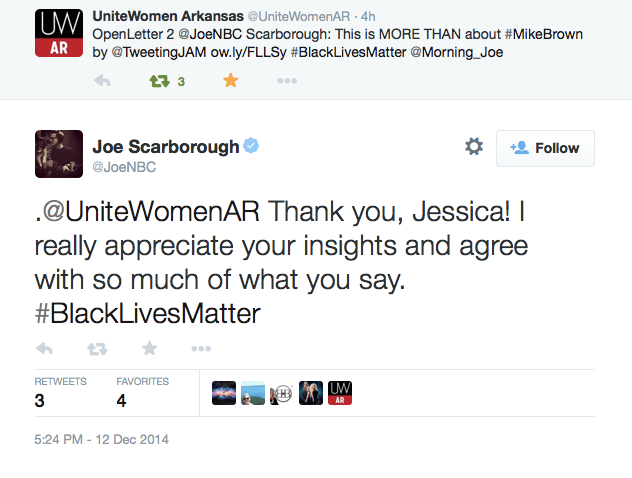
Update: Joe’s Response

Joes-Response


JamAllen2-nb-smallJessica Ann Mitchell is the founder of OurLegaci.com & BlackBloggersConnect.com. To reach JAM, email her at OurLegaci@gmail.com.

Follow Jessica @TweetingJAM.
Follow OurLegaci at Facebook.com/OurLegaci.

33 Brilliant Quotes From Legendary Black Women Writers

Ntozake-Shange-Black-Women-Writers
Ntozake Shange

Growing up as a Black girl writer, various books and writers sustained me. One such writer was Zora Neale Hurston. I lived by her. Her robust unveiling of Black human experiences were the literary nourishment to my young mind. I read over and over again her short story, The Gilded Six Bits.  It was like I was there. I could feel the spirited home of Missie May and Joe. I could taste the molasses kisses Joe bought for their new born baby boy. I was literally wrapped up in the entire story.

Yet what intrigued me the most about Zora as a writer was her free spirit. As a folklorist and anthropologist, she saw the world and soaked up its wonders. This captivated me.  As I grew older, the list of Black women writers that ruled my universe expanded. In college I was enamored with Ntozake Shange, then in graduate school mesmerized by June Jordan. They all knew a part of my soul, they all held pieces of me in their words. It was a long running connectedness. With each page turned, I saw myself.

When it seemed like the world had turned against me or had become lopsided, they turned it right side up again. Through their writings they let me know, that the things I’m seeing and experiencing are real. Most of all I learned that I had the right to tell my truth, no matter how often its existence may be denied and its fullness unsuccessfully subdued.

This edging out is a tradition of oppression, while the ability to rise even in its midst is a signature testament to the dynamic tradition of literary inspired liberation through Black women writers.

Here are some quotes from legendary Black women writers that can be used as continual tools for learning, growth, confidence and fearlessness.

1. “It’s no use of talking unless people understand what you say.” -Zora Neale Hurston

2. “No black woman writer in this culture can write “too much.” Indeed, no woman writer can write ‘too much’…No woman has ever written enough.” – bell hooks

3. “I’m a firm believer that language and how we use language determines how we act, and how we act then determines our lives and other people’s lives.” -Ntozake Shange

4. “When I dare to be powerful, to use my strength in the service of my vision, then it becomes less and less important whether I am afraid.” – Audre Lorde

5. “We write for the same reason that we walk, talk, climb mountains or swim the oceans – because we can. We have some impulse within us that makes us want to explain ourselves to other human beings.” – Maya Angelou

6. “I think writing really helps you heal yourself. I think if you write long enough, you will be a healthy person. That is, if you write what you need to write, as opposed to what will make money, or what will make fame.” -Alice Walker

7. “If there’s a book you really want to read, but it hasn’t been written yet, then you must write it.” -Toni Morrison

8.  “The ability of writers to imagine what is not the self, to familiarize the strange and mystify the familiar, is the test of their power.” -Toni Morrison

9. “Many stories matter. Stories have been used to dispossess and to malign. But stories can also be used to empower, and to humanize. Stories can break the dignity of a people. But stories can also repair that broken dignity.” ― Chimamanda Ngozi Adichie

10.  “Everything I’ve ever done, in the writing world, has been to expand articulation, rather than to close it.” – Toni Morrison

11.  “Challenging power structures from the inside, working the cracks within the system, however, requires learning to speak multiple languages of power convincingly.” – Patricia Hill Collins

12. “The single story creates stereotypes, and the problem with stereotypes is not that they are untrue, but that they are incomplete. They make one story become the only story.” ― Chimamanda Ngozi Adichie

13. “Writing can be a lifeline, especially when your existence has been denied, especially when you have been left on the margins, especially when your life and process of growth have been subjected to attempts at strangulation.” ― Micere Githae Mugo

14. “Sure you can do anything when talking or writing, it’s not like living when you can only do what you doing.” ― Sapphire

15. “A writer should get as much education as possible, but just going to school is not enough; if it were, all owners of doctorates would be inspired writers.” – Gwendolyn Brooks

16. “First forget inspiration. Habit is more dependable. Habit will sustain you whether you’re inspired or not. Habit will help you finish and polish your stories. Inspiration won’t. Habit is persistence in practice.” ― Octavia E. Butler

17. “I write for young girls of color, for girls who don’t even exist yet, so that there is something there for them when they arrive. I can only change how they live, not how they think.” -Ntozake Shange

18. “Let woman’s claim be as broad in the concrete as the abstract. We take our stand on the solidarity of humanity, the oneness of life, and the unnaturalness and injustice of all special favoritism, whether of sex, race, country, or condition. If one link of the chain is broken, the chain is broken.” – Anna Julia Cooper

19. “I don’t want to be limited or ghettoized in any way.” -Sista Soulja

20. “Discomfort is always a necessary part of enlightenment.” ― Pearl Cleage

21. “Words mean more than what is set down on paper. It takes the human voice to infuse them with deeper meaning.” -Maya Angelou

22. “You don’t start out writing good stuff. You start out writing crap and thinking it’s good stuff, and then gradually you get better at it. That’s why I say one of the most valuable traits is persistence.” ― Octavia E. Butler

23. “Many times, what people call ‘writer’s block’ is the confusion that happens when a writer has a great idea, but their writing skill is not up to the task of putting that idea down on paper. I think that learning the craft of writing is critical.” -Pearl Cleage

24. “Shakespeare wrote about love. I write about love. Shakespeare wrote about gang warfare, family feuds and revenge. I write about all the same things.” -Sister Souljah

25. “Putting words on paper regularly is part of the necessary discipline of writing.” -Pearl Cleage

26. “Poetry is the lifeblood of rebellion, revolution, and the raising of consciousness.” -Alice Walker

27. “You must be unintimidated by your own thoughts because if you write with someone looking over you shoulder, you’ll never write.” ― Nikki Giovanni

28. “Writers don’t write from experience, although many are hesitant to admit that they don’t. …If you wrote from experience, you’d get maybe one book, maybe three poems. Writers write from empathy.” ― Nikki Giovanni

29. “There is always something left to love. And if you ain’t learned that, you ain’t learned nothing.” -Lorraine Hansberry

30. “People who want to write either do it or they don’t. At last I began to say that my most important talent – or habit – was persistence. Without it, I would have given up writing long before I finished my first novel. It’s amazing what we can do if we simply refuse to give up.” ― Octavia E. Butler

31. “People wish to be poets more than they wish to write poetry, and that’s a mistake. One should wish to celebrate more than one wishes to be celebrated.” –Lucille Clifton

32. “Poetry is a political act because it involves telling the truth.” ― June Jordan

33. “We have to talk about liberating minds as well as liberating society.” -Angela Davis

Spread The Word. Share This Post!

IMG_0054-ZF-7906-35913-1-001-006Jessica Ann Mitchell is the founder of Our Legaci Press and the National Black Cultural Information Trust. To reach JAM, email her at jamaiwuyor@gmail.com. Follow Jessica @JAMAiwuyor.

We Stand On The Edge Of The World And Dance

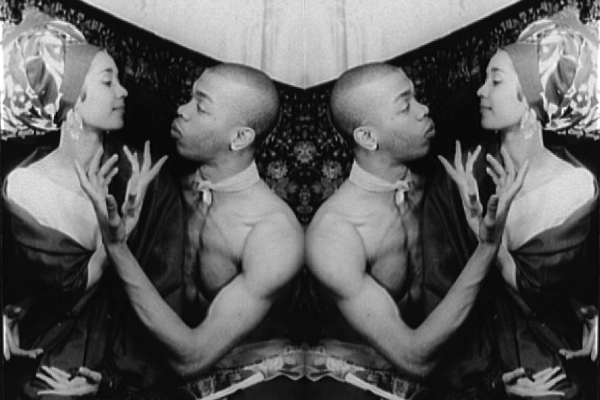
Geoffrey And Carmen Our Legaci
Geoffrey Holder and Carmen de Lavallade – Library of Congress – Carl Van Vechten Collection – Photo Enhancement by OurLegaci

While riding the tides of turmoil, Black identity can seem overwhelming. We are cloaked in a wondrous mystic that the world both consumes and rejects. Yet, still a dancing spirit overrides hopelessness. The inner joy of elder generations that proclaimed, “The world didn’t give it, the world can’t take it away,” resounds more than ever.

I’ve felt this throughout my childhood.

During summer break, my mother made me read books to keep my mind sharp. History books and short stories were among my favorites. There was one book in particular called, Eyewitness Negro History. My eyes widened as I read about revolts, the Great Migration and anything Zora wrote.

Church also played a crucial role in crafting the vividness of black identity.

Before church service, the elders would sing old negro spirituals, the kind you don’t hear anymore. The really old ones. Though I hated going to church so early, I secretly loved this part. “We Are Climbing Jacob’s Ladder”, “He’s A Lily In The Valley”, “You Don’t Know What The Lawd Tole’ Me”, “Come On In the Room” and “I Know I’ve Been Changed.”

On some songs, before every verse an elder sings the first few lines and then everyone joins in. You won’t find this on television. It isn’t for entertainment or show, it was just what we did.

Even then, I saw that we danced on the edge of the world.

I loved it all. It made me feel eternal. Connected. It was history. It was spirit. It was us. It was Blackness. There was no “proper” talk or no code switching.

“Jesus is my docta’ and he writes out alla my ‘scriptions.”

“The angels in heaven done signed my name.”

I was listening to a lively spiritual people.

Yet, this inner force was more than religion.

It was jazz, funk, soul, theater, poetry, story, dance and all the moving energies.

It was all the stories I read, watching them play out in my generation. It was Zora singing again. It was Carmen and Geoffrey. It was Maya’s Still I Rise.

It was everyone in the Gypsy Song performance.

It was my father’s Uncle Trouble.

It was the fact that people still cooked rabbit, coon and corn puddin. And it was Mother Burrell showing me how to do the  Suzie Q, they way she did it in Harlem.

It was the defiance of erasure, the boldness to live fiercely and joyously in spite of being marginalized and appropriated.

It was Langston‘s words :

They send me to eat in the kitchen
When company comes,
But I laugh,
And eat well,
And grow strong.

Tomorrow,
I’ll be at the table
When company comes.
Nobody’ll dare
Say to me,
“Eat in the kitchen,"
Then.

It was us still building for tomorrow. But until then, we stand on the edge of the world and dance.

Spread The Word. Share This Post!


IMG_0054-ZF-7906-35913-1-001-006Jessica Ann Mitchell is the founder of OurLegaci.com & BlackBloggersConnect.com. To reach JAM, email her at OurLegaci@gmail.com. Follow Jessica @TweetingJAM.

Follow OurLegaci at Facebook.com/OurLegaci.


Did Anybody Care?


they-matter
Josefina Rivera, Agnes Adams, Sandra Lindsay, Jacqueline Askins, Deborah Dudley, Lisa Thomas


There were six of them, chained in the basement of a Philadelphia house. The police almost couldn’t believe what they were seeing. The horrors of what the women experienced were almost unbearable to hear. Their kidnapper, Gary Heidnik, chained them, enslaved them, raped them, starved them, murdered two of them and forced them to eat another human being (feeding the rest of the body to the dogs).

What did all of these young women have in common? They were young, black and brown girls from the lower echelon of society. They grew up poor, some of them were prostitutes, all of them perceived to be “unwanted.” Our America, hosted by Lisa Ling on the Oprah Winfrey Network, featured the stories of missing Black women and the now infamous Heidnik kidnapping case. A quick google search of his name will render headlines like “Heidnik’s House of Horrors.”

Indeed the women survived an unimaginable, terrifying ordeal. One of the survivors, named Jackie shared her experiences. She now suffers from Post Traumatic Stress Disorder and depression. Sometimes, she blacks out and unconsciously re-enacts being chained to the basement floor and eating dog food.

For months Jackie and 5 other women languished in a seemingly timeless agony, wondering if they would ever get their freedom.

When hearing about these types of stories, the blame is usually placed solely on the perpetrator. Yet, we need to realize that society plays a complacent role in allowing these types of crimes to occur. All too often perceived “respectability” trumps humanity. Lives are somehow worth less, or are less important if the victims did not lead “perfect” lives as dictated by societal norms. This is especially the case for young Black women, people living in poverty and for sex workers.

Jackie, being a symbol of this marginalized trifecta, was as they noted in the documentary, “lost before she was kidnapped.” As she lived on the margins of society, Heidnik presumed that no one would miss her. And for the most part he was right.

Jackie asked, “Did anybody care that we were out there? Just to call 911 and say, ‘she’s gone?’ Who cared about a Black prostitute, on drugs?”

So as four of the six women, survived until they were finally freed, time moved on without them. And as they finally regained their freedom, society gasped at the horrors they’d experienced, media focused on the perpetrator and in-depth discussions concerning why or how this truly could have happened in the first place, were passed over in the name of sensationalism.

Moreover, Jackie returned to a community that blamed her for being kidnapped and called her “the slave” and “the people-eater.” This severe lack of community support only exacerbated her fragile mental condition.

“She was a slut. She was a whore. She was high. She was drunk. She was in the streets. That’s what she gets. She shouldn’t have been [insert any excuse]. ” Whenever you hear someone say these things, whenever these words leave your mouth, know that these beliefs nurture the ambitions of abusers and murderers.

What she was, who she was, doesn’t negate her personhood. It didn’t negate her human right to live and be free.

There is a dispute over whether or not Gary Heidnik was sane while he was committing these unthinkable acts. His past medical records indicate that he may have been schizophrenic. But one thing is clear, Heidnik knew for certain where to find the perfect victims, the people that were would less likely to be protected or fought for. He chose the people that had already been used, abused and thrown away by society….poor, young, Black women.

That’s what really enabled this crime…a mass societal lack of care and he knew it.

I guess he wasn’t insane after all.


Learn more about this case:

http://www.oprah.com/own-our-america-lisa-ling/Jackie-Returns-to-the-House-Where-She-Was-Held-Captive

http://www.phillymag.com/articles/inside-the-house-of-heidnik/

Learn how to prevent events like this from happening:

http://blackandmissing.org/what-to-do-if-someone-goes-missing/

http://abcnews.go.com/blogs/headlines/2012/01/getting-more-to-care-about-missing-black-women/

Spread The Word. Share This Post!


IMG_0054-ZF-7906-35913-1-001-006Jessica Ann Mitchell is the founder of OurLegaci.com & BlackBloggersConnect.com. To reach JAM, email her at OurLegaci@gmail.com. Follow Jessica @TweetingJAM.

Follow OurLegaci at Facebook.com/OurLegaci.


How Innocent People Are Wrongfully Convicted

Wrongfully-Convicted-Of-Murder

“There is nothing funny about a Black man going to prison for something he didn’t do.” My excitement about watching the movie Life was quickly shut down when my mother stated those words. As a 14-year-old, I hadn’t looked at it that way before. Life, starring Eddie Murphy and Martin Lawrence, was a hit comedy about the antics of two Black men in Mississippi serving life in prison after being wrongfully convicted of murder. She refused to watch it.

The truthful sting of my mother’s response was fully warranted. Being wrongfully convicted of murder happens far more often than people think and can happen to anybody but especially to African Americans. And indeed, there is nothing funny about it.

Even as far back as 1996, the book “Convicted But Innocent: Wrongful Conviction and Public Policy” estimated that there was an output of at least 10,000 wrongful convictions a year. The abstract states, “Even if the American criminal justice system proved 99.5 percent accurate, it would still generate more than 10,000 wrongful convictions a year and these would reflect only serious index crimes.”

More recently the Innocence Project highlighted that studies find,”between 2.3% and 5% of all prisoners in the U.S. are innocent (for context, if just 1% of all prisoners are innocent, that would mean that more than 20,000 innocent people are in prison).”

According to a 2012 report by the National Registry of Exonerations about 2,000 people have been exonerated for wrongful convictions since 1989. Still, this number is in the least bit comforting. As the report notes:

…even 2,000 exonerations over 23 years is a tiny number in a country with 2.3 million people in prisons and jails. If that were the extent of the problem we would be encouraged by these numbers. But it’s not. These cases merely point to a much larger number of tragedies that we do not know about.

So how does this happen?

The Innocence Project lists the leading causes of false convictions as eye-witness misidentification, false confessions, improper forensic evidence and informants. One would think that these components would only lead to rightful convictions but each is severely flawed. For example, in 73% of convictions overturned with DNA, prosecutors used eye-witness accounts. But in many of these accounts there was “cross racial identification,” a known issue because studies show that it’s harder for witnesses to remember the facial details of people from other races.

False confessions are flawed due to pressures to accept plea deals and other coercion tactics. Informants are problematic sources because they are often offered plea deals and dropped charges in exchange for their testimony.

Dateline NBC recently featured a story about Eric Glisson, a man that was wrongfully convicted of murder and served over 17 years in prison. There was no physical evidence, only the words of one “eye-witness” and two other allegedly coerced witnesses. One of these witnesses recanted her testimony stating that she only testified due to police pressure of being threatened with jail time. It took 17 years, but Glisson and his co-defendants were finally freed. A total of five Black and Latino people (four men and one woman) had been in prison for almost two decades for a crime they didn’t commit.

Then there’s the story of The Central Park Five, who were recently awarded $40 million dollars after enduring 7-13 years in prison for a 1989 rape. In 2002, they were exonerated after a confession from the real perpetrator and DNA evidence proved their innocence. In another case, Jonathan Fleming was recently released after spending 24 years in prison for a Brooklyn, NY murder that was committed while he was in Florida.

There are many more stories like these that have yet to be concluded.

I recently learned of a case that hits closer to home. Jean Pierre DeVaughn is the older brother of a friend that I attended college with. Accused of murder-for-hire in the 2005 death of his cousin’s husband, Devaughn has maintained his innocence. He was convicted in 2011 and sentenced to life in prison with an additional 25 years. Having no prior record, he was offered a plea deal but refused to take it, wanting to fully clear his name.

His case is fraught with a series of issues. Devaughn endured an intense interrogation by police, during which a chair was thrown at him, he was taunted and his requests for a lawyer were denied. Additionally, there is no physical evidence linking him to the crime.

According to his defense attorney, a key witness in the first trial testified under the false pretense that Devaughn had accused him of being the murderer. Additionally, racial bias may have tainted jury selection leading to three African Americans being excluded from the jury.

In 2009, Rev. Jesse L. Jackson Sr. endorsed a letter written to the Fulton County District Attorney Office on Devaughn’s behalf. He is now represented by Janice L. Mathis, lawyer, activist and Vice President of the Rainbow PUSH Coalition Atlanta chapter.

Some may think it a bit presumptuous to believe that Devaughn is innocent, but history has shown us not to ignore pleas for a second look at trials that were once proclaimed to be “open and shut” cases. For now Devaughn waits in a Georgia prison for another chance to prove his freedom. The Supreme Court of Georgia will soon review his case.

Perhaps the most disturbing fact about these cases is this could happen to anyone and exonerations are rare occurrences. Many wrongful convictions include death row prisoners, which is all the more reason to support efforts to end the death penalty.

As an article from Scientific American highlighted, “Since 1973 144 death-sentenced defendants have been exonerated in the U.S. But Gross says that the analysis indicates that at least 340 people would have been put to death unjustly in that same time period.”

According to the Innocence Project, there have been only 316 post-conviction DNA exonorees, with 198 being African Americans. This is a daunting number considering African Americans only make up 13% of the US population. The numbers indicate that there is an overwhelming rate of bias concerning death sentencing for African Americans. Additionally, it’s hard to have many cases reviewed due to destroyed or lost evidence.

Something is devastatingly wrong here in the land of the “free,” especially considering the influence of corporate profits from the prison industrial complex. This is a real life horror story.

There is a perception that criminal convictions among African American youth are inherently just. But the fact is, many convictions stem from not having proper representation, not knowing the full scope of their rights when questioned by the police, being denied their rights and racially biased sentencing. An overwhelming amount of exonorees are Black men and women because an overwhelming amount of this demographic are wrongfully convicted or given harsher sentencing than their counterparts (sometimes even according to skin tone).

What can you do to prevent this from happening?

For now, it’s important to support initiatives like the Innocence Project and the Center on Wrongful Convictions that are doing the work to assist as many wrongfully convicted prisoners as possible. Push for your local jurisdiction to include preventative measures like recorded interrogations, proper and long-term preservation of forensic evidence, and advocating for eye-witness identification reform. 

Please do not republish this article without specific, written permission from Jessica Ann Mitchell.

IMG_0054-ZF-7906-35913-1-001-006Jessica Ann Mitchell is the founder of OurLegaci.com & BlackBloggersConnect.com. To reach JAM, email her at OurLegaci@gmail.com. Follow Jessica @TweetingJAM.

Follow OurLegaci at Facebook.com/OurLegaci.

Be Careful What You Believe About Yourself‏

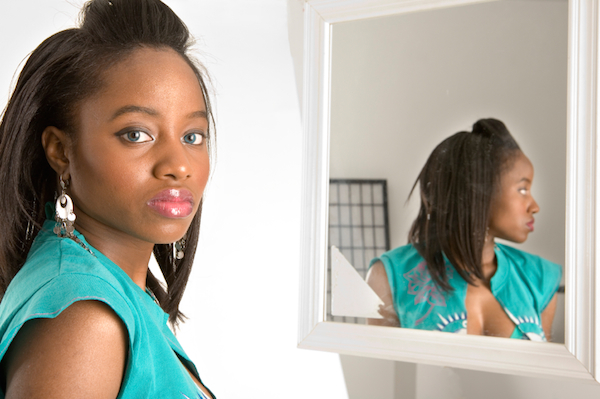
Young woman in front of a mirror

“Words are things. You must be careful. Careful about calling people out of their names, using racial pejoratives and sexual pejoratives and all that ignorance. Don’t do that. Some day we’ll be able to measure the power of words. I think they are things. I think they get on the walls. They get in your wall paper. They get in your rugs; in your upholstery. In your clothes and finally into you.” Three years ago Dr. Maya Angelou shared this insightful perspective on the power of words during an Oprah Masterclass.

The part about how words get into you has always stayed with me. Words and images carve imprints into our minds as to who we perceive ourselves to be, while shaping our identity. This is why when certain images, words or phrases are used for descriptive purposes, I become very cautious with accepting them. It also speaks to why after years of being called the N-word, even the most conscious among us can’t let it go. When Maya Angelou worked on an album with the well known rapper Common, he surprised her by using the N-word. She disagreed with it’s usage and Common stated, “She knows that’s part of me.” I’ve always wondered, “What part of you Common? What part of you is ‘nigger’?”

We’ve been called it so often, as if it were our names, at some point we started believing it represents us. I’ve written about this before, where I had to stop a first time father from referring to his newborn son as his, “little nigga.”

But it doesn’t stop with words. Imagery also plays a big role in how we view and address ourselves. For years it was almost impossible to view any realistic imagery of African Americans. Images of caricatures were sold on products around the world with exaggerated features, in positions of servitude, along with hypersexualized or asexualized messages (depending on the caricature). These images were used as a form of messaging to ignore the humanity of an entire subset of society in order to prevent upward mobility, empathy and cross-racial organizing. One of the most well known caricatures is “Mammy.” And years later we find ourselves clamoring to claim this image as something that represents us…when it never did. This is why the nostalgia concerning the Kara Walker Sphinx is so disturbing.

Reclaiming “Mammy” is just as counterproductive as seeking to reclaim “Nigger.” It’s beneath us but we keep trying to do it. Why?

As Dr. Carter G. Woodson in the Mis-Education of the Negro profoundly noted, “When you control a man’s thinking you do not have to worry about his actions. You do not have to tell him not to stand here or go yonder. He will find his ‘proper place’ and will stay in it. You do not need to send him to the back door. He will go without being told. In fact, if there is no back door, he will cut one for his special benefit. His education makes it necessary.”

These negative images and words have become so widespread that most attempts at trying to debunk them have been outnumbered and overshadowed. We’d seen them so much and heard them so much that they’ve seeped into our psyche. Thus, at times we reinforce these images without consciously meaning to do so. In fact, we’ll find ourselves fighting for the right to protect these images and words.

The women that were called ‘Mammy’ had names like Elizabeth, Rebecca, Ann and etc. They were artists, healthcare providers/healers, and organizers of rebellions. These women were humans in totality, many being brilliant pioneers in an awesome Fannie Lou Hamer type of way. Featuring that imagery on a mass level would be groundbreaking. Yet it still hasn’t been done. What would that look like? Imagine the pure awesomeness of that idea and how that idea could help young Black girls discover new possibilities for themselves.

We are more than servitude. Yet so many images surrounding Blacks in history present us in service positions. Thus it is no surprise that in 2012 the Center For American Progress highlighted that 28% of African American women work in service positions and “only 11.9 percent of African American women were in management, business, and financial operations positions. In comparison, women as a whole are employed in these fields at a rate of 41.6 percent.”

Janet Bragg
Janet Bragg

Being limited to servitude is systematic but is upheld by the words and imagery that constantly describe Black woman as people who cook, clean and take care of other people. However, even a brief glimpse into history will show that before, during and after slavery, Black women were entrepreneurs, political organizers, pilots, and scientists.

Yet, we’ve been so inundated with negative words and imagery that at times we can’t decipher between truth and fiction/ reality and perception. It’s not just an African American problem. Nobody knows who anybody truly is. And certain people understand this, so they push words and images that stigmatize groups of people causing further confusion and discord.

But even without corporations and politicians benefiting from falsehoods, how you see yourself or think about yourself can mold your life.

After the trauma of being raped, Maya Angelou didn’t speak for years. During this time her grandmother told her, some people may call you dumb but I know that one day you’re going to be a “teacher.”

When she was a young woman, one day Maya Angelou’s mother turned to her and said, “You are the greatest woman I’ve ever met.” It shocked her. She stopped cursing from that day forward, because she thought to herself, “What if she’s right? What if I will be somebody one day?”

The words of her mother and grandmother literally changed how she thought about herself and gave her the tools to see new possibilities. These words made an impact. The words and images surrounding her spoke life into her future despite the challenges she endured.

So think for a moment about what you’ve been told concerning who you are and what you believe about yourself. Examine which words or images have gotten into you. Be very careful of the things you believe about yourself. Reject words and images that don’t contribute to your well being. It can mean the difference between freedom or servitude.

Audre Lorde said it best, “If I didn’t define myself for myself, I would be crunched into other people’s fantasies for me and eaten alive.”

Please do not republish this article without specific, written permission from Jessica Ann Mitchell.

Jessica Ann Mitchell is the founder of OurLegaci.com & BlackBloggersConnect.com. To reach JAM, email her at OurLegaci@gmail.com.

Follow OurLegaci at Facebook.com/OurLegaci and Twitter.com/OurLegaci.

The Subtleties of Mammy Honoring Ceremonies


The Subtlety Front

Kara Walker’s The Subtlety has attracted widespread acclaim but has serious conflicts that need to be discussed. 

Artist Kara Walker’s first large-scale public project is officially titled, “At the behest of Creative Time Kara E. Walker has confected: The Subtlety or the Marvelous Sugar Baby 
an Homage to the unpaid and overworked Artisans who have refined our Sweet tastes from the cane fields to the Kitchens of the New World on the Occasion of the demolition of the Domino Sugar Refining Plant.”

Having read interviews featuring Walker’s explanation of the piece, it appears to possess elements of both success and missed opportunities. The Subtlety is recognized by many as a sphinx built in the image of a “Mammy” like caricature. The sphinx is jarring. It makes people want to pay attention or at least ask questions. Her explanations are continuing a conversation about the horrors of the sugar industry’s past.

In a recent interview with The Brooklyn Rail, Walker provided further prospective about the massive “sugar baby” :

She is basically a New World sphinx. A New World thinking of the sugar plantations, the Americas, the trans-Atlantic slave trade, that sort of Rolling Stones-y brown sugar dovetailing of sex and slavery as it reaches the American imagination.

Walker was featured on NPR’s All Things Considered as well:

She’s doing what she does best: drawing you in with something sweet, something almost charming, before you realize you’ve admired something disturbing. In this case, that’s the horror-riddled Caribbean slave trade that helped fuel the industrial gains of the 18th and 19th centuries; a slave trade built to profit from an insatiable Western market for refined sugar treats and rum.

“Basically, it was blood sugar,” Walker says. “Like we talk about blood diamonds today, there were pamphlets saying this sugar has blood on its hands.”

She explains that to make the sugar, the cane had to be fed into large mills by hand. It was a dangerous process: Slaves lost hands, arms, limbs and lives.

“I’ve been kind of back and forth with my reverence for sugar,” Walker says. “Like, how we’re all kind of invested in its production without really realizing just what goes into it; how much chemistry goes into extracting whiteness from the sugar cane.”

The problem with Walker’s sphinx is that the acts of oppression during the slave trade were disturbing but the enslaved Africans were not themselves disturbing. So why continue the distortion of their image? She ends up reinforcing what she seeks to dismantle. How do we honor people who lost “hands, arms and limbs and lives” with further misrepresentations of their identities?

When critically looking at this work of art, we recognize Walker as an artistic genius. Yet even in this framework, when discussing the legacy and horrors of the sugar industry she chose to magnify the mythical overly used “Mammy” imagery. We keep coming back to something that was never truly us.

However, this issue is deeper than Kara Walker’s work. It’s been done before…this mammy honoring ceremony.  This issue speaks to the internalized limitations of imagination among artists and writers when it comes to the African descended lived experience. Lingering onto falsehoods, attempting to manipulate structures in its honor is counterproductive and often representative of an internalized glass ceiling of thought.

We can be something different because we are something different.

I’m not suggesting an attempt at ignoring the history of the “Mammy” caricature but instead I’m interested in what it would look like if Walker went beyond the restraints of this mythical being when it comes to examining the lives of enslaved African artisans.

Subtlety Back

To a certain degree, I understand the appeal of the exaggerated features of the half woman, half beast sphinx. The history of the extravagant sugar sculptures called subtleties, that were bolstered through slave labor is very important. Furthermore, featuring the genitalia of the sphinx can be viewed as taking a jab at the presumed asexuality of the “Mammy” caricature, while also perhaps conjuring images of both sexual abuse and desire. It’s crude and perhaps it’s meant to be.

Yet, the symbolism of this piece is stifled by it’s misplaced distortion and a missed opportunity to unearth what’s often hidden. In this case it would be the Black woman undistorted and unexaggerated. A jewel in her own right, without the need of leaning on identity stripping myths for significance or shock value. We can be both beautiful in our nakedness and whole in our humanity while also critiquing disturbing histories.

Showing Black women as full human beings in a holistic framework is more revolutionary than torturing old caricatures like “Mammy” ever could be…and far more valuable. When we unearth and magnify our ancestors’ true identities, outside of modes of mass societal miseducation, it will be a powerful day.


Please do not republish this article without specific, written permission from Jessica Ann Mitchell.

JamAllen2-nb-smallJessica Ann Mitchell is the founder of OurLegaci.com & BlackBloggersConnect.com. To reach JAM, email her at OurLegaci@gmail.com.

Follow OurLegaci on Facebook at Facebook.com/OurLegaci.


The Subtlety display is available for public viewing until July 6th. Full details available here