The Demise of the Black Television Actress


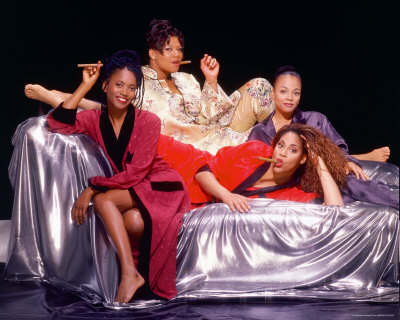
Maxine Shaw “Attorney At Law”, although my academic leaning would later be geared towards the PreMed track, you could not have told adolescent “me” that I could not be as fly, as funny, and as smart as Erika Alexander’s character on the television series Living Single. Sure, I appreciated the other characters on the show, the loony but lovable Sinclair, the seductive Regaine, and the witty and reliable Khadijah; but I saw myself in the assertive and intelligent Maxine. The magic of Living Single revolved around the fact that the show depicted the different types of Black women in our families and social circles, and not just in their personalities, but also their body types and complexions. I would watch every Thursday night, along with the other shows that made up my “Must See TV” line up: Martin and New York Undercover. Here was a collection of diverse Black women all being shown in a positive manner.

Even before Living Single first premiered, at a younger age, I would watch Claire Huxtable on the Cosby Show, and would marvel at how much she looked like my own mother, and was even more amazed by the fact that she carried herself like my mother too. She was educated, intelligent, calm collective, funny, nurturing, but strict! Like my mother, I found Claire Huxtable to be so classy and non-stereotypical. My mother was not the type to roll her eyes, raise her voice, snap her fingers, whip her neck, or use profanity. Like Claire she didn’t have to employ any of those “Angry Black Woman” tactics to be a respected disciplinarian and matriarch.

Then, what about the Spin Off, A Different World, where we were introduced to characters like Julissa, Whitley, Freddy, Denise, Lena James, and Kimberly Reese? Yes, Kim played by Charlene Brown, she was a PreMed major like I wanted to be, and she was the epitome of the statement Black Is Beautiful; with her dark chocolate skin, big eyes, full lips, and shapely hips. I can still remember the episode where those strikingly African features brought her to tears when she had to adorn clothing that reminded her of a “mammy”, only to later peel off those layers and proudly reveal the African beauty that she was.

I reminisce and can’t help but notice that something has happened. Turn on your television and you will have difficulty in finding a Black actress, particularly in a prominent role. You literally have to LOOK for us, and unfortunately when you find us, it will not be in traditional roles or in a positive light. Instead, Black “actresses” and pseudo-celebrities are being casted on surreal “reality” shows shucking for the camera. Gone are the talented and classically trained actresses, they have been replaced by Black women who would rather indulge in stereotypical and derogatory behavior for the world to see. The danger here is that life often imitates fiction (and yes it is fiction, because these shows are highly scripted), and the degenerative behavior will be emulated by viewers; particularly those who are younger and impressionable. Even more problematic is that these images are broadcast around the world, and gives a false view of the American Black woman. It helps to uphold long-standing stereotypes and misconceptions, and even affects the manner in which Black women are treated when they travel abroad.

We can only hope that the pendulum will swing the other way. Perhaps through letter writing campaigns, demands for more inclusive and positive programming, or simply turning the television off. Once again, we can only hope. Maybe the transformation will come about when we begin to pen our own stories and actually support these shows when they air. If not, we will continue to witness the inevitable demise of the Black television actress.

Cherise Charleswell
Eclectic Life Books
September 2012

Cherise Charlseswell is a published author, writer, poet, model, health researcher, contributing writer of Lady Influence; host, producer, & creator of Wombanist Views radio program, creator and lead designer of Eclectic Life, Associate Director of the Los Angeles Black Book Expo, and the California State Representative of the National Black Graduate Student Association. She is currently working on the book projects “The Link Between Food, Culture, & Health in the African Diaspora” and “Walking In The Feminine: A Stepping Into Our Shoes Anthology”.

Awkward Black Girl In Networking

I’m excited every time I learn about a new networking opportunity. I highly anticipate Networking Mixers and Happy Hours. Then the excitement slowly wanes as I remember, “I have to talk to people.” The dreaded talking to people fear is a staple personality trait that my sister, brother and I all possess. My mother recently invited my younger siblings and I to a holiday event. This led to my younger sister and I consoling each other as we both exclaimed, “Oh, God we’re going to have to talk to people.” Its not that we don’t like people. We love meeting new people and learning new things. The problem is we are afraid of exactly what we’re supposed to say.

Ironically, this doesn’t happen to me when I’m doing public speaking or performing. Its those darn personal moments in which people ask standard questions and you are expected to give standard answers. “Yes” “I work at…” “I live in …” “Its been raining at lot lately.” And then what? You’re forced with the dilemma of thinking of something that will either continue the conversation or end it, so that you can return to the safety of your solo corner in the far right of the room. The worst problem is saying the wrong thing. This is the unfortunate moment when your lips form and say the exact opposite of what your brain would have preferred. Its always easier to network online. All you have to do is click a button and abracadabra, you’ve “liked” someone or “joined their network.”. Networking in person is definitely an art. I find that I’m always better at networking in relaxed settings.

Our Legaci Question: How do you feel about networking and what are some of your suggestions for people that are apprehensive about the networking process?

Jessica Ann Mitchell

Jessica Ann Mitchell is the founder of The National Black Pages & Black Bloggers Connect. She also writes on her personal blog at OurLegaci.com. To reach JAM email her at info@OurLegaci.com.

Share the link to this article on Twitter and Facebook and let us know about it. We will give you a shout-out on our next article and we’ll link to your blog or website.

No One Should Make You Vote

No One Should Make You Vote by William D. Jackson

Photo Credit: georgiaencyclopedia.org

No One Should Make You Vote

Through the course of history Black people have fought for the right to be treated and respected as citizens of a country they were forced to travel to on slave ships that crossed the Atlantic Ocean.
The numbers of Blacks that did not survive have been long forgotten and dismissed by generations of Blacks that think just because they make a little money, drive some kind of car, work on a job,but still are Just Over Broke can take voting as a event that can be discounted, overlooked or even forgotten. The evidence of non-participants in voting can be seen in the data that is kept. A record that shows there are still Blacks that either do not care for the sacrifices of others to allow them to been seen as a resemblance to equality or they are just ignorant and still lost on mental slave ships waiting to be mercifully sunken to save their lives.

Yes, this last election brought about a reality in the power of voting, but statistically Blacks still
need to grow in their political awareness and participation.Too many Blacks have forgotten the struggles, sacrifices and deaths to be granted the opportunity to vote. In the early 1960’s a Civil Rights struggle started; The right to vote. This was not easily earned, Blacks were not respected enough to be freely given this right. Blacks had to protest, fight (legally), seek legal means, demonstrate, were jailed willingly and unwillingly, some gave the ultimate sacrifice of their lives, women, children and men died for the right to vote.

The murder of voting-rights activists in Philadelphia, Mississippi, gained national attention along with other murders, lynching’s and brutal violence that made the United States Government take action.
President Johnson, at that time, signed the resulting legislation into law on August 6, 1965. Section
2 of the Act, which followed the language of the 15th amendment, applied a nationwide prohibition
against the denial or abridgment of the right to vote on the literacy tests on a nationwide basis.
Black at that time were given an unfair test to see their “worthiness” even to vote. Even if they did
pass the test many were still denied the right to vote in many cases. Does this sound familiar even
in the 21st century?? In the 21st century if there was a nationwide literacy test in order to vote, graduate from high school, be employed or even have children, if this were the law how many Blacks would fail??
The reality is there are tests, but based on other criteria that seem to grow each year, Blacks still
fail to see the writing on the wall hidden under governmental programs, incentives, and special
programs.

Don’t question my rights to ask as a teacher over 20 years, mentor and involved in my community, I
put my mouth were my actions state, but too few Blacks do not want to get their hands dirty to
work with our children and involved in their communities.

This proves several important things, 1. Education and the ability to read will always be important
2. It is sad that in the 21st century still too many Blacks are not literate enough to read a voting ballot.
3. Some Blacks still don’t get it, the right to vote can be slowly and systematically taken away or denied.
4. If incarcerated in any way this can keep them from voting.
5. Voting rights can be re-established even after a felony conviction, but they must be demanded and not allow threats to work.

The seriousness can still be seen in the because across the nation, legal battles are building over state laws passed in the past two years that impose photo ID requirements, scale back early voting periods and restrict voter-registration efforts. There are other efforts being planned and will be implemented t he closer election day arrives. This is a warning of alarm for minorities and even women, that the right to vote is still an attempt to provide political power minorities and women.
These are changes that threaten the ability of many to vote even legally. What more needs to be said to Blacks and other minorities about their right to vote? There has been a recorded change in the past 6 years. Black voting turnout reached a record 65 percent in 2008, compared with 55 percent in 1988, according to Pew Research study. Driven by Barack Obama’s Presidential campaign, blacks
voted at the same rate as whites for the first time. This has created both a positive image to the power of voting and a threat to those in political power that desire to keep minorities from political and socioeconomic power or even equality.

Denying minorities the opportunity to vote weakens the voting strength of all minorities,
women, the poor, under educated and even those that were incarcerated and served their
sentences are discriminated against. When I think of the first time I voted, I was proud to
get may ballot and cast my vote in the political process. I was just as proud that I could
read the ballot because I valued education to know how important reading and compre-
hension is.

When people ask me if I think everyone should vote, I say, “Yes, I think they should.
But, vote intelligently.” Through the voting process Blacks were liberated physically
from slavery over 150 years ago. The psychological / mental liberation is still occurring
even today.

Too many Blacks are mentally still in slavery with thoughts of low self esteem, self and
cultural destruction, and accepting second class citizenship by not wanting to go back
to school to continue their education. Allowing the media to define their existence and
behaviors that result in continued self destruction.
Voting in November 2012 is just as important now as it was during past generations.
After looking at this video how can you NOT get out and register to vote, how can you
NOT honor the men and women that sacrificed their lives to earn the right to vote for
you and your children. The effort for equality and equitable treatment is never over,
it is a continuous fight on multiple fronts from education, politics, economics and
human rights. The first place to start is your vote.

The Worst Day Of Your Life Might Be The Best Day Of Your Life

We all go through days that seem to take all of our strength to get through. Sometimes, we have experiences that are life changing and we don’t know how or why it’s happening to us. My grandmother experienced this over 50 years ago. As a young wife and mother, Mrs. Hattie Virginia Jones decided to start working to bring in some extra income. At the time, my grandfather was the sole family provider. They had a house full of children and were living on limited funds. The extra income from my grandmother working was helpful. She enjoyed being able to buy her children extra Christmas presents.

Jam & Grandma

However, they were living in government housing aka “the projects.” Due to her additional income, however minimal it was, authorities said she was making too much to continue living there. My struggling grandparents, with a house full of children, were kicked out and forced to pack up everything. Some would expect my grandmother to be bitter about this situation. But instead, decades later, she used it as a testimony. She said,”The day they kicked us out of the projects, I thought it was the worst day of my life. But now I’m glad. Because if I was never kicked out, I never would have bought a house.” Years later she bought a second house.

Someone told this story as one of her many testimonies at her funeral this past March. The house that my grandparents bought is full of memories from my mother’s childhood and my childhood. I picked plums off the trees in the back yard. I slept beside my cousins and shared peanut butter syrup sandwiches. Even as a college student, on summer breaks I’d go to grandmother’s house and sleep beside her like a little child. And even as she lay taking her last breaths, that house is where her children gathered to sing hymnals, pray, and hold her hand as she went home to be with God.

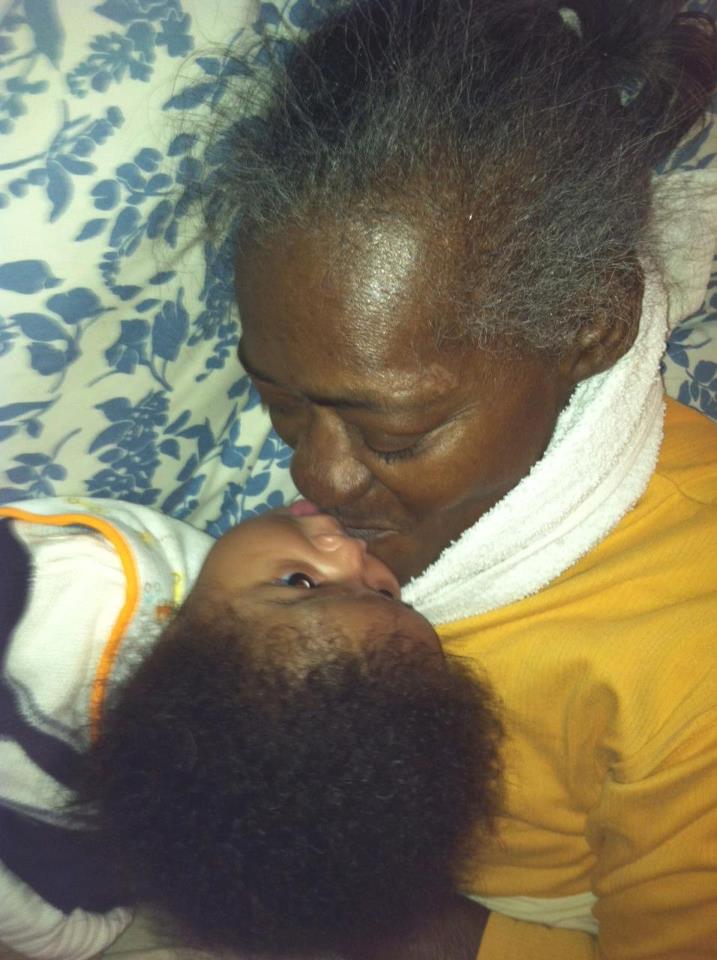
Grandma & her first Great Great Grandchild

When my grandparents were kicked out of the projects, my grandmother didn’t know what was in store for her. She didn’t see the treasure and foundation that she was about to create. She thought it was the worst day of her life. It turned out to be the beginning of a long loving, memory filled journey that impacted the lives of all the generations she nurtured. When she died, her legacy was continued through her 6 children, 14 grandchildren, 12 great grand children and one great great grand child. Every one of us spent our childhood in the house she never would have bought, if she hadn’t been kicked out of the projects.

The worst day of your life, might be the best day of your life.


JamAllen2-nb-smallJessica Ann Mitchell is the founder of OurLegaci.com & BlackBloggersConnect.com. To reach JAM, email her at OurLegaci@gmail.com.

Follow OurLegaci on Facebook at Facebook.com/OurLegaci.

Can you be 'overqualified' for the job?

By Mr. Dapper

I can relate to this first-hand, I have been to a couple interviews where i was told i was over-qualified. I initially thought it was some lame excuse to get me out of their office but looking at my interviews i knew i did too  well to not have made the job. Fine, i wore a dress shirt, and pants, tie, oxford shoes for an interview for a fast food restaurant (can’t remember the name). I thought everyone (at least assuming every one is civil) had to follow that dress code for an interview. That was my first taste of lesson 103 in life: “Life isn’t fair, some people are stupid and unfortunately sometimes these folks possess something you want, in order to get it you must use their stupidity – not fair but logical”. Also i was 16 then, cmon gimme a break. Moreover the employer gave me a card and referred me to a better paying job and told me to use him as a reference. Jackpot! If i knew i woulda worn a pair of sneaks and jeans…but back to the topic. Over-qualification. Asides my restaurant interview i’ve had a few instances of being ‘overqualified’. Being overqualified isn’t a bad thing, matter of fact it’s a praise and maybe a wake up call to you that you deserve more than you’re offering yourself. The company feels that someone with your qualification needs more compensation, etc. Orgs are looking to get a candidate who ‘fits’ the requirements but not necessarily exceed them. The company can see this as a threat and that you might be using them as a stepping stone. The bottom line as the guys at resume blog said is “Overqualified” is a disguise it has nothing to do with your qualifications, knowledge, or talent. It’s a catch-all phrase used to avoid being candid because the company has fears about hiring you or saw or heard something they simply did not like. They view hiring you as a RISK.

When an interviewer makes this statement, it basically means they think you have too many years of experience, you want too much money, your education is more than what is required, or they see the job as being a step down from where you are now in your career and are afraid you will jump ship.

Because they view hiring you as a RISK, you will need to break down the walls and overcome their “fear.” Find out what they mean, drill down and find out the real reason they make this statement. Then eliminate their fear. Do the best you can to find the source of this statement.

Well, here are some comebacks whenever you’re told you are OVER-qualified for the job – knowing fully well you can handle the job PERFECTLY

  1. Plain ask, (in a polite way, of course) what’s wrong with doing the job better than expected?
  2. Refute being labeled as OVER-qualified and tell the employer you’d rather say you are FULLY qualified.
  3. Use the employer’s job description on them: ex if a job requires someone with managerial skills and you happen to be ‘over-qualified’ simply tell the interviewer that with you, you would require less man-power, office time and resources to train and prepare you for managerial duties. You can handle many more tasks than the just “fit” candidate can.
  4. Let the employer know you are looking for a more ‘challenging’ job and that this job suits your neeeds and desires (*insert one of the job requirements here* ex: working with people etc)
  5. Hone down the light on your pay. Of course, in a recession my major concern is the pay however in order to GET the job first, I must play card. So, in your interview try not to make very big obvious highlights on pay. You and your interviewer are both playing tact games, so play your part right,
  6. When the word over qualified is used on you, expand it and try to break down the big word into simpler terms. Eg. “you are overqualified”…your response: “O i understand,  i have the skills required to for this position and more that i have garnered through experience and working *insert job req. eg one-on-one/team*, would you be willing to contact me should an appropriate position be available?
  7. All you do, try and break it down to the REAL reason why you are not being hired. Watch for body language, silent cues etc but don’t get paranoid.
  8. Lastly,  Deliver. All talk and no work makes jack a bluffer. That’s right, you’ve gotta back it up once you land the job. I’m guilty of this sometimes so i know how important it is.
Best of luck out there in these hard trying times!

Making the Case For Digital Activism by Jessica Ann Mitchell

Making the Case For Digital Activism: How Social Media Helps Causes by Jessica Ann Mitchell

Digital Activism
The recent Troy Davis case sparked a firestorm of digital outcries. Online protests were launched along with online petitions. Amnesty International collected over 630,000 signatures in support of Davis. Twitter and Facebook were both taken over by hashtags and updates. Millions of people were discussing the case and educating others about it. The Davis case truly became an online phenomenon. Over 40,000 people tuned into Democracy Now’s live stream of the vigil held outside of the Georgia prison that was holding Davis. For many, this was the first time they’d even heard of Democracy Now, a progressive independent source of news. The live stream went viral on Twitter and Amy Goodman was trending worldwide.
During this time period, Davis supporters became a complete digital community in their own right. Many were desperately hoping for Davis to live. Unfortunately, our requests and pleas were denied. This was truly a heartbreaking moment for us all. However, not more than 24 hours after the death of Troy Davis, digital activism naysayers were on the prowl. These naysayers had a clear message, “Digital activism doesn’t work.” The main reason they believe it doesn’t work is because with all of our prayers and protesting, Troy Davis was still killed by the state of Georgia.

Though Davis’ death is a heartbreaking fact, we cannot allow ourselves to sulk in the negativity of, “I told you so,” and “I knew it wouldn’t work.” Truth be told, the reason that Troy Davis died is because Georgia is still a predominantly racist and oppressive state. As a Georgia girl, I know what its like to live in the backwoods of the KKK’s resting den.

However, saying that digital activism doesn’t work is an outright lie founded in lethargic negativity and ignorance of the power of ordinary people. Public support through online petitions and social media outreach played a vital role in making members of the public aware of the injustices occurring. Even though Davis was executed, that doesn’t mean that all of our efforts have gone to waste.

Now the racial discrepancies surrounding the death penalty in the U.S. are becoming more widely addressed. It could even lead to a movement to abolish the death penalty. This case will forever shed light on the prison industrial complex and the death of black men within it. The death penalty debate is now facing a rebirth. Especially after the world witnessed what was essentially a lynching.
In these cases, yes, our voting rights play a vital role in making societal changes. However, before we can vote to make these changes, we must find a means to inform and reach members of the public. The digital era has afforded us the opportunity to distribute this information rapidly.

Digital outcries, protests and petitions are a highly effective means for change. Organizations like ColorOfChange.org have already proved that with their ability to garner public support (much of it digital) in support of the Jena 6, ending Glenn Beck’s televised hate mongering and pressuring the state of Georgia to free Genarlow Wilson. Another organization, Change.org was vital in sustaining a digital campaign that resulted in clemency for a young African American mother convicted of a felony for sending her children to a school outside of their district.

Countless blogs, news articles, Tweets, and Facebook updates by millions of ordinary people around the world also supported these digital campaigns for justice. So you see, digital activism does work. Sometimes when things don’t go the way we want them to go, it’s easy to allow negativity to take control. However, it takes true power and strength to continue pushing on for justice. We have to push for our humanity, “…by any means necessary,” as Malcolm X once stated. Right now the digital era provides a means that presents us with a plethora of opportunities.

In the 1960s, when a small group of students in North Carolina began sit-ins in all white restaurants and a young Baptist preacher was gathering people for marches, it was understood that civil rights wouldn’t magically appear the next day. What they were doing was a start. When things didn’t change immediately there were naysayers saying, “It will never work, “ and “It’s a waste of time.” I’m glad they kept marching instead of succumbing to unproductive negativity.
In 2011, it is time for us to uphold this legacy. With the help of countless organizations and ordinary people the struggle for human rights and freedom continues… And its going digital.

Love, Jessica Ann Mitchell – The Little Black Girl

Jam-The-LBG
Jessica Ann Mitchell is the founder of Black Bloggers Connect an entity of Lamzu Media. Mitchell specializes in multicultural outreach and communications. She also writes on her personal blog at OurLegaci.com. To reach JAM email her at info@OurLegaci.com.

If you believe in the power of people. Please share the link to this article on Twitter and Facebook and let us know about it. We will give you a shout-out on our next article and we’ll link to your blog or website.

When does a boy become a man?

When does a boy become a man?

When does a boy become a man?

“A Simba Perspective”

By Qaadir Morris

Have you ever seen the Lion King? As a child my brother loved to watch that movie and he would watch it over and over again. I loved the way that the character of Simba evolved. He went from a curious cub, to easy going teen, to finally the Lion King. That’s pretty cool if I must say so myself, but before Simba could become the Lion King he had to go through a lot of hardships. If you recall the story you can recall that Scar implanted the seed of guilt in the mind of Simba, causing Simba to believe that he was the reason for the death of Mufassa. He was supposed to never return. He was supposed to be killed by the hyenas. He was supposed to disappear so that Scar could rule the land and finally become the all mighty king. Scar wanted to be the man or I guess in this case”the lion”.   As I recall the movie Lion King it led me to ask the question: When does a boy become a man? Thanks Simba for the motivation.

Initially Simba wanted to be king for selfish reasons. He didn’t care about being just and being strong for his people, he cared about being able to do whatever he wanted without restrictions. So many of us young men share ties to the character. We all crave power, yet we know not what to do with it once we obtain it. We crave the ability to do what we want and to be on top of people that we tend to forget about the other million or so people in the world. If you can recall the lead song from the movie Lion King “I just can’t wait to be king” Simba never talked about being diplomatic. He talked about being the “man”. Simba’s idea of being the man is comparable to what a lot of us in the real world think make us men. We think that our position in life determines our manhood, and that men are defined by their ability to be strong and their ability to conquer.

Sometimes in life we as young men must be humbled by our situation to appreciate our potential destination. In the movie Lion King Simba ran away as Scar instructed. He found two partners in a meerkat and a warthog. Timon and Pumba could be the grown men who race off into obscurity to escape the pressures of the real world. These two created a pseudo reality for themselves. I think a lot of us in the real world tend to subliminally internalize the phrase “Akuna Matata”. As the song says “it means no worries for the rest of your days. It’s our problem free philosophy. It’s simply Akuna Matata. How many people do you know who act as if they don’t have a care for the world? They could care less about being responsible. They could care less about being anything. They just wake up everyday to the same routine. “Chillin”. In the movie Timon, Pumba, and Simba just chilled. Constant coolin as they ate bugs, looked at the stars, sung songs and lived everyday on cloud nine. Simba at that point of the story didn’t even think about his past. Why go back to that when you can just chill and live an average life with no worries. To bring it back home so many people would rather chill and let their true potential lay dormant. Why strive to be great when you can live a care free life where responsibility does not exist. Why not embrace “Akuna Matata.”

Sometimes we as young men need wake up calls. In the movie Lion King, Nala was Simba’s wake up call. A dose of reality to awaken him from his slumber was all that the young Simba needed. Nala knew the true potential that lay in Simba. She knew the lineage that he came from, yet Simba still tried to run far from his destiny. How many people do you know that have all the potential in the world to do something productive, yet even through all your motivational tactics they still can’t see the bigger picture? I know so many people who could have been, who should have been, or would have been if they only would have awaken from their sleep. You can walk around all day in the land of the living and still be sleeping. Simba was sleeping, as a lot of my peers, and some of yours are. Rafiki showed SImba what he needed to see. It wasn’t Mufassa that he showed him, but it was himself. To bring it back home until you look deep down in yourself you can never fully become a man.

In order to become a man or in Simba’s case a Lion one must accept who you are. You have to embrace that ideal, and not run away from it. The more you continue to run the more you continue to stay in limbo. Simba after accepting who he is went back to Pride Rock. He faced his demons, and though he may have been nervous he did what he had to do. Once we as young men face our fears, and stand firm in our belief that we can succeed the sky at that point is the limit. By facing Scar and proving to himself that he really was worthy Simba became what he was destined to be; “The Lion King”

The story of the Lion King I feel applies to real life. I believe that to a certain degree we as boys share some of the same characteristics of a young Simba. We are trying to find our niche. We are experimenting. We can be pompous at times, and we seldom listen to the advice of others. It’s sad to think that until we are faced with a situation we then truly begin to open our eyes and see the bigger picture. In the case of Simba he lost his father, but luckily he was able to get back on track. The journey they say is more rewarding than getting to the destination, to overcome and to persevere is a great strength that lies in each and every one of us. As a writer I know that I am still evolving, and as a young man I know that I still have room for growth. I know that there will be trials and tribulations, and I know that how I handle them will determine how far I can go, so with that being said I conclude by quoting the infamous song that was mentioned a little earlier; “OH I JUST CANT WAIT TO BE KING”.

Qaadir Morris

You Are Not an Animal: Black Men Reclaim Your Dignity

Photo Credit: Jaguda.com
You Are Not an Animal: Black Men Reclaim Your Dignity

A bizarre and controversial commentary that makes you think, react and say, “Is that possible?” It begins with a shocking premise and culminates in an unusual twist that you have to read to believe. As a show of solidarity, I dedicate this commentary to President Barack Obama, and the most enigmatic entertainer to grace the universe, the unconquerable. Michael Jackson!

by Peggy Butler

Prelude: Since 1989, much attention has been devoted to the status of Black men and their “inevitable demise.” But regardless of what western civilization thinks, Black America continues its tradition of giving props to these courageous warriors. So, to Black men from Alabama to Wyoming, this editorial is dedicated to you.

Picture this scenario: A colossal public housing project embodying 26 buildings, 4210 apartments and 15,000 tenants, stands unnoticed in a low-income residential district surrounded by garbage and overgrown shrubs. Entering the high-rise pigsty—you’re overwhelmed by the stench of urine and cheap wine emanating from the stairwells.

Turning a corner, you walk gingerly amid broken glass and used condoms littering the corridors. Nauseated and disgusted more surprises are in store. As you head for the exit, you pass an abandoned apartment and watch as a middle-age man jabs a syringe into his arm, trying vainly to escape reality. Forging ahead, you watch as gangs fight over neighborhood turf.

As you head for the exit, your feet graze the neighborhood drunks. Asleep in the doorway, unaware of their surroundings and too inebriated to care, they sleep soundly. Welcome to the year 2289. Common sights like the ones above are observed in the congested buildings of Chicago, the dilapidated projects of New York and the multi-complexes of Los Angeles.

It is now 278 years into the future and Black men have replaced animals in laboratory experiments. Having heard in the 20th century that African-American men were moving toward extinction, it came to fruition. Now at the mercy of ruthless scientists, many struggle to reclaim their dignity, as they try to piece together how they came to exist in this state of upheaval.

The massive public housing project, home to 10,000 Black men also doubles as a laboratory. Ninety-five years ago, 50 percent of America’s Black men, unable to cope with social discontent began wondering if there was a conspiracy against them. Thus, began their journey of mass destruction.

On June 29, 2089, a group of young Black men visited the Saravaela Laboratory in Laugford, Ohio. There, using an assortment of codes, they asked scientists to formulate an experiment using them as guinea pigs to determine the validity of the conspiracy theory. A call went out for volunteers, and millions of men permitted themselves to become human fodder. At first they were treated like any other lab animal, but as the months passed, they were subjected to inhumane cruelty.

Rebelling against their plight, a few managed to escape, but for every Black male that escaped, there were thousands more to take their place. Defenseless, his dignity gone, and his pride abandoned; the Black man struggled to free himself from his captors.

Staring through the small cubicle he called home, he wondered how he reached this point-in-time. Maybe it began in December 1989 when the conspiracy theory was first broached. Or maybe it began when Black men started judging themselves by White standards; and gave in to the misconception that they were “lazy, sex-crazed, drug-addicted thugs prone to violence.” But it did begin somewhere—and it ended in imprisonment, and the end of the race as we once knew it!

Stop! Brothers, what I have written up until now, was my pessimistic side, expressing my inner most thoughts. Now it’s time to walk the walk as well as talk the talk. I don’t know about you, but I’m sick and tired of the media and people in general underestimating African-American men. Similarly, I’ve grown leery of White females averting their eyes and clutching their purses in the presence of these men. Moreover, I’m tired of the media explaining in vivid details, the Black man’s demise.

Stop putting all Black men in the same category. Only a small percentage are using drugs and committing crimes. The rest are trying to do their absolute best, thus seeking the pursuit of happiness just like everyone else. By the way, there are thousands of educated and productive Black men climbing the ladder of success. ISN’T THAT PROOF THAT THEY CAN DO MORE THAN SING, DANCE, PLAY SPORTS AND CREATE BABIES?

Black men are not asking anyone for anything. All they’re saying is stop labeling, stop criticizing, stop analyzing. They are not objects to be probed, prodded and petted at will. They are in fact human. See them. Touch them. Feel them. Examine their motives. They are men subject to the same mistakes and temptations as the rest of us high polluting hybrids.

So stop speaking of them as if they were a piece of cheese or a morsel of dust. Stop having programs and panel discussions featuring Black men as the main attraction, and stop saying what a contemptible specimen they are; because we aren’t buying it.

Black men are not animals. They are men. And at this moment they are reclaiming their dignity. Hate it, dismiss it, whatever. The Black man’s motto in the 21st century is “I’m going to keep on flickin until I’m through tickin.” Hence, forget that extinct mumbo jumbo. Peace!

Peggy Butler is a freelance writer based in North Central Florida. She has written for various magazines and Internet publications including Africana.com. and TimBook Tu. Moreover, Butler who lists collecting 60s memorabilia among her hobbies; writes news, features, sports and entertainment articles, as well as commentaries and humor pieces.
Visit her website at peggysbutler.com or track her at Twitter.com/peggybutler647.

My duty is to stand up and speak about the injustice and lies and fight them back with love, unity and action

My duty is to stand up and speak about the injustice and lies and fight them back with love, unity and action.

Written by: Christina A. Jeter

http://www.linkedin.com/in/christinajeter

http://www.cjeter.com

Now that I have educated myself on life, I choose to help others with their transitions without having them go through the same mishaps I entailed to have a peace of mind. The beauty of the world is more than what is being glamorized on television aka the media. Born into a world I seem to know little about, I try to educate myself on its history, while the more I find out daily, the more I become disgusted in humanities ways. I pray that those who are quick to be cruel to those that are different will open their eyes before Judgment Day as they are to me truly being tested.

Life is like a new business venture and this to me is a strategy of making yourself successful and how do you do that, first you create a plan and implement steps to achieve those goals of success.  Now as you put those steps into action you will see that in some areas you succeed and some you fail, instead of tossing your hands in the air and giving up, you apply the actions of success to the areas of failure to make a turnaround in your progression of life.

My Grandfather was born in an era where he had to witness and took the action of society mistreating him, he could have fail victim to the hatred being giving to him and let that stop him from becoming a success, but he didn’t! He traveled; he educated himself, created a profitable business to provide for his family.  I celebrate being black year round because my grandfather has passed down genetics that entails I WILL NEVER FAIL, I ONLY ACHIEVE SUCCESS DIFFERENTLY FROM OTHERS!

GOD had blessed me with many things and one is my education, now knowing that there are many African Americans that should be taught in school and celebrated during black history month besides Rosa Parks, Martin Luther King, and Fredrick Douglas. I encourage everyone to read up about Andre Cailloux (Stephen J. Ochs- A black patriot and a white priest), Felicie Coulon, Gabriel Prosser, Marie Laveau, Rose Nicaud, Francis E. Dumas and Jules Lions.

People of my past and present inspire me to make a change every day and that is what I try to do with my writing. Many things plague the world today and the majority of it is labeling, now while we all have the right to freedom of speech and our opinions, I still should know the connotation of the words I direct to an individual. I educate myself on the different lifestyles of the world and with that I may not agree with it but I respect it. My sensitivity comes from the fact that I have faced bullying and realize, “Rejection is GOD protection.”

We all want power; just watch how you achieve it and what you do with it!

They Say Hispanic…I see Black: The 21st Century and the DuBoisian Color Line is Still An Issue

They Say “Hispanic”…I see “Black” :The 21st Century and the DuBoisian Color Line is Still An Issue
By Timothy Aaron – Styles c2011

According to all indicators, the “Hispanic” population grew by 43% over the last 10 years pushing the actual numbers to over 50 million. Now, according to sources such as The Census Bureau, one out of every six North American (United States citizen) is “Hispanic.

I keep hearing this statistical, numerical and quantitative fact reported however there is one historical and cultural truth that I am not hearing, except in my own head and out my own mouth: many, if not most, of the people classified as “Hispanic” are actually of African descent and “Black.” With this in mind, my logic says if the Afro-Hispanic population is increasing in numbers, so are the number of regular ole “Black” folks which means – Black folks, overall, are becoming the “new” majority. Then why don’t they just say that?

For the record, there is really no such thing as a Hispanic “race.” As an aside, I must say that I am one of those reluctant to use the term “race” to distinguish (between) various peoples. If one believes that there is only One Human Race, then how could there be other races? How could you have sub – races? Wouldn’t a “sub – race” mean that there are “sub – humans”? Personally, I prefer using either of the following terms to classify and differentiate human beings: ethnicity, culture or nationality. But, that’s another narrative deserving more exploration and discussion at a later date.

Hispanic (or Latino) peoples are people comprised of indigenous Native North, Central and South American nations including the Caribbean (e.g. Taino, Arawak, Carib, Aztec, Mayan, Calusa, etc.); Africans; and Europeans (Spaniards and Portuguese). Their ethnic and cultural origins are traceable to either or all of these groups.

As it is well documented, the Spanish and Portuguese presence in the Americas is primarily due to colonialism – what some euphemistically refer to as, “exploration” and “discovery.” Later.

It is the Spanish and Portuguese presence that put the “Latin” in Latin America. While there are remnants of indigenous/Native and African culture throughout the “Hispanic Diaspora,” primarily, it is the Spanish language that defines, connects and “unites” Hispanic people. Put another way, the major commonality and criterion used to classify “Hispanic” peoples is the Spanish language. The term “Hispanic,” then, is primarily based on linguistics and secondarily on culture. Again – ethnically, there is no such thing as “Hispanic.”

Interestingly enough, Spain owes so much to Hannibal the African for the development of its civilization and culture. Oh, the complexities of history, culture and identity. Another topic for another time.

In nations like Panama, the Dominican Republic, Puerto Rico, Argentina, Brazil, Ecuador, Cuba, Peru, Mexico and Columbia – you will find many Black people, as well as clear African cultural influence in and through food, music, religion/spirituality, architecture, art and language. In some cases, probably rare, I will admit, you will find that the African culture is the dominant culture such as in Brazil, Cuba, Panama, Puerto Rico and The Dominican Republic.

So I find it interesting and sad when I hear of African – Americans taking anti-Hispanic positions as they are apparently unaware of the ethnic, cultural and historical commonalities between them and African – Hispanics.

Case in point, in an NPR story about “New NAACP Leaders Broaden Group’s Missions,” an AME ZION Minister in Waterbury, Connecticut, by the name of Leroy Perry, stating his opposition to a Hispanic person serving as chapter President based on the fact that the NAACP was started for “Black people in particular.” I shook my head as I listened to this leader of an African Methodist Episcopal church. Emphasis on “African.”

Oh, this Queens, New York – born and raised person is not naive. I know that many, if not most, Hispanic folks are just as unaware, or in denial, about both their Africaness/Blackness and their ethnic and cultural ties to African-Americans as are African – Americans about theirs to their Hispanic cousins. Yet another topic to discuss at another time. Neither African – American ignorance or self denial or Afro – Hispanic ignorance or self-denial can change the historical truths.

Black people are not just African – American. Nor can “Black” continue to merely be defined by skin color and locality. Being “Black” is just as global as globalization. And no longer can narrative and discourse about being “Black” and “what is Black?” be intelligently and honestly engaged in without mentioning a simple six letter word: “A- F- R – I- C- A.”

About the author:

Timothy Aaron-Styles has worked in media, strategic communications and entertainment in New York, Georgia, South Carolina and Bermuda. Majored in Film and Video at Georgia State University while minoring in Marketing.

He has worked with CNN Headline News, 16 The Library Channel and City 5: Atlanta City Hall’s cable television station. Has advised political, corporate and non-profit clients in New York, Georgia and Bermuda. Co- screenwriter of “Akwaaba” a a romantic comedy set in Ghana reflecting the multi-faceted fabric of Ghanaian life. His one-act play, “Shhhh!!” was adapted into a screenplay and shot and is post-production. The piece has a very interesting and unique perspective on sexual abuse.

He can be reached at Timothyaaronstyles@yahoo.com.