The Power Of Sister Circles And Safe Spaces

for-colored-girls
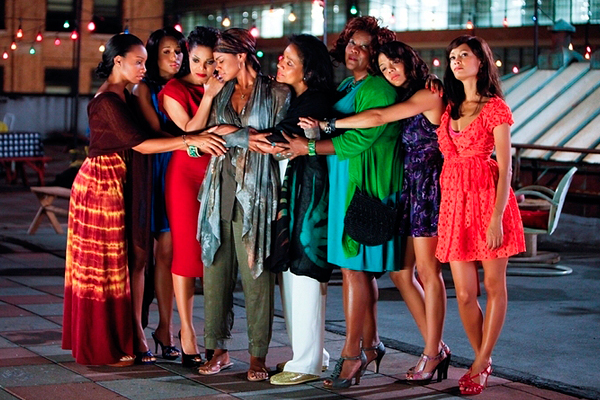
In graduate school, I was invited to join a sister circle. At the time, I had no idea what that was. What resulted was a life long bond with a group of Black women from across the diaspora (Guyana, Dominican Republic, & across the US). We shared our stories and spent hours revealing our inner insecurities. We trusted each other with our deepest regrets, struggles and fears. It was through our sister circle that I learned about sisterhood. There were many tears, hugs and affirmations.

To share your story…To be real with a circle of people you can trust, is one of the best feelings in the world. And I deeply believe that it is through these types of bonds that Black women have been able to survive so many atrocities and still come out with our sanity. Safe spaces in the presence of our sisters, is the place to heal because we know so much of the world seems against us, rushes to judge us, and disregards our truth. It was in these moments that I felt a wholeness that can only be achieved in knowing that these sisters had my back. We could go to each other for anything.
the-color-purple

Outside of the sister circle in grad school, I have another circle of friends including sisters I’ve known since I was 12 years old and others I met during freshman year of college.  I can’t tell you how many times I’ve made or received early morning or late night phone calls during which we’ve vented, came to each other’s rescue, and just served as a much needed listener. Sometimes, just having somebody listen makes all the difference.

Black women’s sisterhood is so strong that the army has actually started studying it. As the army deals with high suicide rates among soldiers, one thing has remained true…Black women still have the lowest rates of suicide in the military even though we all know they face higher rates of discrimination. Yet, we live on. The army wonders what Black women have that other groups don’t.

While the government does not break down military suicides according to race, among the general population African-American women have the lowest suicide rate of any group. Surprisingly, white men die most often by their own hand. “By comparison, the rate for black women was less than three suicides per 100,000.” “The sense of community among themselves, and the … built-in support that they get from each other is something we’re paying a lot of attention to, and trying to find ways to emulate,” Kemp told Government Executive. “I think often that veterans and men don’t have that same sort of personal support, and we have to build that for them.”  – The Grio

The Washington Post covered the power of Sister Circles in their article about a new program called Prime Time Sister Circles.

… Prime Time Sister Circles, a 12-week program focused on helping African American women in midlife improve their nutrition and fitness, and deal with stress. And just as important, participants say, the Sister Circles provides them with emotional and spiritual support akin to a long, tight hug. The circles are kept relatively small: no more than 25 women. Participants include those who make six-figure incomes and others with more modest means. They meet for two hours, once a week over three months and often learn that more things connect than separate them. – Washington Post
group-of-vintage-black-women
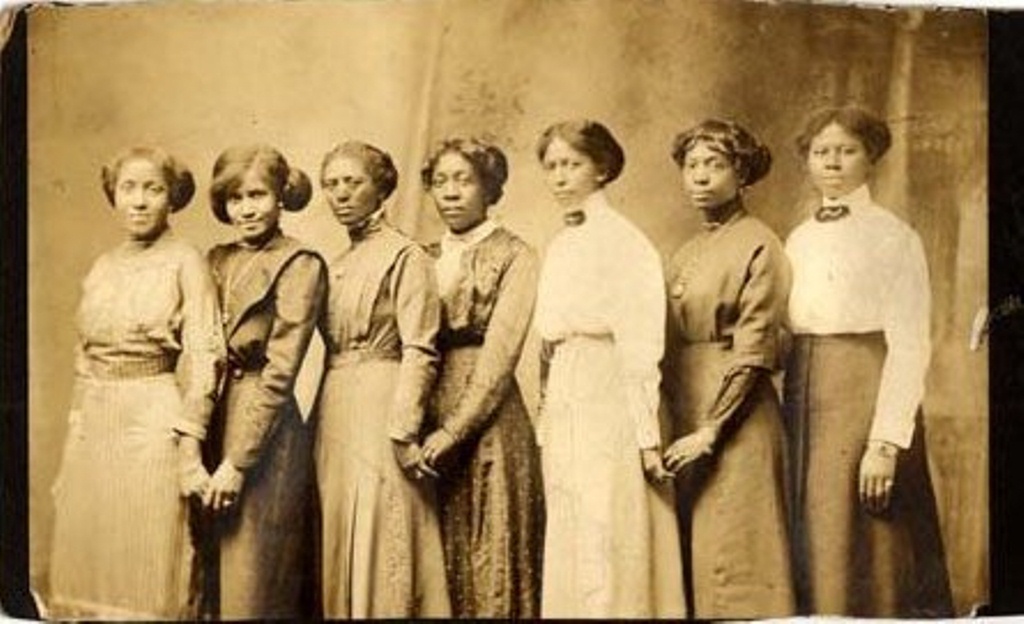
Just having the experience of being a part of a sister circle, makes me think about the survival of the generations of women that came before us. The bond between sister friends is a deep aspect of our history. And that is why I believe Black women have become so resilient. Not out of anger but out of emotional bonds that hold us up.

So today, I just want to say thank you to all of my sister friends and our sister circle. Marie, Zakiya, Griselda, Halycon, Anita, Alexandria, Keena, Rodniqua, Patrice, Shari, Rachel, Janine, Candice, Valeria, Nikki, Margo and more.

Love, J.A.M. Aiwuyor

-Join my mailing list-

The Ghost Of Nelly’s Tip Drill

nelly-1

“It mus be that a** cause it ain’t your face. I need a tip drill. I need a tip drill.”

Hip Hop artist Nelly has reignited a 10 year old firestorm about his notorious Tip Drill video. About ten years ago, Nelly was set to  launch a bone marrow drive for his sister at Spelman College. But his plans were foiled when a group of Spelman students confronted him on the issues of misogyny and the hyper-sexualization of Black women in his music videos. They invited him to speak on the issue and have an open discussion about it. Nelly wasn’t having it. He pulled his funding from the bone marrow drive and it was a huge media fiasco. However, the Spelman students did host a bone marrow drive of their own.

tip-drill111

It tarnished Nelly’s career and he hasn’t recovered since. His sister also lost her battle with Leukemia. Over the past few years, the dust has settled and Nelly has slowly reemerged in the spotlight. However, he recently appeared on the Huffpost Live show where he basically blamed the students of Spelman for the death of his sister.

He believes that they should have left the issue of his misogyny alone and just focused on bone marrow. I’m surprised ( I don’t know why) that after all this time Nelly still doesn’t get it. Those students weren’t attacking his bone marrow drive efforts, they wanted him to confront the public spectacle that he created off of Black women’s bodies. The same bodies that he was seeking bone marrow from. For some reason, he can’t see that yes this is connected. Should we only care about his sister and not the other millions of Black girls and women that are being objectified and hyper-sexualized?

Before you go there, let me say this. Yes, those are Black women in his videos that willingly consented to being objectified. They do not speak for all of us, yet unfortunately they are viewed as a representation of Black women. And the promotion of this objectification through both song and video, participates in upholding a wide spread normalization of the degradation of specifically Black women. The degradation is so normalized that more often than not, Black women and girls have a hard time getting support after being molested, raped, and forced into prostitution (sex slavery). This normalization says, “It’s okay because they’re made for this.” Consequently, Black women are often blamed for the sexual abuse that they endure.

Just take a look at this trailer for the documentary Very Young Girls.

It’s deeper than Nelly would like to think.

Nelly is refusing to acknowledge the ghost of his Tip Drill video and what it stood for because he doesn’t have to. Treating women like property and refusing to acknowledge the right of Black women to voice their concerns outside of supporting male centered thinking is the norm. More specifically, if Black women dare to speak up for the ill treatment of women and girls, we’re viewed as somehow betraying our community.

The truth is, Nelly (as he not so eloquently pointed out) is not the only one. We know through our lived experience that almost every mainstream rap song and music video is embedded with the domination of women  mentality. It was here before Nelly and it’s thriving after his short reign at the top of hip hop charts. Nelly isn’t pressed to truly think about this issue because our lived reality continuously reinforces his sentiments.

That is why what the Spelman students did is so important. They took a stand on an issue that is harming our community. And they did it despite how unpopular their stance was. We often talk about a plethora of issues in the Black community. However, things will only change for the better if we run towards our fears and truly confront the internal roles that we play. What those students did was a step in the right direction and can serve as a guide for how future generations can confront these issues head-on. One day I hope Nelly realizes this.

Stop Apologizing For Being Black: Natural Hair In The Workplace

BlackWomanArtist

During this recent dip in the economy, many Black people have been forced to endure the dogged job hunt chase. Many of us are qualified (or over-qualified) citizens with plenty of talent and credentials. However, by being Black we are placed in a unique situation of double-consciousness. In the case of black women, we face a somewhat triple- oppression having to deal with our color, sex and socio-economic statuses. One key factor in the job hunt fiasco that specifically affects Black women is our hair. On countless blogs, websites and forums the questions continue to be asked, “ Is natural hair unprofessional?” or “Should I straighten my hair or wear a wig to get a job?” I have seen a plethora of answers and there is always the dreaded conclusion that we must alter ourselves in order to gain employment.

However this issue is much deeper than being about employment. When are we going to realize that the more we continue to alter ourselves to please “others”, the more we are succumbing to the sub-human state of existence that is being placed upon us? This is an issue of forcing the world to recognize our humanity, our God given right to exist the way we were created. When we change our hair, skin or body to please other people we are in essence saying, “You’re right, there is something wrong with being Black.”

When is the last time you saw a discussion about Caucasian women afraid to wear their hair straight for fear of unemployment?

You’ve never seen it because it doesn’t exist. European phenotypes are unfortunately perceived as normal. Meanwhile, African phenotypes are viewed as abnormal in a society that is predominantly Eurocentric. This is why multi-million dollar companies such as Nivea can create advertisements referring to Black hair as “uncivilized” without seeing anything wrong with it. However, this can change and it’s changing more and more everyday. It takes persistence, even in the face of hardships, to make the world respect our right to humanity. We are not three fifths of a man. We are human beings on this planet and we have a right to exist fully and completely.

The more we allow ourselves to be disrespected, the more we will continue to face blatant and overt discrimination concerning our hair, skin and bodies. Furthermore, do you really want to work for a place that does not respect you or your heritage? Wear your hair kinky, curly, straight, bald, twisted or braided but please do your hair the way it pleases you. Not someone else. Let us stop apologizing for being Black. We have to make the world recognize and respect who we are, as we are, unapologetically.

Jessica Ann Mitchell Aiwuyor is a writer, social justice advocate and the founder of Our Legaci. Learn more about her work at JAMAiwuyor.com. Email JAMAiwuyor@gmail.com.

@TweetingJAM – Facebook.com/JAMAiwuyor 

HIV Negative…I Got My Papers. Do you?

A few days ago I was at work skimming through an old issue of Essence Magazine that I kinda sorta stole from one of my closest sista girlfriends. I got to this article called Capital Offense about the HIV/AIDS epidemic in Washington D.C. According to this article, D.C. is our nation’s leader in AIDS cases, with Black women making up most of the new HIV cases. African Americans make up “84% of newly reported HIV/AIDS cases” in The District of Columbia. Now, usually I skip articles like these because they are very scary to take in. But this time, I forced myself to continue reading and the more I read, the more I realized that I had been underestimating the extent to which HIV/AIDS was affecting the Black community. I kept thinking wow, this is real. HIV/AIDS is real and the topic should not be ignored or avoided because many of us are dying. The poverty that plagues the city plays a key role in this epidemic as nearly 19% of its resident’s are poverty stricken. Needless to say poverty begets crime and drug use, which leads to the exchange of needles, which leads to more cases of HIV/AIDS.

So I decided that I would take a step towards eliminating this epidemic and get myself tested. The last time I was tested was about 9 months ago but the health department encourages follow ups so I scheduled an appointment yesterday. Today, I sat in the Health Department anxiously awaiting my turn, paid my $15, and saw the nurse. My nurse was an old Black Woman with a warm southern accent. She reminded me of someone’s no nonsense but loving Grandmother. She drew blood from my finger, pushing down hard around the opening to get a good drop of blood. After she sent the blood off for testing (which took 20 mins), she decided that we would have a talk.

We went to another office, closed the door and she said to me, “What do you know about HIV?” I was so startled by the question that my little Master’s degree went out the window. I found myself stumbling over words and saying the little bit I could remember. Then she gave me the most elaborate explanation of HIV/AIDS that I have ever heard. She started at the beginning and talked about everything: “The best ways to avoid contracting HIV is abstinence and condoms. Condoms are 99% effective. Don’t exchange needles. Don’t even exchange crack pipes because there may be wounds in your mouth. If you are bisexual, wash your toys in Clorox. HIV/AIDS dies within seconds when it hits the air but if you are positive don’t leave bloody articles around. If you are positive and you have unprotected sex with someone else who is also positive, you may increase your chances of turning HIV into AIDS.”  And so on and so on. I was like a little kid again in school at my desk. Then my teacher said, “Okay now sit out there while I go get your results.”

As I sat, all of the things that she said were running through my head. That’s when I realized that this woman really cared about me. I have been tested on numerous occasions and nobody took the time to see if I really understood what was going on. No one ever took the time to make sure I knew how to protect myself. No one ever took the time to speak to me on a personal human level about getting a HIV test.

When she called my back to the office, she informed me that my results were Negative. Then she gave me another talk about protecting myself. These were her words, “Trust NO ONE. Don’t trust anybody! The Black male has little concern for the Black female. He will go out and have sex with a risky person and then come right back to you and give it to you… A lot of women get HIV from their husbands. A woman I knew died this way… If a black man goes to prison and doesn’t have it already, chances are he has it when he comes out and passes it right along…Some people with HIV get sad and go spread the virus on purpose to share it with others… Don’t trust anybody!…Use a condom.”

The words of this old Black woman stung me. Reality set in. How many times have I engaged in intercourse unprotected with a boyfriend? How many times have we all done this, whether it was a girlfriend or boyfriend (maybe even one that we didn’t really trust)? Then, usually, especially in youth, those relationships don’t last. We don’t realize how many times we are putting our lives at risk. On the subject of the black man, those are her opinions. However, it has been proven time and time again that you may think you’re the only one and in reality you are as Aretha Franklin puts it, in a “Chain of fools.” The results are higher rates of HIV/AIDS cases among Black women than any other category in the U.S. Still, we hardly ever talk about it in our communities. It’s a secret, a hidden all out epidemic.

I just want to say to everyone. Love yourself. My sista Griselda reminded me of that in an article she wrote a few weeks ago. We’ve got to start loving ourselves better. We need to talk about this issue more openly. Churches (the best avenue to reach Black People) need to have some HIV/AIDS classes and testing days. We need to fight for Brothas in prison to have access to condoms. We need to remind Sistas that love for self is more important that HIS love. And we need to destroy this sexist misogynist illusion of Manhood that so many Brothas have fallen susceptible to. We need to replace it with “real” knowledge of self and self love.

So, I just wanted to let you all know about my recent eye opening experience. Please go get tested and tell your friends to get tested. Get educated about HIV/AIDS, so that we can prevent it from spreading. We don’t have to live like this. We can prosper. We can save our communities.

By Jessica Ann Mitchell

info@TheLegaciOnline.com