Black Music The Mis-Managed Gift

iStock_000009469729Small-Earphones

In the late 1960s and 1970s, the top Rhythm and Blues songs were about racial pride and self-love.  Songs like “We’re A Winner,” “Higher Ground,” and “Respect Yourself” inspired a generation of African Americans to work together and feel better about their circumstances. Today’s (urban) music contains derogatory language, normalizes violence, and promotes the pimp/gangster mentality.

James Brown asked Al Sharpton during their last conversation, “What happened to us that we are now celebrating from being down?  What happened we went from saying I’m black and I’m proud to calling each other niggers and ho’s and bitches?”  Brown said, “I sung people up and now they’re singing people down, and we need to change the music.”

James Brown was right.  Here are three reasons why we need to change the music in 2014:

1. We are not keeping it real. Rappers are unfairly blamed for many of the problems in the black community.  Professor Michael Eric Dyson argues that, “the demonization of gangsta rappers is often a convenient excuse for cultural and political elites to pounce on a group of artists who are easy prey.” I completely agree. However, we, as a community, need to challenge gangster rappers’ specious justifications for promoting violence and using derogatory language.

Many rappers rationalize their negative content by proclaiming to be street reporters. 50 Cent said, “Music is a mirror, and hip-hop is a reflection of the environment that we grew up in.”This statement is disingenuous. Many gangster rappers, including 50 Cent, do not simply rap about what they have experienced. Oftentimes, they glorify the worst aspects of the inner city. A perfect example is 50 Cent’s popular 2003 song “P.I.M.P.”

He raps:

I ain’t that nigga trying to holla cause I want some head/ I’m that nigga trying to holla cause I want some bread/ I could care less how she perform when she in the bed/ Bitch hit that track, catch a date, and come and pay the kid/ Look baby this is simple, you can’t see/ You fucking with me, you fucking with a P-I-M-P.

In this song, 50 Cent describes the life of a pimp as being exciting and glamorous. Taking on the persona of a pimp, 50 Cent brags that he drives a Mercedes Benz and wears tons of jewelry. If I were young or naive, I might think this would be a great career without negative repercussions.

50 Cent’s assertion that he raps about reality is not accurate.  This song does not reflect the true pimp-prostitute relationship in the inner city. Pimps engage in dangerous and criminal behavior. They can be sentenced to long prison terms for major offenses such as operating a prostitution business, child sex abuse, and sex trafficking. Moreover, pimps and gangsters ruin our communities. They prey on vulnerable girls (sometimes as young as 14 years old).  These girls are forced to engage in sexual activities in dirty motels, back alleys, and even the backseats of strangers’ cars.

I do not want to single out 50 Cent or this song.  Currently, the most downloaded hip-hop songs use the gangster/pimp/thug trope. As of January 2nd, 2014, YG’s “My Nigga” has spent 12 weeks on the Billboard Hot 100 Chart; and in less than three months (September 2013-December 2013), the single was certified Gold, meaning it was downloaded or streamed on-demand over 500,000 times. Songs like these wrongly promote actions that are illegal and deleterious to our community.

Think about the way repetitive lyrics and stylized music videos can influence impressionable young boys and girls. In The Hip Hop Wars, Tricia Rose writes, “As it stands now, ‘keeping it real’ is a strategy that traps poor black youth in a repetitious celebration of the rotten fruits of community destruction.”Furthermore, this distortion of inner-city life continues to link African Americans to laziness, criminal violence, and sexual insatiability; thus, reinforcing the most potent racist and sexist images of the black community.

2. Not keeping with tradition. In a 2007 sermon, Al Sharpton responded to arguments by rappers like 50 Cent.  Sharpton noted that black music has never been just a reflection of black life; black music has always encouraged and uplifted our community. Sharpton explained, “During slavery, we were not just singing about picking cotton; we were singing “Go Down Moses.” During the 1950s, we were not just singing about sitting at the back of the bus; we were singing “We Shall Overcome.” In the 1960s, when whites told us we were less than equals, we were singing, “I’m Black and I’m Proud.”Black musicians have always inspired our people to dream higher and think bigger.

One of the best examples of this is James Brown’s “Say It Loud – I’m Black and I’m Proud.” In the 1960s, Brown worked tirelessly to uplift our community. By 1968, he was frustrated that African Americans were still being marginalized and oppressed.  He was also disheartened by the rate of crime within our own neighborhoods.  In fact, urban violence was the final impetus that motivated Brown to write his trademark song.

In The One: The Life and Music of James Brown, R.J. Smith recalls Brown watching a television news report about black-on-black violence with his longtime manager, Charles Bobbit. The book notes, “Mr. Brown said, ‘Black people love each other, why do we have to do this to each other?’” After a few moments, Bobbit retreated to his room. Brown asked him to come back twenty minutes later. When Bobbit entered, he saw two napkins with the phrase written, “Say It Loud – I’m Black and I’m Proud.”  Brown asked Bobbit to gather 30 kids and meet him at the recording studio. Using the young people to help him sing the chorus, Brown recorded the song that night.

Brown, later, explained his reason for incorporating boys’ and girls’ voices into the song. In his autobiography, he wrote, “If you listen to it, it sounds like a children’s song. That’s why I had children in it, so children who heard it could grow up feeling pride.” Over 50 hip-hop songs have sampled James Brown’s melodies.  I wish more platinum-selling artists today would emulate Brown’s desire to use lyrics as a means to empower and uplift young people.

3. Music is a powerful tool In our culture, musical artists and their songs have always enjoyed a central role.  Nikki Giovanni once wrote that, “if [Aretha Franklin] had said, ‘come let’s do it, it would have been done.”Even during Dr. Martin Luther King’s career, comedian and activist Dick Gregory understood that an artist like Aretha Franklin had just as much political and social impact as King. “You heard her three or four times an hour. You heard him only once on the news.” This analogy is even more true now. Not only do we hear a song by an artist like Rihanna or Kanye West several times an hour on the radio, but we are also inundated with their music videos on television and online.

Every time an artist of that caliber releases a new single or album, millions of people all over the world are talking about it and/or sharing it via social media. Three weeks ago, so many people were downloading the new Beyoncé album and posting about it across all social media platforms that many pop culture commentators joked, “Beyoncé had broke the Internet.” Furthermore, Rihannahas over 32 million more followers on Twitter than First Lady Michelle Obama. Today, our musical artists have an even bigger platform to help shape our community’s discourse.

Throughout black history, artists like Aretha Franklin took advantage of their unique position by recording empowering songs like “Respect” and “Think.”  One of Aretha’s favorite songwriters and artists, Curtis Mayfield also used his status to encourage African Americans during the civil rights movement.  In Higher Ground: Stevie Wonder, Aretha Franklin, Curtis Mayfield, and the Rise and Fall of American Soul, Werner writes:

When the struggle seemed too much to bear, followers of both Martin and Malcolm took heart from Mayfield’s gentle exhortation to “Keep On Pushing.” As they savored the bonds of love and friendship that bound their families and the movement itself together, they sank into the soothing harmonies of “I’m So Proud” and “Woman’s Got Soul.” “People Get Ready” tapped the deepest wellsprings of the gospel vision and gave many a weary soul a place to rest.

Some people suggest the civil rights era demanded an approach that is no longer relevant or necessary. This argument is problematic. During that period, we were fighting for justice and equality in greater society while simultaneously wrestling with complex issues within our own community.

In 2013, we experienced the Trayvon Martin verdict, the striking down of a major component of the Voting Rights Act, and the continued proliferation of the prison industrial complex. Yes, we continued to celebrate having a black president; but, we only have one black governor (out of 50) and one recently elected black senator (1 of 100) in the United States Congress.

In addition, we struggled to find ways to curb inner-city youth and gang violence. This epidemic claimed the lives of too many of our precious boys and girls. Moreover, the homicide statistics did not account for the countless young people who survived violent attacks but were severely injured, traumatized, or emotionally numbed.

In 2014, we still face many uphill battles and challenges. And that is, ultimately, why we need to change our music. We need songs that will motivate us to stay positive. We need songs that will encourage our young people to graduate high school and attend college. We need songs that will remind us to respect ourselves and our community. We need songs that will inspire a generation to work together to solve our most difficult problems. Now more than ever, we need our artists to sing us up!

Jarrett MathisJarrett Mathis is the Founder of Empowering Ourselves, Inc., a 501© (3) non-profit organization, whose mission is to empower black youth and reduce violence in Brooklyn, New York. To learn more about Empowering Ourselves, please visit www.EmpoweringOurselvesInc.org.  He can be contacted at jarrett@empoweringourselvesinc.org
Everybody’s Uncle: Representing For The Black Extended Family

fresh-prince-of-belair

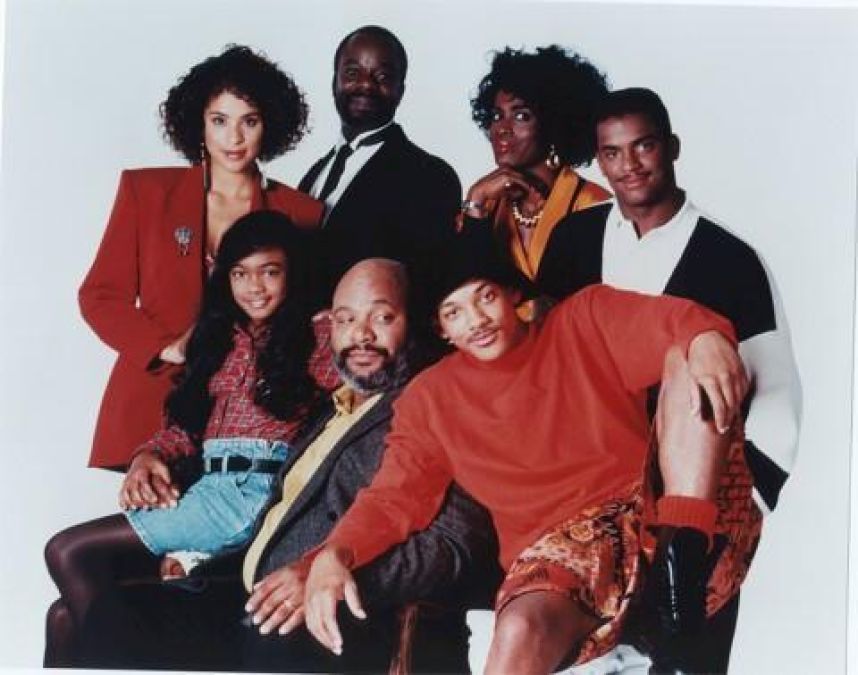
Before there was Dr. Phil, everyone “knew” Uncle Phil. The Fresh Prince of Bel Air was a top rated family sit-com for six seasons, especially among African-American audiences for its ability to stylistically merge the Hip Hop and Civil Rights generations, highlighting differences in age and economic class in a comedic way. The show takes place in Bel Air, a neighborhood not unlike Beverly Hills. As a native of Los Angeles, I’d visited Bel Air, which looked quite similar to the home featured in the  show’s intro. Though I lived on the east side of town, worlds apart from the opulence of the Banks family, in some way-like the Cosbys, they were real to me. Uncle Phil was real to me.

The character of Philip Banks’ is truly worth some analysis as it stood out as a unique voice for manhood and fatherhood during 90’s television and beyond. He started out a respected attorney, and through the duration of the show became a judge.  James Avery played a sharp attorney in a tailored suit that owned a mansion with a lawn the size of a football field. This image stood in stark contrast to the casual shirts, baggy pants, baseball caps, and designer shoes worn by the show’s leading character played by a young Will Smith.

However, the power of Avery’s character was his role as a family man. A provider and tough, yet loving relative, Uncle Phil character, alongside Aunt Viv, showcased communal parenting and the value of the extended family.

Unlike shows featuring Black youth who were adopted by strangers, such as Different Stokes and Webster, Fresh Prince displayed a family extending kinship to a relative in trouble. Remember the words to the intro theme:

“When a couple of guys, they were up to no good; started making trouble in my neighborhood. I got in one little fight, and my mom got scared…”

I trust you know the rest. While an extremely catchy lyric, the song reflects the heightened distress that mothers of urban youth, especially Black males,  were experiencing all across the country in major cities during a rise in gun violence and the popularity of color-based street gangs. Absentee fathers, overwhelmed mothers, and societal conditions in Black communities make extended family practices in the U.S. commonplace. It is essential to survival.

Rather than the narrow limitations of the nuclear family, the extended family approach wholeheartedly embraces the African proverb, “It takes a village to raise a child.” Uncle Phil became synonymous with that village in so many homes for years.  In turn, we welcomed him and the Banks family into our homes, making them part of our extended family, so to speak.

James Avery passed away on New Year’s Eve. It is true that death happens every day, yet it feels intensely punctuated when a well-known person goes home on a holiday.  Shortly after interviewing Mr. Avery in 2005, my paternal uncle passed away on New Years Eve. In a twist on taking care of extended family, Uncle Tony moved in with my sisters and parents after he had a close brush with death living on the streets. My mother helped nurse him back to health. He went on to live about 5 years longer than any doctor ever expected. I thought of him a great deal today, just as I thought of Uncle Phil.

James Avery will be greatly missed by all those who enjoyed him years ago, as well as those who got a quick thrill out of seeing him on crime dramas like CSI: Miami and Grey’s Anatomy. He played a role, an unmistakable character that broadened notions of fatherhood and family. As much as we will miss him, let us not forget to keep his family, grieving in a way that is far from the fiction of a script, lifted in prayer, just like a true extended family would.

alexAlexandra Barabin is a writer, public speaker, and cultural facilitator. She is the Founder of Sun Up Business Management and www.YesSheIsMe.com, a community dedicated to women and girls. She can be contacted at SunUpSays@gmail.com.

The Living Prayer: 150 Years Of Watch Night

iStock_000017330620Small
For 150 years African Americans have been gathering at church on New Year’s Eve to pray and celebrate new beginnings. We call this “Watch Night”. This tradition was started on December 31, 1862, the day before the Emancipation Proclamation went into effect. They prayed and waited through the night for official confirmation of the good news.

When I think about that faithful night, I imagine what their prayers must have been on the height of anticipation. I’m reminded of my own family’s struggle for freedom, even after slavery ended. My grandmother was a very young girl when my great grand parents packed up  their children to escape from the new form of slavery called sharecropping.

The opportunities and successes bestowed upon my generation are not “entitlements” or  “handouts.” They are hard fought liberties, the result of faith coupled with tireless works. Our freedoms came through the wet nurses, slaves, cooks, bus boys, school teachers, preachers and drivers…the everyday people that lived in the midst of sheer pain and wouldn’t allow themselves to die out even when the pain was too much to bear.

Somebody dared to dream of freedom, prosperity and hope. Somebody saw the bodies hanging from trees and wouldn’t let it stop them. Somebody pushed those limits until they burst at the seams.

Somebody prayed. It is through these prayers that fears were diminished, aspirations were solidified and futures were protected. It is through this legacy that new generations dare to go further and reap what was sown by our forefathers and foremothers.

Watch-Meeting

Often slave rebellions and freedom movements were organized by preachers, spiritual leaders and activists like Nat Turner, Denmark Vesey, Queen Nanny, MLK, Ella Baker, Mary McLeod Bethune, Toussaint Louverture, Malcolm X and etc. It was they who foresaw brighter futures.

The mantra holds true, “We’ve come this far by faith.” This faith maintains that “trouble don’t last always,” and “weeping may endure for a night but joy comes in the morning.” How quickly we forget how we got over.

We live in the age of Apps, iPhones, Facebook, and Twitter. It’s easy for us to become consumed with the world around us. We often forget that even the most simple rights like drinking from a water foundation and ordering food, were hard fought.

One hundred fifty years ago, our ancestors held the first official “Watch Night.” They’re still watching, guiding new generations as we usher in a new dawn. 

JamAllen2-nb-smallJessica Ann Mitchell is the founder of OurLegaci.com & BlackBloggersConnect.com. To reach JAM, email her at OurLegaci@gmail.com.

Follow OurLegaci on Facebook at Facebook.com/OurLegaci.

How Politics, Racism and Facebook Ended My 16-Year Friendship

facebook-racism

This Christmas I will not be speaking to my friend of 16 years.  Why???  Well after years of reading his Facebook posts I slowly and painfully discovered that my white friend was a racist. Initially I tried to ignore it but as an African American man I could no longer stomach his increasingly toxic, race fueled comments that were initially veiled as just boisterous, conservative rhetoric. After debating him online for years over politics, race and social topics I finally had an epiphany. I could no longer excuse “Adam” by brushing him off as being a hyper-conservative republican. His truth was undeniable. However, I chose not to confront Adam about it, instead I quietly un-friended him on Facebook. Weeks later he confronted me and unloaded a barrage of online insults accusing me of being the actual racist and a “radical” for calling out discrimination, something I’ve aggressively done for years on Facebook, Twitter, Youtube and on my personal blog/website.

Initially I blamed Facebook and the bold frontier of social media, a place where like-minded individuals are able to find strength in numbers in pack like mentality as the source of Adam’s racism.  But after deeper reflection I believe it is the rising public influence of social media combined with an unconscious internal racial/class angst within Adam and many other white Americans that has now spewed to the surface with the election and re-election of the nation’s first Black President, Barack Obama.

Our Friendship
handshake

Adam and I are about two years or so apart in age, both from the state of Alabama, both attended The University of Alabama although we didn’t know each other in college.  Four years later we bumped into each other in Atlanta where we both worked for the same company.  We vaguely recognized each other, discovered our mutual roots, college friends and quickly bonded as friends ourselves.  Oddly, our racial differences didn’t seem to matter especially since we both hailed from a state richly steeped in a tradition of hatred, slavery, Jim Crow segregation and racial discrimination.

Our twenties quickly turned into our thirties as we both chased our careers crisscrossing the nation with eight moves and five cities between us but we always stayed in touch. I remember once when I was going through financial challenges in Los Angeles, Adam gave me a financial gift to keep me going.  So we weren’t just causal buddies, we were genuine friends.

The Change Began in 2008

2009 Armed Forces Inaugural Committee

It was the election of America’s first Black President that was the initial trigger.  Adam’s criticism of the President, the economy and its sluggish growth, high unemployment along with his 2012 staunch support of Mitt Romney for president and his criticism of Obamacare is what blew open the divide between us.   Although these online conflicts are common between social media users and their “friends,” our conflict was much different and far deeper.

We weren’t just men hiding behind computer screens and mouse pads.  We were real life friends who shared secrets, hosted each other in our homes, supported, advised and even prayed for one another.  Now we were at odds with each other via social media and it was about to get much worse. As the great recession lingered, Adam became unemployed for a long time and felt significant angst about his place in the world and ability to sustain himself. He increasingly blamed Pres. Obama for not fixing the economy fast enough.  Meanwhile I was forced to completely abandon my media consulting small business in order to run back to a corporate 9-5 job when my client base dried up.  But instead of blaming Pres. Obama I blamed his predecessor Pres. George W. Bush along with the Republican led filibustering within the US Senate which blocked crucial jobs bills which would have grown the economy faster.  So our initial online clashes were over who really was to blame for our forced and dramatic career changes and life shifting situations.

By 2012 Adam was unabashedly lifting talking points from far right leaning FOX News network and spewing them across his Facebook feed without an ounce of criticism towards his own Republican party for its constant obstructionism, filibustering of key legislation and judicial nominations along with its gerrymandering of voting districts to seize control of the House of Representatives. He never addressed the conservative led 36 state Voter-ID “suppression” efforts which sought to reduce early voting, the number of hours to vote, plus stopped voter registration drives and blocked students at private historically black colleges and other universities from voting in the states where they attended school.

We soon became caricatures or perhaps archetypes of Facebook.  He was now a reliably grouchy Republican poster child stating how he wanted his country as he posted a picture of how red America’s voting districts really were but how we have a Democratic President and controlled Senate.  And I would fly in on his Facebook posts like a true blue Liberal Superman countering that much of the red on his voting map represented land based districts and NOT people filled districts not to mention the epic 2010 republican gerrymandered districts on federal and state levels. He soon started to attack immigrants and specifically Latinos when he posted how it felt being a white minority living in certain parts of Los Angeles and seeking out other white people.

But then it really got ugly!! In another post he tried to bash current day immigrants stating how his family migrated to America several generations ago and became productive citizens and that he demanded better from others in “my” country today. I angrily countered that my family had been in this country far longer than his since my descendants came on the slave ship Clotilde which docked in Mobile, AL in 1859. I informed him that Blacks have been in America since the 1600s in Jamestown, VA as slaves and that America really wasn’t “his” country but that he and his family were the true immigrants in America.In another Facebook rant Adam went after the poor chastising them for having too many children and for being on welfare, forgetting that he too was unemployed for a very long time and needed assistance. He also went after a women’s right-to-choose and gays with same-sex marriage stating there were far more important issues to tackle.True to red-state formation, Adam embraced only fiscal issues, rejected social justice topics and the hyphenation of America and instead longed for an era in which white straight men ruled America; an era which Adam never lived however generations later he unknowingly reaped the benefits of it through his white privilege.

Similarly I never lived in an era where blacks were captive to slavery and segregationist Jim Crow laws but I still felt the disadvantages and hurdles growing up and becoming an African American man trying to understand why it seemed so much harder for me to succeed even though I tried, worked and networked three times harder as my white counterparts both in business and within the workplace.Adam and I both felt internal angst about America and achieving the American dream but in two very different directions.  While Adam’s angst and path is often sympathized, even lauded at times, my angst and path is often discounted, demonized and scoffed as being simply excuses.

Were we really ever friends???

Adam and I represent a microcosm of American society and its growing chasm and obsession with race and class.  It’s a battle between a dying demographic (white conservatives) versus a young, growing, dynamic, multi-ethnic, multi-racial demographic which when combined with women, gays, elderly and the poor are finally having their issues and voices heard and addressed.

There’s a belief by the former group that somehow they are losing something when other groups gain their rights or have their grievances addressed.  They fear they might be retaliated against once all avenues of politics, business and social dealings are no longer brokered by themselves.  It is a fear I believe is striking at the center of Adam’s heart.

Today neither one of us is swayed by the other’s arguments and we exist as polar opposites in the world. So is our 16 year friendship worth saving? The answer for me  this Christmas is I’m not so sure.

HerndonDavisHerndon L. Davis is a former media activist turned corporate schmuck .  He can be reached at herndondavis@aol.com and at www.youtube.com/HLDATL.

Article originally posted on: http://herndondavis.blogspot.com

Scandal And The Problem With The Invisible (Black) Man

Photo Credit: Hollywood Reporter

“Like the bodiless heads you see sometimes in circus sideshows, it is as though I have been surrounded by mirrors of hard, distorting glass. When they approach me they see only my surroundings, themselves, or figments of their imagination—indeed, everything and anything except me.” ― Ralph Ellison, Invisible Man

“I’m standing right here,” Harrison said last week, demanding to be acknowledged as Abbey and David have a quite intimate sexual conversation in his presence. But his words are quite symbolic of his position during the three seasons of Scandal, ABC’s hit one-hour drama. Ten episodes into the season, hope for Harrison to step out of the shadows is fleeting. Instead, he appears to be fading away, like an invisible man.

Known for his episode defining one-liners like, “We are gladiators in suits,” more than his own storyline, Harrison is the most stagnant character of all . The fans have long noticed, but there were recent signs of life. After a two-season drought of absolutely NOTHING to add a layer to his back-story or current love life, season three has stalled on its promise to deliver. So far, we’ve got an exchange of threats between Cyrus and Harrison, a shirtless scene with a little inappropriate bedside manner and even less context; then there is that 30 second scene when a woman we’ve never seen walks in Olivia Pope’s office, tells Harrison to keep his phone on, and walks out. That’s it…since September!

He is quickly becoming a nobody; a one-dimensional, lackluster dolphins in a sea of sharks who often looks confused and out of place. Everything seems to just be happening around him. Once, a powerful presence, his character is quickly fading into the background. This troubles me even more because he is a Black man. While I maintain that Shonda has the most diverse cast in primetime television, I have always struggled with the representations of Black men on this show (for the sake of keeping this conversation focused, I won’t mention the challenges I have with the struggling character development of Black men on Private Practice and Grey’s Anatomy).

Before quickly dismissing me as a “hater,” stop early. I am a fan of the show. And I hear you fellow Gladiators when you say, “But Alexandria, what about that life-giving monologue delivered during the finale by Olivia’s father, a Black man, to Fitz??” Yes Lord! That scene gave me chills and the writing was brilliant! Yes, of course I saw the socio-historical reference of this older Black man calling this white man in a position of power a boy. But before I could fall too far in love, that same man had been fired, humiliated, and professionally castrated by the very man he just declared was beneath his pay grade, having his words served back to him cold: “If you cut off the head, another one will grow in its place.” So, you’ll have to forgive me if I want something more.

Eventually, I hope, in true Shonda fashion, that some great storyline will come from the depths of TV writing heaven, swoop down and take us all away to glory, making this all worth the wait. With such a long awaited faction of the show, they have no other choice but to do Harrison justice. The question is, for the love of gladiators everywhere, WHEN??

Why does any of this matter? Because I sat and watched a two-week mid-season Winter Finale twist and turn around almost every single character ripe with a spousal murder, a hostile take-over, and a double cross 3 episodes in the making. But, no Harrison. Not one thing.

There is something left to be desired by his absented presence and it needs to be addressed. Here are three reasons why:

*Harrison Is A Good Man (we hope!)
Compared to the other male characters on the show, Harrison is a prince among men. He is not a lying, backstabbing politician. He is not a manipulative Washington puppeteer sleeping with anything in a skirt. And he hasn’t killed anybody…yet. From what we’ve seen, he is dedicated, loyal, and a strong, trustworthy ally to Liv and her crew. Plus, as one of only four Black characters, three of which are Black men, Harrison needs much more context than he currently has because he’s been there from the beginning.

In season two, we were introduced to two other Black male characters significant to Olivia’s life. First, politician and love interest, Senator Edison Davis was presented as handsome, sweet, and well, let’s face it, weak. Yes, weak. Not an episode went by where Twitter and Facebook were not blowing up behind how docile he seemed to be, and how he was just no match for the powerhouse of Olivia. No chemistry or comparison to the passion and intensity of her former elicit romance with President Fitzgerald. Even though Edison is supposed to be a Senator, he seemed to be unable to do anything for (or with) Olivia.

The second man, we only knew in brief, yet chilling, cameo appearances until we discovered that he was head of B6-13. Oh yeah, and by the way, he is Olivia’s father. Commander Rowan “Eli” Pope is deliberate, calculating, manipulative, and vicious. The more we learn about him, it’s clearer how dangerous he really is. And after the way he read Fitz while he sat cuffed in a torture room, it is clear that he is not to be underestimated. The Sappy Senator and Daddy Pope provide two far-reaching extremes of masculinity and behavior that play right into typical archetypes of Black men: aggressive and violent or inadequate and feeble. Thus far, Harrison sits somewhere between the weak and the wicked. Adding some layers to his story may provide a much-needed opportunity for the show to see a powerful, complicated, yet compassionate man of Harrison’s class and swag.

*Harrison is the only one WITHOUT a story!
With very little present and even less of a past, how can we expect to believe Harrison as a Gladiator in a suit? We can’t, especially when every other leading character has evolved in some meaningful way. The longer that this is the case, Harrison will be confined to a one-liner sidekick.

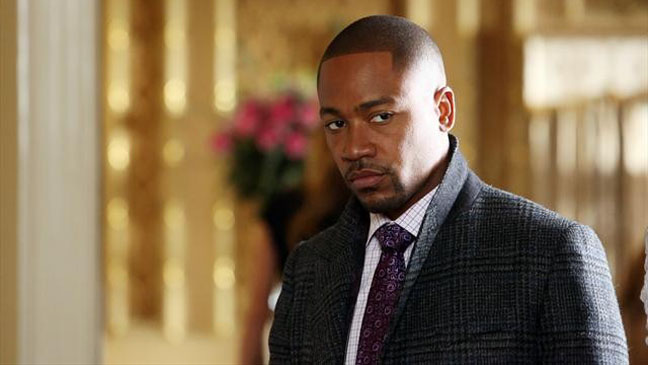
In fact, we rarely even see Harrison outside of the work he does with the team. What is he doing when Huck is at AA meetings with Quinn sneaking closely behind? Or when Abby is sneaking off to have an affair with nemesis David Rosen? We pretty much only see him on the job. Far be if from me to complain about watching Columbus Short stand back looking handsome in a suit. However, in seasons one and two, every leading character experienced a major change, contributing to the storyline of Scandal, and complicating the game all the more. This of course is with the exception of our dear Harrison.

Think about it. Quinn has an incredible back-story that led the first season to a confusing, yet exciting cliffhanger. Now, she is in some crazy double-cross set-up, sleeping with the enemy! Then, there is our loveable assassin. #whatthehuck was trending everywhere! We learned more about his previous life then we ever thought possible. Now, in every new episode, Huck is the central connection to black ops org B6-13. We even see reporter James Novak shift in his family and career goals as husband to the sinister Chief of Staff, Cyrus Beene. And the lovable, yet elusive all American hero, Jake shocked us all with that stealth move at the end of last week’s episode. But when will the crumbs that were left behind thus far lead us home to Harrison?

*Harrison is Becoming Irrelevant.
Without his own story, Harrison’s authority is diminished. Right now, his presence and his contributions to the story are irrelevant. We need Harrison to be fully human; to have a life, a family, or a love interest; anything that makes him a whole person. We are rooting for him to win!

Despite the slow progression, there has been a slight arc to Harrison’s character. In the midst of assassin Huck’s breakdown, we see Harrison step up to be Olivia’s head partner at “the firm.” It is thrilling to see him leading client meetings, giving tactical orders to the team, and rallying them together in Olivia’s absence. However, I can’t help but feel his power is underscored by his insistence on being there time and time again as the strong second-in-command when Olivia’s gut is off, wrong, or broken. In more than one episode, Harrison volunteers, in true gladiator fashion, to lay down his life for her, assuring her that he will do what ever it takes to help her figure it out. On multiple occasions, their encounter looks like this: Olivia stares blankly at her foot solider, often refusing to answer his questions, and coldly walks out of the room without an explanation, literally ignoring him. #whattheharrison!

Without a story of his own, Harrison is a sidekick, just a simple accessory to go with Olivia’s fabulous wardrobe. My hope for Harrison is what gladiator’s everywhere are waiting for. Harrison’s time has come, and before Season 3 is done, we better get it!

alexAlexandra Barabin is a writer, public speaker, and cultural facilitator. She is the Founder of Sun Up Business Management and www.YesSheIsMe.com, a community dedicated to women and girls. She can be contacted at SunUpSays@gmail.com.

Please Excuse Davontaye, He Suffers From Povertenza

Povertenza

Dear Judge,

I know that Davontaye’s actions caused the deaths of four people. But please don’t give him life in prison. He suffers from Povertenza. You may not know about this condition but Povertenza is an illness that people from impoverished socio-economic backgrounds have.

Due to the inability to access quality education and employment, Davontaye’s development has been stifled. This leads to poor decision making and I would further argue that since his neighborhood sees so much death and destruction, that he may even suffer from Post Traumatic Stress Syndrome in addition to Povertenza.

Judge, it is clear that Davontaye can not be held responsible for his actions. He needs rehabilitation, not prison. Prison would only worsen his mental condition. 

Sincerely,

J.A.M.

This defense obviously doesn’t work for black  and poor youth. Yet, news outlets are spiraling about 16 year-old  Ethan Couch who caused the deaths of 4 people by drunk driving. His defense, was that he suffered from “Affluenza” a disorder that only the affluent have. According to his lawyers, Couch was shielded from personal responsibility his entire life. Discipline is not a word in his vocabulary.

Affluenza

Judge Jean Boyd sentenced him Tuesday to 10 years of probation but no jail time, saying she would work to find him a long-term treatment facility.

But Eric Boyles, who lost his wife and daughter in the crash, said on CNN’s “Anderson Cooper 360,” “There are absolutely no consequences for what occurred that day. The primary message has to absolutely be that money and privilege can’t buy justice in this country.” – CNN

Basically, Couch was coddled his entire life and now his punishment is more coddling.

On the flip side, there are millions of under-privileged youth across America, that have lived under the worst conditions imaginable. They’ve witnessed murders, endured hunger, and survived sexual abuse. However, upon committing a crime, they are handed down the harshest prison sentences imaginable. As I’ve pointed out before, many youth spend years in prison for crimes they didn’t commit because they didn’t have enough money to sway the justice system or get proper legal counsel. It’s a non-laughable joke.

If “Affluenza” is real, then I posit that my newly coined “Povertenza” be considered. Instead of jumping to fill up prisons, let’s start putting youth from disadvantaged backgrounds in treatment facilities. This would be ideal, but it won’t happen because there is too much money to be made. This is one of the reasons why Judge Mark Ciavarella Jr was able to sell 5,000 children to prisons.

Disgraced Pennsylvania judge Mark Ciavarella Jr has been sentenced to 28 years in prison for conspiring with private prisons to sentence juvenile offenders to maximum sentences for bribes and kickbacks which totaled millions of dollars. He was also ordered to pay $1.2 million in restitution.

In the private prison industry the more time an inmate spends in a facility, the more of a profit is reaped from the state. Ciavearella was a figurehead in a conspiracy in the state of Pennsylvania which saw thousands of young men and women unjustly punished and penalized in the name of corporate profit. – Examiner

Most of the children he sentenced are likely to be from backgrounds that are far less privileged than anything Ethan Couch has experienced. His sentencing tells us a lot about the American justice system and how deeply embedded economic disparities are when it comes to accountability. Essentially, the poor are expected to be more accountable for their actions while the wealthy are viewed as inherently respectable (especially if they’re white). Being from what people view as a “good” family can go a long way. This opens the door for more opportunities and the right to be viewed as non-threatening even when your actions prove otherwise. This is exactly why racial and economic inequalities are an on-going battle.

The next time someone tells you that there is no such thing as “White” privilege or elitism, ask them why Affluenza is a viable defense but Povertenza isn’t.

JamAllen2-nb-smallJessica Ann Mitchell is the founder of OurLegaci.com & BlackBloggersConnect.com. To reach JAM, email her at OurLegaci@gmail.com.

Follow OurLegaci on Facebook at Facebook.com/OurLegaci.

Mandela, ALEC and The Fight That NEVER Ended

Photo Credit: ALEXANDER JOE/AFP/Getty Images

With the passing of Nelson Mandela, media outlets have been flooded with the constant championing of his ability to forgive. However, the bigger lesson to be learned is, apartheid never had to happen. Apartheid was not a mystical occurrence; it was a fully planned and intentional mass oppression of a people. The same can be said for the current systematic creation of the permanent underclass.

Mandela once said,  “Like Slavery and Apartheid, poverty is not natural. It is man-made and it can be overcome and eradicated by the actions of human beings.”

One of Mandela’s greatest wishes was that we never forget the millions of people around the world currently living in poverty and dehumanizing conditions. Forgiveness does not mean forgetting. Right now corporations and organizations like ALEC should be on the forefront of our minds.

ALEC-chart-e1355768773333

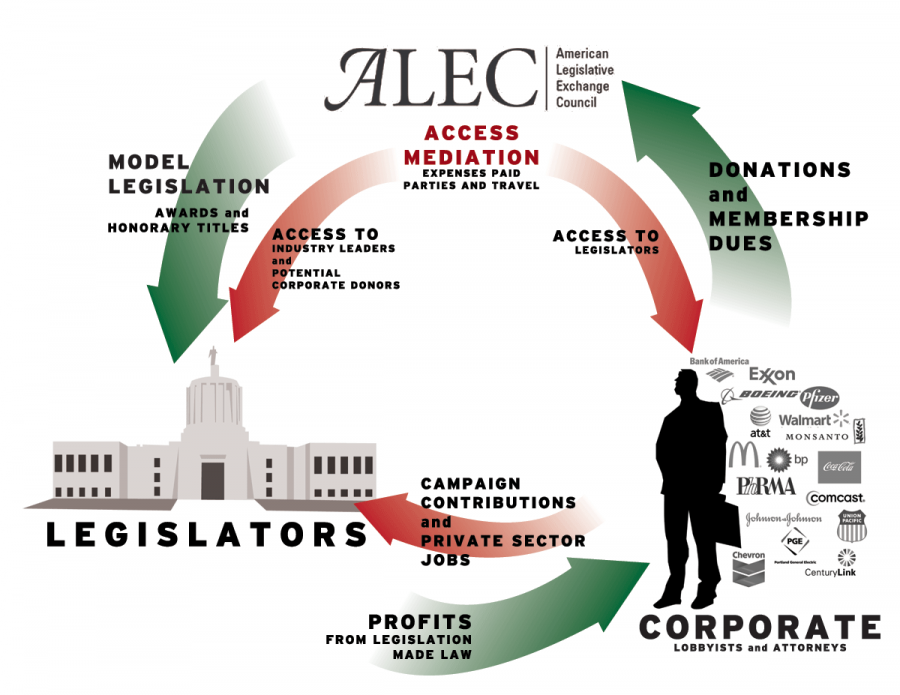
ALEC (American Legislative Exchange Council) is an organization of legislators, corporations and lobbyists that seek to control the global economy. In the 1980s, ALEC was a key organization that supported the South African apartheid regime and worked against divestment and sanctions.

In 2013, ALEC engineers voter suppression laws, making sure that it’s harder for Black, Brown, Young, Old, Women and Poor people, to vote in U.S. elections. They do this in order to prevent laws like The Affordable Care Act from benefiting people with low-economic statuses. Laws like the Affordable Care Act, provide a wider opportunity for the poor to have economic upward mobility.

This is a huge issue because it prevents corporations from sustaining the creation of a permanent underclass, which would allow for companies like Walmart and McDonald’s to continue their low-wage driven pay scale, thereby increasing profits. Though Walmart and McDonald’s both ended their membership with ALEC last year, they are still implementing the same policies among their workers which prevent economic stability.

In the most simplistic terms:

The poor remain poor due to their inability to access quality education, healthcare and other life saving resources. Poor education limits the earning potential of workers and substantially increases the chances of incarceration. Due to the fact that low-income wage workers can’t afford to shop somewhere else, they end up becoming consumers among the same companies and fast-food restaurants that try to suppress their votes.

 A cycle of poverty ensues leading to stress, violence, and the constant intake of low-priced highly processed foods. Consequentially, the top four causes of death for African Americans are heart disease, cancer, stroke and diabetes. African American is not synonymous with poor, however many African Americans face historical prejudices which make it difficult for economic advancement.

Furthermore, this issue goes beyond race. Though the construction of race plays an important role in social hierarchies, people of all races and various income backgrounds are susceptible to the underclass creation cycle. ALEC and other conservative groups use race-baiting and fear mongering to prevent unsuspecting voters from recognizing this until it’s too late. By the time voters realize that they’ve been hoodwinked, their home has been foreclosed on or a family member lost their battle with cancer due to lack of proper healthcare.

Still, even these issues are first world problems. In other parts of the world, poverty can be viewed in the form of children dying from preventable illnesses like diarrhea. And though the world is often draped in luxury and decadence there are still people that die from starvation or spend their lives working 20 hr days in sweatshops and factories under the worst conditions imaginable.

Mandela teaches us that our world doesn’t have to be like this. His fight against apartheid teaches us that we must not remain silent in the face of oppression. Yes he used forgiveness and reconciliation as a tool for healing a nation. However, forgiveness does not mean forgetting. Forgiveness and its blessings cannot be fully realized if the horrors of the past are white-washed, allowing for oppression to continue thriving in various forms.

Mandela’s main leadership example was fighting against the burdens placed on the poor and marginalized people of his country by the white supremacist doctrines of the National Party of South Africa and every nation, politician or corporation that supported/looked the other way while they structurally subjugated a nation of people.  (This includes Richard Nixon, Ronald Reagan, Margaret Thatcher, Citigroup, IBM, General Motors Corp, JP Morgan Chase & Co, ALEC and many more.)

Though apartheid has ended, the battle against organizations like ALEC and corporations that economically oppress people around the world has never really ended. Mandela said forgive but he didn’t forget. And so in the tradition of freedom laid before us, let us not forget that there is still much work to be done.

JamAllen2-nb-smallJessica Ann Mitchell is the founder of OurLegaci.com & BlackBloggersConnect.com. To reach JAM, email her at OurLegaci@gmail.com.

Follow OurLegaci on Facebook at Facebook.com/OurLegaci.

Kanye’s Frantz Fanon Complex

Photo Credit: Getty Images http://www.mirror.co.uk/
Photo Credit: Getty Images http://www.mirror.co.uk/

I recently wrote an article called, “Harry Belafonte Was Right About Jay-Z.” The article went viral, generating a huge response from the Black community and beyond.  A few readers were puzzled when I stated, “Kanye West…often laments about racism but strives to uphold the same materialistic values that help drive economic disparities.” Now, I will explore this more thoroughly.

There is no denying that Kanye West has had a tremendous impact on the music industry and pop culture. From the beginning of his mainstream career, Kanye has been critical of issues dealing with racism and the structures within it. His infamous, “George Bush doesn’t care about Black people,” statement caused a media frenzy and solidified the general sentiments of the Black community during the Hurricane Katrina tragedy.

Yet it seems with more fame and popularity, Kanye’s commentary has shifted from calling out racism because it’s wrong, to calling out racism because he didn’t get a seat at the table. This is the bigger issue.

Frantz Fanon
Frantz Fanon

The distinguished psychiatrist Frantz Fanon addressed this line of thinking in his 1961 classic Wretched of the Earth. In this literary masterpiece, Fanon deconstructed the colonized mind.

“The gaze that the colonized subject casts at the colonist’s sector is a look of lust, a look of envy. Dreams of possession. Every type of possession; of sitting at the colonist’s table and sleeping in his bed, preferably with his wife. The colonized man is an envious man.”

One cannot deny the lasting effects that slavery and colonialism has had on African Americans and people of African descent around the world. In a recent interview, Kanye vehemently states, “We’re all slaves!” I understand him to a certain extent. Indeed, there is a systematic glass ceiling that prevents people of African descent and people from low economic classes from upward mobility. Even when some rise up the ranks, there are still many barriers that prevent them from attaining certain goals because they do not come from a certain class (the old money class). This is where I understand Kanye on the fashion industry. They don’t want him and they never will. He will forever be categorized as “urban,” a description he is desperately running away from because he knows that this is another way of being pigeonholed and prevented from making a significant impact (beyond blackness and urbanism) in the fashion industry.

WEB_DuBois_1918
W.E.B. Du Bois

In some ways it coincides with  W.E.B Du Bois’ description of double consciousness:

It is a peculiar sensation, this double-consciousness, this sense of always looking at one’s self through the eyes of others, of measuring one’s soul by the tape of a world that looks on in amused contempt and pity. One ever feels his two-ness,—an American, a Negro; two souls, two thoughts, two unreconciled strivings; two warring ideals in one dark body, whose dogged strength alone keeps it from being torn asunder.

However, Kanye has time and time again demonstrated that he is displeased with the system solely based on the fact that he wants a seat at the table. His anger is steeped in envy rather than reform. And this is dangerous because we get away from transforming these hierarchical structures, to unknowingly reinforcing them.

For example, this is evident in his almost complete dismissal of Black models for his runway shows in Paris. He doesn’t seem too concerned about the pains of racism unless it’s affecting his own progress. Instead, he went with the flow and continued to allow for Black models to be denied a chance at equality. He also cheers on fashion brands that are known for their lack of diversity. The fashion brand Céline, was recently boycotted by the supermodel Iman, because of their refusal to hire Black models. Meanwhile Kanye West orders full wardrobes of Céline clothing, attends their shows and sports their brand.

Furthermore, he has a lack of respect for African American history. Much like the N-Word, no matter what way you look at it, the Confederate flag represents the deep rooted oppression of African Americans. In fact, it was used as a tool to remind us of our “place.” After the Brown v. Board of Education desegregation ruling, the state of Georgia started using the Confederate flag as a sign of the good ole’ days.

kanye-west-Confederate-Flag

The painful past associated with the symbolism surrounding the flag and what it represents is no laughing or fashion forward matter. According to the Southern Poverty Law Center, about 500 extremist groups still use the cross on the Confederate Flag as a symbol of white superiority. This example is tired and old but I can’t imagine someone wearing a Swastika for fashion. I wonder if Kanye will start wearing symbols promoting the South African apartheid era next.

When Kanye speaks about racism or slavery, he’s not doing it for the ordinary people, but instead for sensationalism. He is using the Confederate flag to generate buzz, no matter how hurtful it may be.

He also has an incessant belief that Paris is the only fashion mecca and it has to let him in.  Kanye recently wanted to help the Louis Vuitton brand with his “influence.” They promptly rejected the offer.

Kanye has an obsession with getting acceptance, but not the “colored” kind. When the radio host Sway tried to encourage him to maybe create his own way, Kanye gave the now Twitter famous reply, “ You ain’t got the answers Sway.”

Indeed none of us may have the complete answers to racism and upward mobility. However, given his track record and current behavior, Kanye simply can’t be taken seriously on racism.  With every new Kanye rant we are witnessing a public display of internal conflict consisting of Fanon’s “dreams of possession” and Dubois’ double consciousness. Ultimately, he cares more about having a seat at the table with the same people he accuses of racism and classism, than bringing about change.

JamAllen2-nb-smallJessica Ann Mitchell Aiwuyor is the founder of OurLegaci.com. To reach JAM, email her at JAMAiwuyor@gmail.com.

Follow JAM on Facebook at Facebook.com/JAMAiwuyor.

Why Black Children Can’t Trust The Police

KaliefBrowder
This is Kalief Browder. Thanks to the NYPD, three years of his life are gone forever.

[Article updated on August 12, 2014]

It’s something I wish I didn’t have to say. One of the first things we teach children is to respect authority. Listen to your elders. Go ask a grown up. When there’s trouble, dial 911. But, what do you say when the people they are trained to look up to as protectors, too often end up being aggressors. I realize that millions of police officers across the country put their lives on the line every day. Their jobs are hard. It’s not easy. Yet, no one can deny the heartbreaking reoccurring reality of innocent Black youth being killed, neglected or abused by police officers and other people in positions of authority.

I often wonder how to truthfully explain police interaction to children. I image it would go like this:

1) If you’re ever in a car accident, don’t run towards the police for help. They might shoot you. RIP Jonathan Ferrell

2) If you are ever being unlawfully arrested or detained, forget your rights. Don’t speak up for yourself. Even with your hands behind your head, they might shoot you. RIP Oscar Grant

3) Try not to be at the wrong place at the wrong time, like at home when police raid it. Try to disappear into thin air. But, whatever you do, don’t be seen. By standing in the hallway, you might get shot. RIP Aiyana Jones

4) If you’re ever with an adult that is in trouble with the law, you may not be recognized as the child that you are. In fact, you may have to carry a sign with you specifically for traffic stops. They can read, “I’m a child, please don’t bash in the window next to my head,” or  “Please don’t shoot at the van that I’m in.” Ask Oriana Ferrell’s children.

5)  If you’re ever walking home and you’re stalked by a (non uniformed) neighborhood watchman, don’t try to defend yourself. Or else they’ll feel threatened and have the legally upheld right to shoot you. RIP Trayvon Martin

6) Never. Never. Never Walk home at night (or day). They will think you’re a criminal and accuse you of any crime they see fit . You might go to jail for 3 years, only to be released without any explanation. Ask Kalief Browder.

7) If you ever get lost or missing. Don’t expect them to come looking for you immediately unless you’re blonde haired and blue eyed. Just find your own way home. Ask Amir Jennings, Phylicia Barnes and countless others. RIP Latisha Frazier.

8) If you’re ever abducted and forced into sex slavery, don’t expect to be rescued. If they happen to see you, you  will not be taken to the hospital. You will be arrested for prostitution… even if you’re 13 years old (the average entry age for sex trafficking victims).

9) If you’re ever acting up at school, don’t worry about what your mother will do when you get home. You might not even go home. Jail could be your next destination, even if you’re 6 years old. – Ask Salecia Johnson.

Updates

10) If you’re ever in a car accident, don’t knock on someone’s door for help. You might get shot and labeled a criminal. RIP Renisha McBride

11) If you’re walking down the street…Nevermind. Don’t walk down the street. Don’t breathe. Don’t do anything “normal” because—> you might get shot, even with your hands raised. RIP Mike Brown

12) If you’re ever in Walmart, don’t hold a toy gun. They won’t asking any questions, even though there shouldn’t be a need to. The police will just shoot you down and come up with an excuse later. RIP John Crawford III

The list could go on and on. Though it may seem outlandish, everyone of these circumstances are a part of the everyday realities Black youth face in America. The ever present fear of Blackness robs Black children of the opportunity to have their adolescence and innocence recognized. Even as children, they’re both feared and criminalized. Though the police should be protecting them, historically racist irrational beliefs presume that Black children aren’t in fact children. This breeds serious child endangering consequences like false imprisonment, abandonment and death. Too often police officers believe their job is to protect the public from Black children and not the other way around. It’s sad to say. But right now, Black children can’t trust the police. And why should they?

The Power Of Sister Circles And Safe Spaces

for-colored-girls
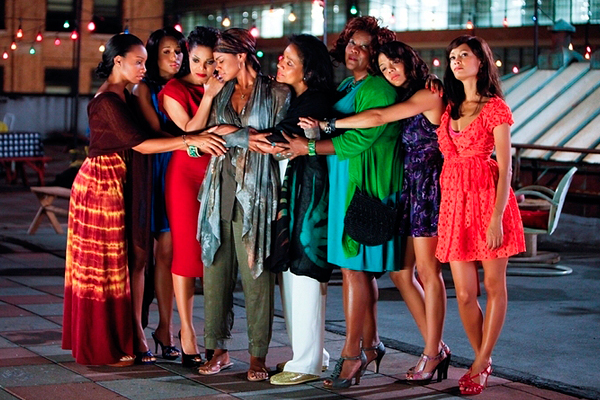
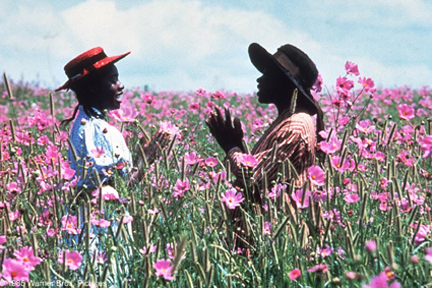
In graduate school, I was invited to join a sister circle. At the time, I had no idea what that was. What resulted was a life long bond with a group of Black women from across the diaspora (Guyana, Dominican Republic, & across the US). We shared our stories and spent hours revealing our inner insecurities. We trusted each other with our deepest regrets, struggles and fears. It was through our sister circle that I learned about sisterhood. There were many tears, hugs and affirmations.

To share your story…To be real with a circle of people you can trust, is one of the best feelings in the world. And I deeply believe that it is through these types of bonds that Black women have been able to survive so many atrocities and still come out with our sanity. Safe spaces in the presence of our sisters, is the place to heal because we know so much of the world seems against us, rushes to judge us, and disregards our truth. It was in these moments that I felt a wholeness that can only be achieved in knowing that these sisters had my back. We could go to each other for anything.

the-color-purple

Outside of the sister circle in grad school, I have another circle of friends including sisters I’ve known since I was 12 years old and others I met during freshman year of college.  I can’t tell you how many times I’ve made or received early morning or late night phone calls during which we’ve vented, came to each other’s rescue, and just served as a much needed listener. Sometimes, just having somebody listen makes all the difference.

Black women’s sisterhood is so strong that the army has actually started studying it. As the army deals with high suicide rates among soldiers, one thing has remained true…Black women still have the lowest rates of suicide in the military even though we all know they face higher rates of discrimination. Yet, we live on. The army wonders what Black women have that other groups don’t.

While the government does not break down military suicides according to race, among the general population African-American women have the lowest suicide rate of any group. Surprisingly, white men die most often by their own hand. “By comparison, the rate for black women was less than three suicides per 100,000.” “The sense of community among themselves, and the … built-in support that they get from each other is something we’re paying a lot of attention to, and trying to find ways to emulate,” Kemp told Government Executive. “I think often that veterans and men don’t have that same sort of personal support, and we have to build that for them.”  – The Grio

The Washington Post covered the power of Sister Circles in their article about a new program called Prime Time Sister Circles.

… Prime Time Sister Circles, a 12-week program focused on helping African American women in midlife improve their nutrition and fitness, and deal with stress. And just as important, participants say, the Sister Circles provides them with emotional and spiritual support akin to a long, tight hug. The circles are kept relatively small: no more than 25 women. Participants include those who make six-figure incomes and others with more modest means. They meet for two hours, once a week over three months and often learn that more things connect than separate them. – Washington Post

group-of-vintage-black-women
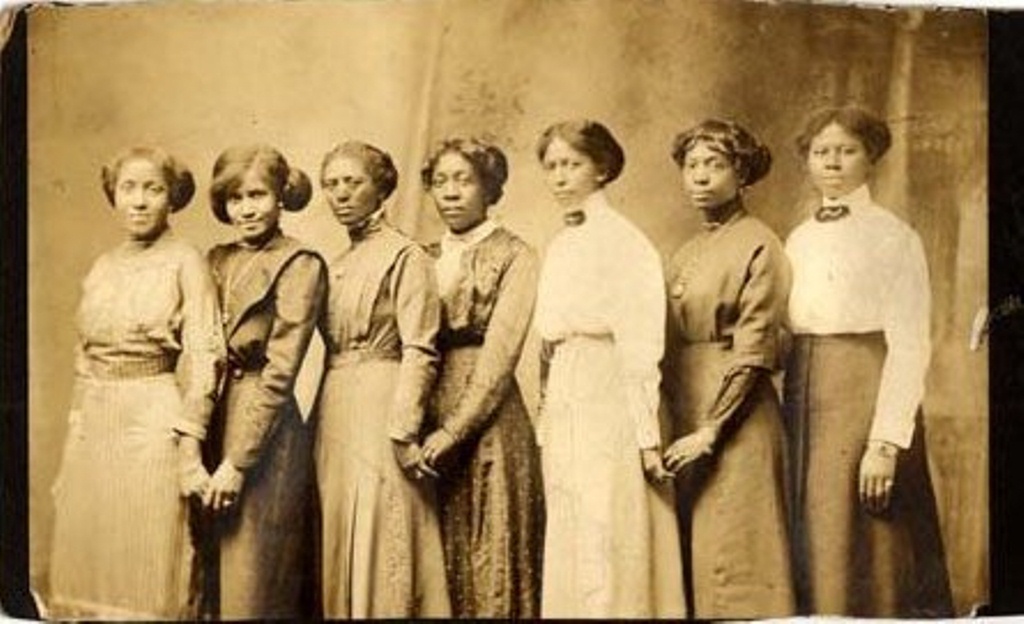
Just having the experience of being a part of a sister circle, makes me think about the survival of the generations of women that came before us. The bond between sister friends is a deep aspect of our history. And that is why I believe Black women have become so resilient. Not out of anger but out of emotional bonds that hold us up.

So today, I just want to say thank you to all of my sister friends and our sister circle. Marie, Zakiya, Griselda, Halycon, Anita, Alexandria, Keena, Rodniqua, Patrice, Shari, Rachel, Janine, Candice, Valeria, Nikki, Margo and more.

Love, J.A.M. Aiwuyor

-Join my mailing list-