Showing Our Girls We Love Them With Words and Actions

Part I of the Writing In My Image Series by Jessica Ann Mitchell Aiwuyor

A long time ago, I started the journey of writing my first children’s book. However, after coming up with the title, I did some research and found that it was not unique enough. I also came across a few trademark registrations that would have made it difficult for me to move forward with publishing and merchandising. Thus, I decided to move in a completely different direction but with the same goal – publish a children’s book that promoted self care and self love among young Black girls. I wanted my book to show the love and care that I remember receiving from family members and role models growing up. Thus, I felt it important to use a term of endearment throughout the book to show both the connection and love for my young readers.

After starting a list, I reached out to a large group of friends asking them to share with me terms of endearment that they remember hearing growing up. My phone became flooded with text messages from friends, family members and school mates. Everyone had something to share. My list grew larger and larger. By the end of the day, I had crowdsourced about 30 loving nicknames that we give young girls in our families and communities.

Seeing the long list of terms of endearment used for Black girls warmed my heart. I instantly started thinking about all the love we received growing up and all of the people that tried to show it. “We love our girls,” kept resonating in my mind over and over again.

We hear so much negativity on a constant basis regarding the Black community’s treatment of Black women and girls. It’s true, we live in a patriarchal society that is often overly male focused. It’s true, that our girls face discrimination and oppression at almost every turn. It’s true that when we are wronged, it is harder to get people to show up for us in the same numbers as we have for Black men and boys.

It is also true that we love our girls. It is also true that people have fought and will continue to fight for us. In almost every traumatic moment in my life, there were always people within my community that were there for me. Many of my sister friends have also experienced this. There was a person or people around us there to show us love, all the while calling us “baby girl”, “sweetie pie,” or “dear heart,” as terms of endearment. Those people and their support matters. This should also be uplifted.

I do believe that we care.  I do believe that we love.

However, it’s not enough to use nice words. It’s a start but it’s far from the finish. We need to consistently show our girls that we care through both our words and our actions. This means uplifting them, standing up for them, providing them with opportunities, giving them positive reinforcement, protecting them, giving them freedom to be themselves, believing them when they say they’ve been harmed, reporting all predators or other harmful people – the list goes on. We need to do everything we can to show our girls that they are loved and we need to do it early.

View the list below to see the terms of endearment from my amazing group of sister friends.

Terms of Endearment for Little Black Girls

Baby girl, Lil mama, Brown sugar babe, Lil bit, Child, Sis, Boo, Sweetie pie, Doll baby, Sweet pea, Honey Child, Sugar plum, Sister Girl, Chocolate drop, Brown sugar, Sweetie, Missy, Precious, Pumpkin, Princess, Suga foot, Miss thang, Young lady, little girl, Mama’s Butt butt, Bunny, Toot, Sweet love, Angel face, Boo baby, Love muffin, Baby Cakes, My lil love bug, Chickadee, Deary, Dear heart, and My love.

Jessica Ann Mitchell Aiwuyor is the founder of Our Legaci Press and the author of Rise and Shine, Dear Heart, a children’s book that provides encouragement to young girls, while showcasing diverse skin tones, shapes and sizes. Rise and Shine, Dear Heart is available for pre-order at OurLegaciPress.com/books.


Join me at the Rise and Shine, Dear Heart Children’s Book Launch Party on Saturday August 25, 2018. RSVP at DearHeart.Eventbrite.com


Dear Black People Going To See Black Panther

Black Panther World Premiere
HOLLYWOOD, CA – JANUARY 29: Actor Angela Bassett at the Los Angeles World Premiere of Marvel Studios’ BLACK PANTHER at Dolby Theatre on January 29, 2018 in Hollywood, California. (Photo by Alberto E. Rodriguez/Getty Images for Disney) *** Local Caption *** Angela Bassett

Negative Nancys are out here trying to shame folks for being excited about the film Black Panther.

Well, I’m here to say this loudly:

It’s fine to wear African clothing, dance, relax and have fun.

All of this is perfectly normal and human. Furthermore, it’s beautiful to see all of this melanin on my timeline adorned in African inspired clothing, with positive Black messages.

Trust me, the ancestors are pleased.

It is testament to our legacy that despite all of the negative images that Eurocentric idealism has tried to throw on us – we continue to love who we are and love ourselves.

We are a unique, talented and creative people. And yes, this should be celebrated.

Black people deserve to have joy! I’m tired of people shaming us for exuding happiness, during what is definitely a defining moment in Black cinema.

No, Black Panther is not our key to freedom. No, Black Panther is not our liberation. I don’t think anyone thought we would suddenly be free from oppression based off of a movie. That’s not the point.

This film highlights the essence of Black cultural awareness, heritage and pride. It promotes positive and beautiful African imagery, with a compelling story line and an all Black cast. Additionally, the film promotes strong Black female voices in leadership positions. This is seriously impactful.

Furthermore, we don’t have to be 100% serious all the time. It’s actually healing for us to enjoy the moment.

So, dress how you want to dress. Act how you want to act. Have fun this weekend.

And I co-sign the message below by Kev On Stage: Let people live!

See y’all in Wakanda!

HOLLYWOOD, CA – JANUARY 29: (L-R) Actors Sterling K. Brown, Letitia Wright, Winston Duke, Martin Freeman, Angela Bassett, Daniel Kaluuya, Lupita Nyong’o, Chadwick Boseman, Michael B. Jordan, Danai Gurira, Andy Serkis, and Forest Whitaker; writer/director Ryan Coogler; Marvel Studios President Kevin Feige; producers Louis D’Esposito and Victoria Alonso, and executive producer Nate Moore at the Los Angeles World Premiere of Marvel Studios’ BLACK PANTHER at Dolby Theatre on January 29, 2018 in Hollywood, California. (Photo by Jesse Grant/Getty Images for Disney) *** Local Caption *** Sterling K. Brown; Letitia Wright; Winston Duke; Martin Freeman; Angela Bassett; Daniel Kaluuya; Lupita Nyong’o; Chadwick Boseman; Michael B. Jordan; Danai Gurira; Andy Serkis; Forest Whitaker; Ryan Coogler; Kevin Feige; Louis D’Esposito; Victoria Alonso; Nate Moore

Also, read my article Black Americans Wearing African Clothing Is NOT Cultural Appropriation.

Jessica Ann Mitchell Aiwuyor is the founder of Our Legaci Press. To reach Jessica, email her at OurLegaci@gmail.com. Follow her on Facebook at Facebook.com/JAMAiwuyor.

Join Mailing List


What Communities Need to Know About Sex Trafficking

What communities need to know about sex trafficking
Young girl, alone.

A few years ago, I watched the documentary, “Very Young Girls.” It featured the stories of young girls in New York City that had been sex trafficked by pimps. Some of the girls were as young as 12 years old. What surprised me most in the film was that instead of trying to save these children, in many cases authorities treated them like criminals. There was even a prosecutor trying to get one of the girls punished with jail time. Here was a child victim of sex trafficking, sobbing in the court room and the state was trying to send her to jail. Instead of advocating for rehabilitation and protection, the legal system had turned against her.

Though many organizations have tried to tackle this issue, sex trafficking is still a major problem. This is especially the case in the Atlanta, GA and Washington, DC areas.Tina Frundt has provided tips for everyone in the community to help fight against sex trafficking and how to best protect our children.

She is the Founder and Executive Director of Courtney’s House, a non-profit dedicated to helping children exploited by sex trafficking for commercial gain. Tina is also a survivor.

Here is what communities need to know about sex trafficking:

  1. Accept that your community is vulnerable. Victims are rich and poor. From the city and suburbs. Boys and girls. We must all look for the signs.

  2. Businesses need to step up. Everyday victims pass through clothing stores, nail salons, hair salons and hotels. When businesses act, victims can be saved.

  3. Don’t wait, call! Calling or texting a tip hotline is anonymous. It will never trace back to you. Call sex trafficking hotline 1-888-373-7888 or text BFREE (23733).

Ultimately, what children exploited by sex trafficking need the most is support – not just from family and friends but their entire community.

The sexual exploitation of youth is a problem in many parts of the world. Read my article, “What Really Happens on Vacation” to learn more about this issue and how you can help.

This Interview With Toni Morrison Never Gets Old

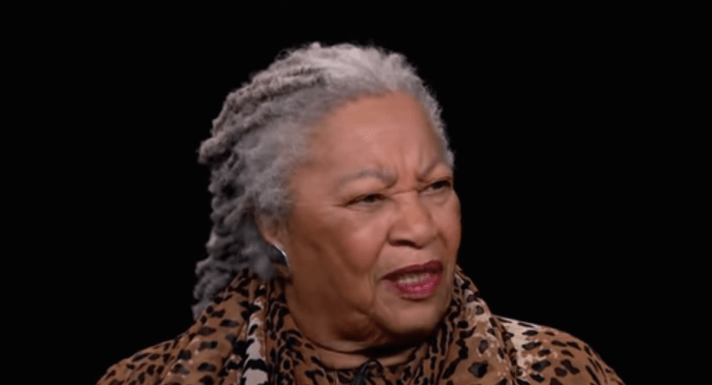
Toni Morrison Interview with Charlie Rose

In this old interview with Charlie Rose, Toni Morrison responds to a past question about if/when she will stop writing novels centered around race. She then responds with a bold answer about centering Blackness. Morrison explains that African writers, like Chinua Achebe, helped her to see the perimeters of writing without being consumed by the white gaze and how this was liberating.

The quote below hit home the most for me:

The problem with being free to write the way you wish to, with out this other racialized gaze, is a serious one for an African American writer.

Thanks to Anti-Intellect for posting this on Youtube!

Jessica Ann Mitchell Aiwuyor is the founder of Our Legaci Press. To reach Jessica, email her at OurLegaci@gmail.com. Follow her on Facebook at Facebook.com/JAMAiwuyor.

Join Mailing List

Afro Germany – Being Black and German

Afro Germany

Produced by DW Documentary from Deutsche Welle international broadcasting company, the Afro Germany documentary explores the history of African descended people in Germany and their cultural awareness.

Film Synopsis:

Black and German: news anchor Jana Pareigis has spent her entire life being asked about her skin color. What is it like to be black in Germany? What needs to change? “Where are you from?” Afro-German journalist Jana Pareigis has heard that question since her early childhood. And she’s not alone. Black people have been living in Germany for around 400 years, and today there are an estimated one million Germans with dark skin.

But they still get asked the latently racist question, “Where are you from?” Jana Pareigis is familiar with the undercurrents of racism in the western world. When she was a child, the Afro-German TV presenter also thought her skin color was a disadvantage. “When I was young, I wanted to be white,” she says. Parageis takes us on a trip through Germany from its colonial past up to the present day, visiting other dark-skinned Germans to talk about their experiences. They include rapper Samy Deluxe, pro footballer Gerald Asamoah and Theodor Michael, who lived as a black man in the Third Reich. They talk about what it’s like to be black in Germany.


Jessica Ann Mitchell Aiwuyor is the founder of Our Legaci Press. To reach Jessica, email her at OurLegaci@gmail.com. Follow her on Facebook at Facebook.com/JAMAiwuyor.

Join Mailing List

Sam’s Club Disaster Proves We Need More Black Owned Businesses

With absolutely no warning given, more than 10,000 people went to work on January 11th only to find, “We’re closed” signs on the windows.

That morning, Walmart suddenly decided to permanently close 26 Sam’s Clubs across America. And they’re closing a total of 63 overall. On the cusp of huge tax cuts granted by the Trump Administration, Walmart had announced that they would increase their employee minimum wage to $11 and give a one-time only $1000 bonus to employees that worked for them 20 years or longer.

All of this was extremely laughable. With the high turnover rate of companies like Walmart, they basically agreed to give bonuses to unicorns and replace a few pennies with nickels.

The biggest lesson here is that they don’t care. By now, I hope most of us know this already. Corporations will use you up and spit you out with a blink of an eye. This time it was Walmart/Sam’s Club but sudden layoffs could happen with any large corporation. There are books, that discuss how American capitalism is basically the offspring of chattel slavery – which would explain corporations’ unwavering belief that the maltreat of employees is not an issue because they suck the life out of you “create jobs.”

And when you’re Black in America, you have to work twice as hard to earn 50% of the same dollar. So, it’s painful to know that so many people’s lives dangle in the balance – only to be discarded at a whim by corporate greed.

Not to be overly simplistic – but this is a reminder of the need for more Black owned businesses. No, this is not a cure all to being overworked and underpaid. Nor is it a cure all to the historic economic disenfranchisement that Black communities face. HOWEVER, a side business that brings in additional income can be a huge help for families living paycheck to paycheck.

Your business does not have to be a large scale operation. I’m talking about a return/reinvention of small businesses that often sustained Black communities in the past. My grandmother used to make arts and crafts and help people with their taxes. My grandfather bought a van one day and started his own taxi company – a business that is still alive today.

Business ownership is not the end all and be all to solving economic issues affecting our communities. However, it is always helpful to have more than one source of income if possible. It doesn’t matter if your business is cutting grass, braiding hair, helping people with their taxes. What ever your skill set is, if you have the ability to start a side business, I strongly advise you to do so. These corporations only care about profits. You are expendable and if they could replace you with a lower paid worker or even a robot they would (as some have already started doing).

It’s also a good idea to research how successful Black business owners of the past became successful. Most people know the name Madam C.J. Walker, but many have no idea how expansive her beauty empire was and that she hired thousands of beauty consultants – helping Black women and men across the country become self employed. These stories serve not only as an inspiration but as a guide for overcoming difficult situations and prospering in the face of adversity by using your own skills and abilities.

In times like these, having the ability to be economically self sufficient can help someone escape the grasp of the poverty line. Yes, we should continue to vote and push our representatives to create laws for living wages, healthcare and public education. BUT,  we can not wait on them to make these an immediate reality. Our political system is so tied to corporate lobbying and donors that impactful changes to the system can take years to develop.

Yes, we need living wages. Yes, we need jobs. And yes, we need a business of our own, right now! Because one thing is for certain, when it comes to corporations – they don’t care about us.


“I am a woman who came from the cotton fields of the South. From there I was promoted to the washtub. From there I was promoted to the cook kitchen. And from there I promoted myself into the business of manufacturing hair goods and preparations….I have built my own factory on my own ground.” – Madam C.J. Walker


Jessica Ann Mitchell Aiwuyor is the founder of Our Legaci Press. To reach Jessica, email her at OurLegaci@gmail.com. Follow her on Facebook at Facebook.com/JAMAiwuyor.

Join Mailing List

New Year, Same Us

Every year we endure the same societal pressure to magically become a new person with the coming new year. We will supposedly develop new habits, new personalities, and new traits all by the stroke of midnight.

But I’d like to pose something different.

How about we embrace who we already are?

Too often human beings are faced with unhealthy expectations that push us further and further away from our true selves. This outside pressure is especially placed upon the backs of Black communities and communities of African descent.

We are too often expected to be super human, without flaws and suppressed within the confines of boxes that are completely unnatural to us. These boxes usually shrink us, encourage us to run away from our identities, our cultures, our Blackness – while pushing us to the margins of our own lives.

However, one thing I’ve noticed is that we gain strength when ever we embrace ourselves. And we always seem to find our way back. Perhaps, it’s a testimony to our creativity and will to survive.

So cheers to us, pushing forward while looking back. Cheers to us, continuing to be who we are – embracing our lives and our Blackness. No matter the century, no matter the year – it will always be New Year, Same Us.

We here!


The drums of Africa still beat in my heart. They will not let me rest while there is a single Negro boy or girl without a chance to prove his worth. – Mary McLeod Bethune


Jessica Ann Mitchell Aiwuyor is the founder of Our Legaci Press. To reach Jessica, email her at OurLegaci@gmail.com. Follow her on Facebook at Facebook.com/JAMAiwuyor.

Join Mailing List

Call for Writers: STORIES OF THE BLACK MULTIPLE BIRTH EXPERIENCE

OLP Calls for Submission

Our Legaci Press is accepting queries for our upcoming anthology, Mama Twins: Stories of the Black Multiple Birth Experience.

About: We’re looking for personal essays about your experience as a Black mother of twins and larger sets of multiples.

Word length: 3000-5000 words per story.

Contributor payment: Contributors will receive a $150 payment and two author copies of the anthology upon publication.

SUBMISSION GUIDELINES

To be considered as a contributor, email a short query letter with the following information to info@OurLegaciPress.com. 

1. Send one paragraph summarizing the true story that you would like to write based on your experience as a Black mother of multiples.

2. Specify your cultural background. For example, state if you are: African American, Trinidadian, Nigerian, and etc.

3. Include a short bio of no more than 300 words.

4. If applicable, list other publications that you have been published in.

5. Deadline to submit query letter: December 15th, 2017.

View the full submission guidelines here


Learn more about Our Legaci Press at OurLegaciPress.com.

Get Out: The Hilarity of Black Pain

get-out-allison-williams-daniel-kaluuya-1488144786

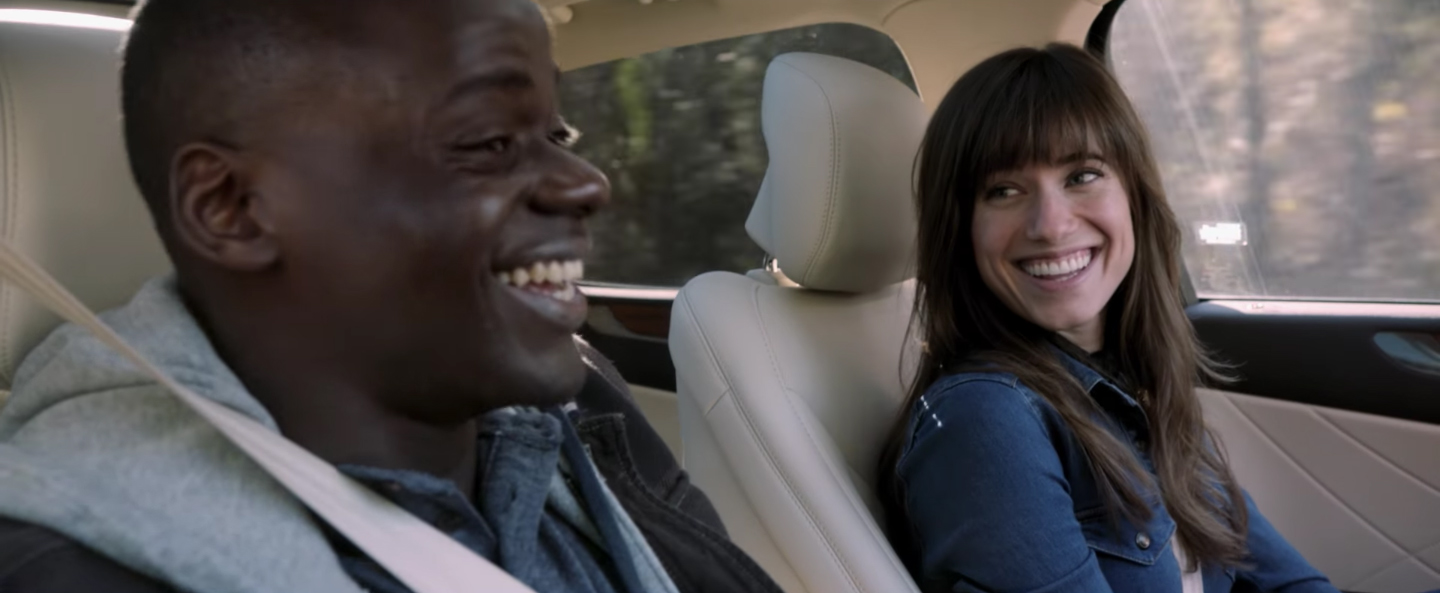
Get Out, the movie thriller that both horrified and effectively unveiled several layers of racialized oppression, is apparently a “comedy.” This is according to the good people at the Golden Globes, leaving many viewers like myself baffled. Get Out focused on a secret group of white body-snatchers that kidnaps young Black people to take over their minds and bodies in order to enjoy their physical attributes.

Did they even see the movie, I mean really see it?

The film resonated with Black audiences, especially since Black people in America have historically been used for medical experimentation and sexual exploitation. Furthermore, throughout society our physical attributes have been used for labor and enjoyment among the white bourgeoisie.

Though some view the film as an exaggeration, it’s actually not far from depicting actual medical practices that have taken place. For instance, the so-called “father of modern gynecology,” James Marion Sims, practiced painful experiments on Black slave women with no anesthesia. Also, for years enslaved Black people were sold on the medical market to be used as specimens for white doctors.

All of this was done in the name of science and medical history!

Though Get Out had some splashes of comic relief, it was in no way a comedy in its entirety. In fact, an alternative ending was chosen in order to lighten the pain shown throughout the movie, as America was in the throes of coming to grips with having Donald Trump as president.

Calling Get Out a comedy further trivializes the very real, very painful experiences that Black people have endured under the hands of white physicians and scientists. I’ve written before about America’s collective amnesia  that conveniently places painful Black experiences within an imaginary realm.

In order to prevent future horrific acts, it must be fully acknowledged that what we’ve gone through is real.

Even more so, in order to heighten accountability, we must fully acknowledge who inflicted the pain and for what reasons. The Golden Globes’ labeling of Get Out as a comedy is an effort (be it conscious or unconscious) to circumvent acknowledging the history of medical research in America.

With the story of the Tuskegee Syphilis Study, Henrietta Lacks’ stolen DNA, and the enduring legacy of our ancestors who overall survived terrifying acts of violence at the hands of medical physicians- few Black people were laughing about Get Out.

To further express this point, Jordan Peele, the film’s producer, writer and director stated through his Twitter account that, “Get Out is a documentary.”

Originally deemed a horror film, perhaps Get Out is difficult to place into one genre. However, none of us viewed it as a comedy. It’s hard to see the hilarity of Black pain.


Jessica Ann Mitchell Aiwuyor is the founder of OurLegaci.com. To reach Jessica, email her at OurLegaci@gmail.com. Follow her on Facebook at Facebook.com/JAMAiwuyor.

Join Mailing List

Why More Black People Should Be Blood Donors

DNA

Though millions of people worldwide suffer from Sickle Cell Disease, the general public is still very uninformed about its impact. It’s estimated that about 300,000 children are born with the disease each year. (Source NPR)

According to the CDC, “SCD is a group of inherited red blood cell disorders. Healthy red blood cells are round, and they move through small blood vessels to carry oxygen to all parts of the body. In someone who has SCD, the red blood cells become hard and sticky and look like a C-shaped farm tool called a ‘sickle.’ The sickle cells die early, which causes a constant shortage of red blood cells. Also, when they travel through small blood vessels, they get stuck and clog the blood flow. This can cause pain and other serious problems such infection, acute chest syndrome and stroke.”

Some people, like myself, have the Sickle Cell Trait but not the disease. This means that we have, “one sickle cell gene and one normal gene.” Sickle Cell Disease can occur when both parents of a child have the trait. In this case, there is a 25% chance of the child having SCD. (Source CDC )

Though Sickle Cell Disease affects people from various ethnic backgrounds, it is highly prevalent in people of African descent. The Sickle Cell Trait may have developed as a natural resistant to Malaria. Researchers believe,”Due to its protective effect against malaria, the sickle mutation may have been naturally selected in sub-Saharan Africa, where malaria is endemic and one of the major causes of death.” (Source Science Daily)

Some patients require blood transfusions to treat severe anemia. This is where Black blood donors come in because people of similar ethnic backgrounds are more likely to have the same blood type. The success of transfusions highly depends on the similarity in blood types.

Recently one blood donation center encountered some confusion about this and was even accused of being racist for asking for more Black blood donors. Check out their excellent and informative response below:

Based on the explanation above, more Black blood donors will save more Black lives affected by Sickle Cell Disease. Unfortunately, the medical field is highly distrusted by many communities of African descent due to past and recent mistreatment and abuse (Source TheHill). Still the need for Black blood donors exists and would benefit Black patients greatly.


Jessica Ann Mitchell Aiwuyor is the founder of OurLegaci.com. To reach Jessica, email her at OurLegaci@gmail.com. Follow her on Facebook at Facebook.com/JAMAiwuyor.

Join Mailing List