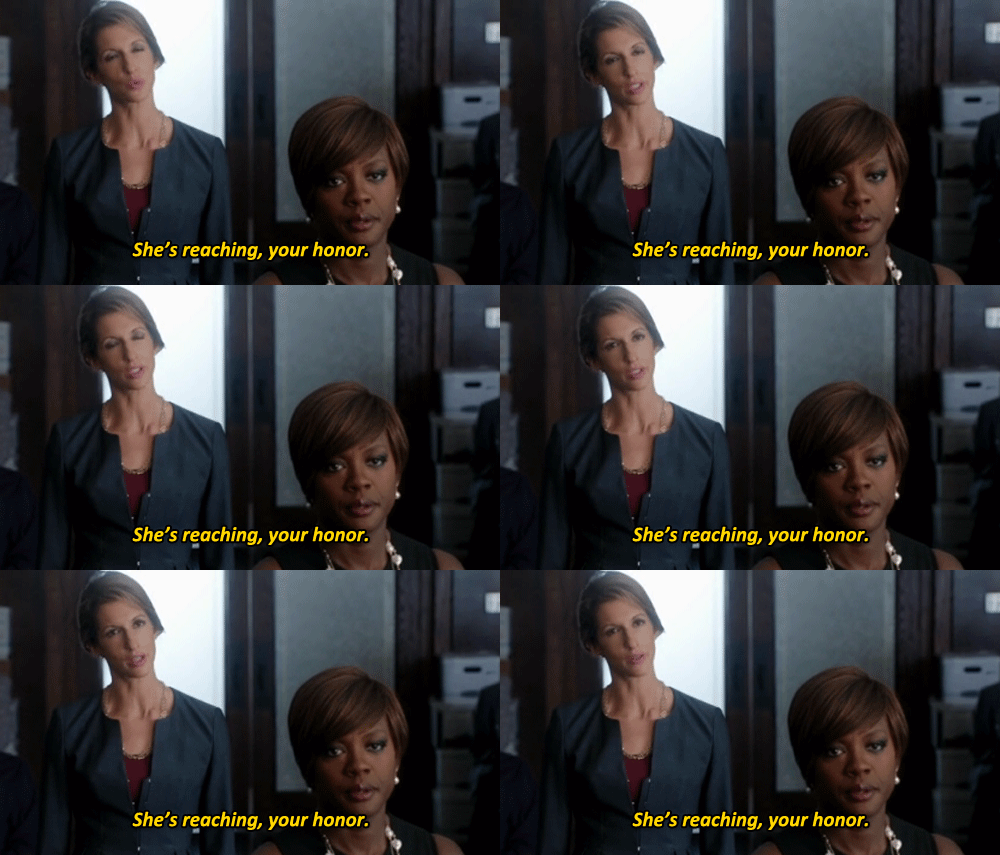
By now you’ve probably heard about or watched Queen Sugar. Hosted on the Oprah Winfrey Network and produced by Ava DuVernay, the television show is based the award winning novel by Natalie Baszile. It has so many beautiful moments of dialogue that it’s hard to pinpoint a favorite part. But if I had to choose, it would be pretty much all of the scenes between the Bordelon sisters.
The infamous repast scene continuously replays in my head.
Following their father’s death, Charley hires a company to come serve food at the repast. This fuels a rant from older sister Nova exclaiming, “How long you been gone? You ain’t been gone that long? How come you don’t remember how it’s done?”
This scene put a spotlight on built up frustration between the sisters and the annoyance of Charley’s somewhat cultural amnesia.
“How come you don’t remember.”
It’s almost an indictment of Charley, calling out her continual abstention from home ties. The entire episode and probably the whole series is a projection on memory as a life line.
Charley (who is currently facing both public and private turmoil) is struggling with finding a way to come back to her authentic self; the self she lost in the chase after a life that turned out to be the complete opposite of what it seemed to be. Which happens often. We chase something; a dream job, a high position – only to later discover that none of it was what it appeared to be and we find ourselves looking back, trying to recollect those pieces of ourselves that we dropped along the way.
Eventually, there comes a time when we need to lean on our foundation for strength but struggle because we discover that we’ve long forgotten the path back.
“How come you don’t remember”, speaks to that process – which is the beginning step towards a rebirth. This is perhaps one of the most prominent underlying themes of Queen Sugar: rebirth, rejuvenation and resilience all achieved by using our foundation for strength. This theme is also present in Nova’s usage of healing work, which is a gift she apparently acquired from her mother.
In another scene, their brother Ralph-Angel and his son Blue share a warm embrace with his dying father on a hospital bed. The visual of the grandfather, son and grandson showcased the importance of love, lineage, and memory in the lives of the characters.
Needless to say, Queen Sugar has many brilliant moments that offer subtle life lessons for us all to absorb. Though entertaining, it’s ultimately a learning experience with beautiful visuals and dynamic storytelling.
Queen Sugar airs Wednesdays 10pm on OWN.
Jessica Ann Mitchell Aiwuyor is a poet, writer and social justice advocate. She’s also the founder of Our Legaci. Rant or rave to JAMAiwuyor@gmail.com.
The clan of pseudo intellectual digital “Black power” referendumists, referred to widely as “Hoteps,” say she’s a capitalist puppet controlled by the illuminati. They can’t tell you exactly who or what the illumanati is, but according to them she’s part of it. And unless she humbles herself adorned in natural hair, head scarves and ankh pieces (I just described myself freshman year of college), she is not to be trusted. She can do no right.
She has to be Harriet Tubman. She must retire her career in entertainment to be an emancipator of slaves in order to redeem herself before their “overstood” consciousness. – Because “blonde hair.”
On the other far end of the spectrum, the religious sect that worships the edges and finger nail clippings of Beyonce Holy Mother of “Slayage,” known widely as the BeyHive, say she’s a revolutionary leading us to the light of Black liberation. There are discrepancies as to how Black liberation is defined, what it looks like and how it operates, but according to them she is definitely the leader of our time. And unless you humble yourself before King Bey, exclaiming in repetition “slay” or “yasssssss” or “she snatched my edges,” you are not to be trusted. You can do no right.
She has to be Harriet Tubman. She must be our leader of Black freedom, the epitome of Black feminism, the reincarnation of African goddesses here to restore your dignity in Blackness. – Because “hot sauce.”
If you’re not inclined to believe she’s a CIA agent but you’re also not inclined to believe she’s the savior of performed Black identity, you’re going to besilenced. This silencing will be led by the usual “Bill Cosby was about to buy NBC” suspects but also by the very people who crusade against silencing on social media every other day. Yet, it doesn’t matter because it appears the people have come to a decision. If you’re not critiquing how and what we tell you to critique, you’re the enemy and shall not be tolerated. Still, when it comes to racists declaring that she is somehow “anti-police” because she wore a black leotard vaguely reminiscent of Michael Jackson and the Black Panther Party, we all call b.s. That in at least one way, is comforting.
We have not completely shamed our ancestors.
Whatever you’re inclined to believe, please remember that Beyonce can be an entertainer you loathe or love but she does not have to be Harriet Tubman. She is not beneath critical acclaim simply because she doesn’t meet your ideal image of Black political consciousness. And she is not above critical analysis simply for being your fabulously talented fave.
Take that for however you interpret it to mean and get in your own formation.
BeyoncéVevo / via Zahra Barnes
Jessica Ann Mitchell-Aiwuyor is a writer, social justice advocate and the founder of Our Legaci. Learn more about her work at JessicaAnnMitchell.com. Rant or rave to JAMAiwuyor@gmail.com.
The internet has unfortunately become a cesspool for the most simplistic arguments to be sensationalized. The latest finger pointing bandwagon phrase to hit the net is “cultural appropriation.” It’s being slaughtered, with a slew of would be writers refusing to actually research the meaning of the term before tossing it around carelessly. So is the case with a recent article declaring, that Black Americans were culturally appropriating African cultures by wearing African clothing. It goes without saying, that this bold assertion is as deprived of history, logic and critical analysis as “reverse racism.”
Part I: Let’s begin with the definition of appropriation.
Cultural appropriation is when a dominant culture takes, claims and establishes itself the creator of the cultural heritage and artifacts of a minority and or marginalized culture thereby erasing the history of the marginalized culture.
In Neo-Slave Narratives: Studies of a Social Logic in Literary Form, African American studies professor Ashraf H. A. Rushdy describes appropriation and how it operates:
Something gets appropriated by something else when a productive or expressive form or practices, let’s say jazz or blues or agricultural methods for growing rice, develops within one disempowered cultural group but gets used by and enriches only or mostly another empowered cultural group. The distinction between cultural groups has to do most emphatically with each group’s relationship to power, controlling the means of material production and controlling the means to mental production.
Rushdy continues:
One of the marks of that relationship between an empowered and a disempowered cultural group is that the empowered group is able to take possession of those material products, physical labors, and cultural forms and practices developed within the disempowered group. Once that something is “appropriated” it no longer functions to enrich materially or to empower socially those within whose cultural group that something developed. (p. 175)
Using Rushdy’s explanation, Black Americans as African descendants are not appropriating African cultures by wearing African clothing. The oppressive power dynamics, the enrichment that excludes African cultures, the means of controlling the material production of African clothing on the part of Black Americans is non-existent. Nor can Black American power dynamics with African cultures be compared with the power dynamics of colonial power structures that stifled Africa’s progress as was outlined in Guyanese Pan African scholar Walter Rodney’s, How Europe Underdeveloped Africa.
Part II: Black History Is African History
The historical experience of Black Americans does not begin with slavery. It begins in Africa. This is a shocking plot twist to those wishing to disconnect Black Americans from African cultures. We did not emerge out of thin air, but are instead a mixture of African people of multiple ethnic groups predominantly from Western Africa. The Trans-Atlantic Slave Trade and chattel slavery did not erase the cultural legacy of Black Americans anymore than colonialism erased the cultural legacy of African ethnic groups.
During the slave trade and chattel slavery the ancestors of Black Americans, Afro-Latinos and Afro-Caribbean people were often prevented from speaking their African languages and practicing their religions. Furthermore, the dominant Western culture demonized all aspects of Black African cultures. Still, Richard Allen and Absalom Jones founded the Free African Society and later the African Methodist Episcopal Church in 1787, which is to date one of the oldest Black American institutions in the United States of America.
They named it the “African” Methodist Episcopal Church for a reason. It was a reflection of how they viewed themselves in America. They spoke no African languages, they wore no African clothing because those things were not readily available to them. But they insisted on embracing everything about their heritage that they had access to.
Over the last 228 years, a lot of changes have taken place including the ability to reconnect with aspects of African cultures that were cut off by oppressive systems.
These reconnections are not without complications.
However, claiming that Black Americans are committing the same cultural appropriation as whites when wearing African clothing demonstrates a gross lack of basic level critical thinking skills. One can not compare attempts to reconnect to cultural origins with oppressive attempts to erase an ethnicity’s cultural legacy. Even if some Black Americans may not understand the full deeper religious meaning of various prints or tribal paints, that is completely different from seeking to erase the achievements and history of a culture’s artifacts, which is what cultural appropriation does.
Furthermore, the assumption that all Black Americans do not know the deeper meaning of various tribal prints or paints is without merit. This is especially the case due to the rising amount of African descendants converting to traditional African religions or at least bonding with various symbolic references from these religions. One can not assume, that the wearer does not know the meaning simply because they are Black American. It could be the case that they know the meaning and that’s why they wore it. It’s complicated, layered and not always executed properly, but still not appropriation.
Part III: Africa Is Not A Country, Blackness Does Not Exist In A Vacuum
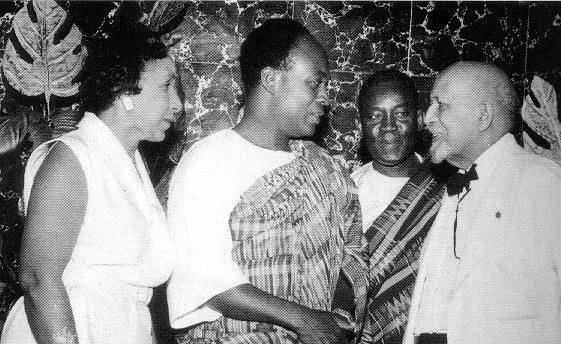
Kwame Nkrumah, the first president of Ghana and Nnamdi Azikiwe, the first president of Nigeria,both attended Lincoln University, the first degree granting Historically Black College in the U.S. Nkrumah, an avid Pan Africanist, often cited the interconnectedness among all members of the Pan African World, working closely with Black scholar W.E.B. DuBois. Nkrumah is well known for his vision of a unified Africa with strong linkages to the Pan African World. “I am not African because I was born in Africa but because Africa was born in me,” said Nkrumah.
Making the statement that “if you do not belong to an African tribe, don’t wear tribal print,” is exclusionary to people that may not know the exact tribe of their family’s origin. It’s even furthermore complicated because as a mixed people, Black Americans actually come from many different tribes. Everyone does not have the privilege of knowing what tribes they come from, but they still carry the cultural heritage of those groups.
I was fortunate enough to trace my maternal lineage, with the help of AfricanAncestry.com’s DNA program. My own maternal ancestors are from the Tikar ethnic groups in modern day Cameroon. Does this mean that I suddenly became the spokesperson for all things Tikar? The answer is no. But it does mean that I have a cultural and ancestral connection that extends beyond the history of U.S. chattel slavery and any attempts to reconnect with that at best can be viewed as cultural appreciation or acculturation depending on my proximity to members of that ethnic group. The artistry and craftsmanship that my grandmother exhibited through her quilts, statues, paintings and instruments represent her heritage as a direct descendant of the Tikar people, even though she did not know she came from this ethnic group.
This can not and never will be cultural appropriation. You can not appropriate that which is your own.
Additionally, there are thousands of different types of African cultures and sub-groups. Ethnic groups on the continent and throughout the diaspora borrow from one another through cultural exchanges. Exchanging languages, religions, foods, musical styles and clothing. Members of various African ethnic groups often wear the tribal prints and jewelry of other ethnic groups simply based on liking the style. There is no reason Black Americans, Afro-Caribbeans and Afro-Latinos should be excluded from this cultural exchange. Additionally, on the economic front, many marketplace sellers and African fashion designers would cringe at the thought of limiting their work to only within the confines of their tribe.
That’s not how this works.
Black Americans and other children of the African Diaspora are included in the Pan African cross-cultural process as evidenced by the spread of hip hop music throughout Africa and the creation of Rastafari communities in South Africa and Tanzania. These are both stylistic and religious exchanges that no reasonable person views as appropriation.
Part IV: Lack of Knowledge Affects Everyone, Not Just Black Americans
Miseducation and Eurocentric thinking taught through colonialism, slavery and Western education affects all members of the Pan African World in varying levels, not just Black Americans.
The need to assert authority over Africanity in the face of other African descendants is a pettiness that stems from the designed disenfranchisement of the Pan African world. It also unknowingly reaffirms anti-Black sentiments by denying the nuanced experiences and cultural heritages of all people of African descendant. Instead relying on a limited non-layered perspective of Africanity.
Additionally, the faux concern about Black American knowledge of African prints would be more believable if critics were offering classes and books that share the deeper meaning on various tribal prints.
Part V: We’ve been told the same lie.
The limited interaction between continental Africans and African descendants is highly influenced by western based miseducation and media (in both Africa and North America) that promotes anti-Blackness at every turn, leaving African descendants and Africans on the continent circling in an endless cycle of confusion and rage uselessly aimed at each another.
This leads some Black Americans to make illogical declarations like, “I’m Black Not African American,” as if Black Land is a thing that magically exists outside of Africa. Upon asking, when did they stop being African, the response will include some gibberish about not speaking an African language, not having a red carpet laid out for them when they went to Africa and the misguided belief that Jesse Jackson created the term “African American.”
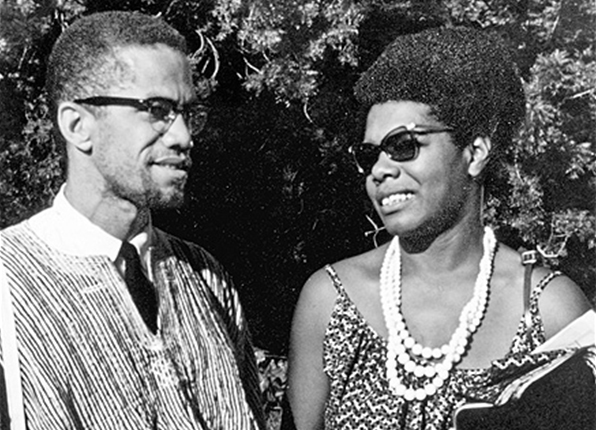
No one has yet been able to answer Malcolm X’s question, “If a cat has kittens in an oven, does that make them biscuits?”
Meanwhile, some Africans will proclaim more pride in being French or British than Senegalese, Ghanaian or Nigerian. Upon asking, why they perceive Western cultures to be superior, the response will include a puzzling look as to why you don’t understand that everything white is just better.
We’ve all been told the same lie, that somehow being African is “less-than” believing that it is more refined to be disconnected from Africanity. This has lead to many of us needlessly tearing each other apart. And make no mistake, all levels of anti-Blackness around the world stems from the historical Eurocentric perspective that African people are subhuman.
As children, Black Americans often used heard the term, “African booty scratcher.” I was called African Booty Scratcher daily, being a little dark skinned Black girl with short nappy hair. This term was not reserved for African immigrants but for all dark-skinned children. Black children were reiterating the negative stereotypes of African people that surrounded us on a daily basis through media, the Western education system and older generations. And it hurt.
In fact, there is a meme floating around the net that says, “You called me an African Booty Scratcher in school. Now you’re wearing a dashiki.”
Yet few who circulate this meme will admit that their parents also held onto negative stereotypes of Black Americans and Jamaicans, often attempting to keep them away. Using their own derogatory terms to describe them.
Though this generation has more opportunities to form cross-cultural bonds than our parents, there are those among us that are harboring hurt. And turning this pain into a “you can’t share my toy attitude.” It’s time to grow up. We’re not on the playground anymore.
We are all hurting, because we’ve been taught to believe the same lies.
In Conclusion:
Black Americans, Jamaicans, Dominicans, Puerto Ricans, Haitians, Black Canadians, Afro-Caribbeans, whatever you want to call us, are members of the Pan African family. Wearing African clothing and tribal print is more revolutionary and impactful than upholding any stereotypes, slurs or one writer’s shortsightedness.
Our progress depends on our interconnectedness.
Over 400 years ago, many of us were torn from the shores of our homelands in Africa. We were beaten for speaking our languages, shunned for our skin, raped, murdered and brutalized. Some of us tossed ourselves over the sides of ships in order to see freedom through death. We have witnessed our family members hanging from trees. We have survived a horror like no other and still have the unmitigated gall to walk around in 2015 with our tribal print and paint. Our ancestors are somewhere smiling.
Despite not being born in Africa, like Nkrumah proclaimed, Africa was born in us. Overthrowing the tools of oppressive systems, gaining self knowledge and reconnecting with our origins may not always be perfect or without growing pains. But it is not and never will be cultural appropriation.
It’s a layered, nuanced, complicated triumph.
P.S.
I am a member of the North American Delegation of the 8th Pan African Congress. To be included on our mailing list email OurLegaci@gmail.com.
A close friend of mine recently endured a traumatic life experience that led her down an unconventionally painful path. In order to recover, she moved across the country and started a new life from the ground up. She shared with me, all the ups and downs she’s faced over the last 3 years. Her story, though uncommon, is extremely powerful, having the potential to inspire young Black women coming from a similar background. She then told me that she planned to write a book about her experiences, with the intention of saving people from going through what she’s dealt with. I’m not going to give the story away here. You’ll have to buy the book!
However, I wanted to highlight our conversation because it led to a larger one about how powerful writing is. As Black women writers, she and I have both been to the point where writing was our salvation. When we couldn’t depend on people, when no one would listen, when the pain seemed to much, when the joy was evaded, with the pleasure was marginalized, and when the injustice was overwhelming, writing was there to guide us through. Our writing, whether in the forms of poetry, prose or first person narratives, brought us not only comfort but power.
When the world seemed to beat us down, our words built us back up. No one could stop us from creating. No one could dare stand in the path of our stories. And because our stories are often interconnected, our words comforted other Black women that hadn’t yet found a way to express their thoughts.
I remember one time in Syracuse, NY, I performed a poem about religion, women, sexual abuse and how women are viewed in society. After the performance, I was called to attend a meeting with the poetry group that hosted the event. At that meeting, I could tell some people were uncomfortable with my piece. However, one woman came up to me in front of the whole group saying,” Thank you. Thank you for telling my story. I’ve always felt this way but just didn’t know how to say it. I didn’t have the words but you did it for me.”
Those words that I penned were not directed specifically towards her, yet still rendered specific results. They brought healing, understanding and power. There is power in hearing words that connect with your experiences, along with your spirit. It reaffirms who you are. It shows that you’re not alone, that you’re not imagining things. It also gives you the support to realize that your life, your story is important.
This is how I felt the first time I read Zora Neale Hurston, James Baldwin, Ntozake Shange and Toni Morrison. This is how I felt the first time I listened to Lauryn Hill’s Unplugged album.
Each word reaffirmed my life, my power, my agency. Words can change how people view the world and how they view themselves within it. Perhaps, this is why my favorite quote from Maya Angelou echoes forever in my ears,
“Words are things. You must be careful, careful about calling people out of their names, using racial pejoratives and sexual pejoratives and all that ignorance. Don’t do that. Some day we’ll be able to measure the power of words. I think they are things. They get on the walls. They get in your wallpaper. They get in your rugs, in your upholstery, and your clothes, and finally into you.”
Words get into you. Writers please know that your words have power, that when you write, you’re adding to the world. No matter how small you perceive yourself to be, you can reaffirm life, call truth to power and build new foundations. You can also destroy, tear down and suppress.
But know that you have this power and do not underestimate it. Use it wisely, strategically and hopefully for a good cause.
Jessica Ann Mitchell Aiwuyor is a writer, social justice advocate and the founder of Our Legaci. Learn more about her work at JessicaAnnMitchell.com.
The internet’s news cycle moves in waves. When news hits, there is often so much to cover over a short period of time, that topics are easily considered old before you even press the publish button. Every few weeks a celebrity dies, a political scandal unfolds, racism rears its ugly head and the world keeps spinning. We’re operating on a 24 hour news cycle. Consequently, our minds don’t have enough time to rest.
Furthermore as writers, there’s an almost never ending pressure to comment on the latest drama. We’ve been trained to be “outraged” about almost everything. There are a million voices all chiming in at once, all clamoring to be heard. Everyone is pressured to say something or go unnoticed and nobody wants to be unnoticed.
It’s tiring. It’s a creativity drainer. Most of all it’s wasteful. Perhaps time would be better utilized focusing on issues we enjoy writing about the most.
Before your next think piece ask yourself, “Do I really care about this…right now? Do I actually have anything of substance to contribute to this conversation that needs to be said? Has enough time passed to actually have a nuanced discussion about this? Are there other writers already articulating a similar perspective as me, possibly better than I would?”
For me, these questions have resulted in NO to articles about: Tyga, Nicki Minaj vs. Taylor Swift and Black feminists defending her, Rihanna’s so called violence against women music video with Black vs. White feminists (again), anything about Riley Curry (cute but only 3 years old), and finally Bill Cosby (because the internet has this covered in great abundance, from almost every angle). There are many other subjects that I also have on pause.
I’m not saying no to these topics forever, just for right now.
After making it a practice to ask myself this series of questions, I’m glad to report that I’ve been saved from spending a lot of unnecessary time and energy on “hot topics.” Yes, I have opinions on them. However I’ve learned from experience that opinions and or critiques aren’t always worthy of an article.
Plus, I’d rather have more practice with being creative than trendy.
It may work in your favor to resist getting swept up in the fury of the interwebs. Only write about what you’re really passionate about. Your energy is better suited on work that builds towards your future, instead of trying to feed the internet beast. Because as we all know, the internet beast is never satisfied.
Release yourself from the digital hamster wheel.
“We write because we believe the human spirit cannot be tamed and should not be trained.” – Nikki Giovanni
Jessica Ann Mitchell Aiwuyor is a writer, social justice advocate and the founder of Our Legaci. Learn more about her work at JessicaAnnMitchell.com.
In May of 2014, I published a piece about my family’s escape from sharecropping. I was surprised to learn that so many people didn’t know that sharecropping was slavery rebooted. The title of this article was Dismantling Collective Amnesia. It received a tremendous amount of feedback from writers and historians alike. I was applauded for both sharing and remembering the story. Still, it wasn’t as if I had a choice. Such transgenerational survival stories do not afford the convenience of forgetting.
Fast forward to April 2015. It was revealed that Ben Affleck participated in Henry Louis Gates, Jr.’s well known PBS series, “Finding Your Roots.” However, when one of his ancestors (Benjamin Cole) was discovered to be a former slave owner, he requested that Benjamin Cole be completely erased from his family history. This ancestor (that Affleck shares his first name with) would not be included in Affleck’s “Finding Your Roots” episode. This was in order to avoid being associated with his ancestor’s past. Supposedly, Gates’ team allowed this erasure to occur.
This created a firestorm, in which Gates, a renowned African American Studies historian, faced criticism. It is unknown as to how much pressure was placed on the team to exclude this pivotal component of Affleck’s family history. But one thing is certain. Affleck represents America’s denial problem. His initial refusal to include the full truth of his family’s history aligns perfectly with America’s current trajectory of denial and erasure. It’s the same premise as “all this racism with no racists.” All this oppression with no oppressors. Affleck may have been trying to deter attention from someone he was ashamed of, however he contributed to the historical denial of oppression mounted on people of African descent; as if slavery were a figment of Black imagination, and slave owners are simply fictional characters that exist only in our minds.
It’s the same travesty as schools in Texas and Massachusetts seeking to rewrite history books to make slavery appear less brutal. It’s the same as publishers seeking to detract “nigger” from Mark Twain’s books to make him appear less racist. It’s the same as the years of denial that Thomas Jefferson was a slave owning rapist.
Furthermore, Affleck’s ability to dodge this history is a brilliant display of his own racially tiered privilege. Black Americans do not have the privilege of dodging history and the pains of slavery simply because it makes us uncomfortable. Black Americans do not have the privilege of making special requests to disconnect us from being the descendant of enslaved people. So much of the U.S. Black experience is systematically connected to slavery and the imagery of servitude. There is no escaping this, no matter how factually incorrect many of these depictions may be.
The truth is many people of African descent were enslaved in the Americas. The truth is there were enslavers that made this industry possible. Affleck’s ancestor was one of them. His attempt to disconnect himself, is an attempt to erase this truth, thereby erasing the truth about how racial oppression operates and who is behind it.
Ignoring these truths is not a viable solution. Acknowledgement and discomfort is necessary in order to dismantle institutional oppression. Though Affleck is a well known liberal, his denial is representative of many white liberals and conservatives alike who seek to dodge history in order to quell discomfort and personal responsibility towards acknowledging and dismantling systematic privilege.
Current day systems of oppression thrive on the lives of marginalized groups. For example, the current struggle for living wages among America’s working class is closely linked to strategies from chattel slavery for maximizing labor and increasing profit with low wage expenses.
The plantation didn’t just produce the commodities that fueled the broader economy, it also generated innovative business practices that would come to typify modern management. As some of the most heavily capitalized enterprises in antebellum America, plantations offered early examples of time-motion studies and regimentation through clocks and bells. Seeking ever-greater efficiencies in cotton picking, slaveholders reorganized their fields, regimented the workday, and implemented a system of vertical reporting that made overseers into managers answerable to those above for the labor of those below.
The perverse reality of a capitalized labor force led to new accounting methods that incorporated (human) property depreciation in the bottom line as slaves aged, as well as new actuarial techniques to indemnify slaveholders from loss or damage to the men and women they owned. Property rights in human beings also created a lengthy set of judicial opinions that would influence the broader sanctity of private property in U.S. law. – Sven Beckert and Seth Rockman (How Slavery Led To Modern Capitalism)
In order to break these systems apart, there has to be a truthful discussion about what happened, who was responsible, and how it can be rectified. There must be a sincere attempt at truth and reconciliation.
This was Affleck’s opportunity to show his enslaving ancestor as an example of the ills of America’s past. Then show himself as a person working to rectify these ills. Instead he chose to ignore the issue altogether. For that, he reinforces a hard truth about America. Denial is chosen over healing. Erasure is chosen over accountability. Consequently, marginalized and systematically oppressed communities continue to be blamed for their own oppression, and history is laid to the wayside.
Jessica Ann Mitchell is a writer, social justice advocate and the founder of Our Legaci. Learn more about her work at JessicaAnnMitchell.com.
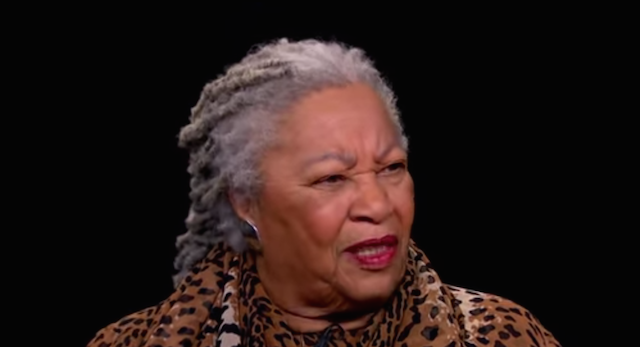
In an interview with journalist Charlie Rose, Toni Morrison discussed police brutality and violence against African Americans. She asked a series of questions that point to a key issue in America, the criminalization of Black skin and the white supremacist values cloaked in cowardice that leads to the deaths of so many unarmed Black victims.
She asked:
How are you afraid of a man running away from you?
How are you afraid of someone standing in the grocery store, on the phone with a toy gun, that you could buy in the store?
How could you be afraid of a little boy?
And who are these people calling who call 911? Who are they?
You look out the window and you see a kid with a toy gun and you get on the phone?
Her usage of the term “cowardly” speaks volumes in describing how institutionalized the dehumanization of Black people continues to be. The so called “fear” is based on creating a worldview of African descended people as less human in terms of intellectual prowess and super-human in terms of physical strength (especially when referring to criminality). This animalistic perspective has been at the center of anti-Blackness for centuries. Examples include when “scientists” debated the brain size of Blacks and religious leaders debated whether or not Africans had souls in order to deem slavery justified. It was the central theme of TheBirth of A Nation, the 1915 propaganda film that overtly warned white Americans that free negros were a threat to society.
This would explain why someone could believe they have a logical explanation for shooting a person running away from them or gunning down a child and refusing to provide the child with medical attention.
They truly believe this unarmed person is “dangerous.” Officer Darren Wilson even described Mike Brown as a “demon” with the strength of WWF wrestler “Hulk Hogan.” That’s the thought process.
Super-human
Violent
Animalistic
It never changes.
Though Jonathan Capehart imprudently asserts the mantra “hands up don’t shoot” was built on a lie, the premise behind Mike Brown’s death follows the same superhuman negro/must be put down like an animal aggression trajectory. Whether or not his hands were raised, does not alter the key issue behind why Brown’s death was deemed justified. Simply put, he was perceived to be another dangerous negro.
Through this lens:
Mike Brown wasn’t a 17-year teenager. He was a raging gorilla loose on the streets.
Rekia Boyd was not an innocent bystander. Her very presence was violence as a potential threat.
Tamir Rice wasn’t a little boy. He was a roaming gunman looking for a victim.
Aiyana Stanley Jones wasn’t a sleeping little girl. She was a member of a familial mob the required brute force at first encounter.
With each death of an unarmed Black person, especially at the hands of police or people in assumed positions of societal authority, the cowardice and the fear is a reassertion of white supremacist beliefs, even if the victim dies at the hands of a Black police officer. Many members of mainstream media happily overlook this. Just as women can be patriarchal misogynists, Blacks can internalize Black inferiority and white supremacist beliefs.
Police have been given the authority to uphold laws and societal norms. While at the same time, the collective fear of Blackness operates as a U.S. societal norm. Thus the deaths of unarmed Black victims ensues, regardless of the ethnicity of the officer. When this occurs, the officers are then protected by the society that continuously protects and rebirths this norm.
Within the communities of the victims, they are seen as they are…human beings deserving of protection.
Mike was a teenager walking.
Rekia was a teenager standing.
Tamir is a 9-year old playing.
Aiyana was a 7-year old sleeping.
Amongst their communities, these victims are seen through a different lens..the lens of humanity. So when Toni Morrison asks, “How could you be afraid of a little boy?”
This question is very layered and could be interpreted as, “When will you see the little boy that I see?”
When will the lens be corrected?
Jessica Ann Mitchell is the founder of OurLegaci.com & BlackBloggersConnect.com.
To reach JAM, email her at OurLegaci@gmail.com.
There’s something magical about writing and sharing the inner workings of your mind instantly. That’s how it works in the digital space. We’re constantly sharing, breathing new life into old words. Yet, at the same time there’s a fleeting feeling.
Another case of police brutality…write a think piece.
Another person says something racist…write a think piece.
Another person does something sexist…write a think piece.
I’ve actually come to hate think pieces. I can’t help but feel like a rat on a wheel. There’s this constant spinning motion pushing you to stay writing, stay hitting that publish button in hopes of likes or some monetary gain. I’ve heard it referred to as “feeding the beast.” The internet is never satisfied. What’s popular today is gone tomorrow, almost as if it never existed. Old suddenly takes on new meaning. Content often focuses on who can break it faster and hinders most real possibilities of in-depth analysis or nuanced discussions.
Everyone must ride the wave. Or be deemed nonexistent.
I’ve often wondered how potent their words would have been if Langston Hughes or Zora Neale Hurston spent hours on Facebook and Twitter instead of penning poems and writing books. Perhaps they would have gained a “following.”
Yet, would we value their work the same? Would their words have been added to the endless stream of brilliant yet easily discardable “latest posts?” Would we still value their time?
The problem with digital writing is there is nothing to hold on to. It’s not the same feeling as having a physical book or magazine. It’s digital, cloud based, and light like air. Thereby making digital writing feel temporary, like a fleeting gust of wind.
Though nothing ever really disappears on the internet, the quick natured environment of digital communication makes important dialogue get quickly discarded in exchange for the latest controversy.
Everyone feasts upon it, dining on every piece, tearing apart every strip. Then, on to the next one. Lack of substance becomes reality. Quick witted pseudo scholars, psychologists and self help gurus dominate droves of gullible minds simply because they’ve found the key to social media. They’ve learned to ride, even manipulate the waves.
Even with well meaning publications, writing becomes another day, another click bait. Always striving to be ahead of the page view curve makes substance secondary. Everyone is striving to be memorable without memory.
Where do we go from here?
How do we deal with the issue of disappearing words? (The fleeting times, the missed moments, the badly deconstructed ideas, and the incessant desire to be noticed.)
There are no real answers to this question. Perhaps our only choice is to be inventive: push the limits, dig, write, erase, write again, breakdown, and build up in ways that haven’t been done before. Maybe then, our words will serve more as a reference point than some random page, that once was skimmed and forgotten.
Nevertheless, we will do what writers do. We’ll keep writing, hoping the digital swindlers leave enough room for us to make an impact before our words disappear.
Jessica Ann Mitchell is the founder of OurLegaci.com & BlackBloggersConnect.com.
To reach JAM, email her at OurLegaci@gmail.com.
Precious wasn’t a 110-pound light skinned girl for a reason.
As NPR described, “the writer known simply as Sapphire, tells the story of a dark-skinned, heavy-set, illiterate African-American girl who has survived multiple pregnancies by her father.” In other words, the character Precious was created by Sapphire to depict one of the most rejected, unprotected, less privileged demographics.
I wanted to show that this girl is locked out through literacy. She’s locked out by her physical appearance. She’s locked out by her class, and she’s locked out by her color.
There were similar reasons behind the creation of characters Pecola Breedlove in Toni Morrison’s The Bluest Eye and Celie in Alice Walker’s The Color Purple. Because of denied privileges to women fitting their characteristics, Black women writers felt a need to share these stories. Three things these legendary characters all had in common: poverty, dark skin and sexual abuse. This was not an accident.
It has been known for a very long time that people with dark skin have often been treated with the utmost disdain and abuse. This is not a new discovery. Yet still, a few of my readers had a digital meltdown when I discussed light skin privilege.
At first I was surprised but then I remembered how difficult recognizing privilege can be. After all, a huge component of privilege is not realizing it exists.
So I’m going to rewind and thoroughly explain what privilege is, how it works and who has it.
It wasn’t until I was older that I realized I had privilege. Even as a little girl, when a white class mate (afraid of my Blackness) refused to come near me, I had privilege. Even in middle school when a group of Black girls compared me to a gorilla, I had privilege. Even in the 9th grade, when I was bullied to the point of crying in class by other Black kids because of my permed but still nappy hair, I had privilege.
It wasn’t until I was older, when I saw some of these same people and their lives, that I realized the privilege I had. I grew up in a two parent household. Both of my parents were college graduates. The concept of college was never a question. Never had I ever been asked, “Are you going to college?” It was a given. Not only was I going, I had already begun writing, playing instruments, learning modern dance, and performing in theater productions. When I wanted to do something, my mother wrote a check.
We were not rich, but she was able to pay for every school activity I wanted to do.
My mother was very busy, but still had time to go over my school work. During the summer, I would get mad at her for forcing me to complete workbooks before I could go out and play. I didn’t know that any of this was a privilege. It was always assumed that everybody was able to do all of these things. In my mind, everybody’s mom read them stories, gave them books, made home-cooked dinners every night, and helped them apply for financial aid to attend college.
I later learned that some of those same people that bullied me so badly, were living in abject poverty. Baldwin County, Ga has a poverty rate double the national average. Many of their mothers were working overtime in service and fast food industries trying to make ends meet. I realized that those playground wars, where I had been called such horrible names, were their own attempts to feel better about their status in the world. If they could succeed in making someone else feel the way they felt, then they could feel powerful (even if it only lasted for a few hours.)
If you had told me at the time I was being called a gorilla, that I had privilege, it would have been hard for me to believe you. I would have said, “But my feelings are hurt, what privilege?”
It wasn’t until my senior year of high school, when so many Black kids failed to pass the Georgia High School Graduation Test, that I started to realize the disparities. It wasn’t until I saw members of my senior class receiving a certificate instead of a diploma that I realized what happened. Their lives were cheated, opportunities had been denied and it was systematic. I recalled how certain students were automatically put on the technical track while others were put on the college track. The state of Georgia had predetermined who was going to college and who wasn’t.
But not me. I was going to college. I was going to leave and study whatever I wanted to. In high school I worked at McDonald’s, Sonic and Papa John’s. Quitting these jobs was never a make or break situation for me.
I had no problem saying, “I quit,” because, I was college bound. Fast food or retail wasn’t going to be my future. Hence my confusion when I saw other students dropping out of high school once they finally got their highly coveted job at Walmart.
Later in college, I saw how girls that were darker than me in skin tone were treated by men. I saw first hand how their deep brown skin was used a prerequisite for excessive abuse or utter disregard. I’ve seen their love interests dodge them and pursue me or other girls. I’ve also seen how they were treated by faculty members and staff. They were under constant attack. My lighter skinned friends also faced hardships, being not considered Black enough or having to deal with people’s assumptions about them. But what our other friends were going through was undeniable.
We were also treated differently according to body type.
Dark skin plus thicker body equaled additional problems. It was during this time that I also realized thin privilege. And yes, that’s a real thing. I had never thought of this before either, but it existed and I benefited from it.
Later I learned about abelism and the privilege I have as a person with no physical or developmental disabilities.
So here I am a Black middle class, 2nd generation college graduate, with two educated parents, with no known disabilities, that wears a size medium. I have a lot of privilege that other people don’t have. That doesn’t mean I’ve never experienced racism or bullying.
So when I wrote about the documentary Light Girls, referencing its avoidance of privilege, the commentary was out of a real need to address historical facts that affect the Black community. Light skin privilege is real. It has been studied and documented throughout history. It is a subsidiary of White privilege, where people of hues closer to white on the racial hierarchy are afforded with certain advantages. Over the past 300 years, it has become a part of the fabric of Western society.
Here are the 6 most common responses when discussing Light Skin Privilege:
1. But I’ve experienced racism. I don’t have privilege.
2. But other Black people picked on me because I’m light skinned. I don’t have privilege.
1-2: Your concerns are valid. However, it needs to be remembered that this issue isn’t about individual situations or circumstances. Light skinned privilege isn’t about anybody’s assumptions or hurt feelings. Race is a social construct that was created to sustain a hierarchy. In the Western world “whiteness” has been used as a measuring stick for human value. People of lighter hues have been treated with less “disdain” than other Black people. This is a historical fact, not an idea or assumption. It doesn’t mean that light skinned people never face racism or colorism.
3. But I went to prison or had some other horrible experience in life. I don’t have privilege.
Light skin privilege does not mean that people labeled as light skinned never experience hardships or adversity. However, it does mean that at times, certain hardships will have less of a blow if your skin tone is lighter. For instance, a recent study showed that among Black people in prison, those perceived as light skinned received shorter sentences than those perceived as dark skinned.
4. Stop making assumptions about my character. I don’t have privilege.
Privilege isn’t about making assumptions on someone’s character. People need to understand the concept of light skin privilege is not an indictment on light skinned people, but instead an indictment on how racial hierarchies operate. Challenging this issue, is necessary in order challenge the false concept of white supremacy.
5. I don’t believe it. Show me the receipts! Where is this privilege?
For all naysayers, part of “privilege” is having the ability to not “see” the problem, because it has become so normalized.
6. Why are you talking about this? What good does it do? This is just divide and conquer.
Talking about Light Skinned Privilege does not promote “divide and conquer.” Ignoring it does.
Divide and conquer can only exist in a state of confusion. Right now, confusion exists because we haven’t learned how to effectively pin point and deconstruct the inner workings of racial oppression. By rejecting the privilege of light skin or at least calling it out, we are also rejecting the concept of white supremacy. We are saying that all Black lives are just as valuable as the others. This same thing can be said we we reject homophobia and sexism in our communities. We’re saying all Black lives matter the same, despite our perceived differences.
Last but not least
Part of the normalization of privilege is not being aware it exists. Even as a former landlord happily called me her “new pitch black friend,” I had privilege at various levels. In other words, this isn’t about your or my hurt feelings. Transforming society hinges upon our ability to proactively breakdown privilege: white, light skinned, class, economic and beyond.
In the case of racism and colorism, recognizing light skin privilege is a step towards understanding how to dismantle white privilege and Black oppression. The recognition of light skin privilege is not an indictment against light skinned people, it’s an indictment on the currently normalized role of false white supremacy and how it plays out in our lives.
Jessica Ann Mitchell is the founder of OurLegaci.com. Email JAMAiwuyor@gmail.com.











 Our Legaci with J.A.M. Aiwuyor