6 Black Films & Shows to Discuss Other Than Birth of a Nation

our-legaci-6-black-films-and-shows-to-support

Can I admit that I’m tired of talking about Birth of a Nation? Even though I plan on writing my own collection of thoughts concerning the film and its surrounding controversy, I’ve noticed that all of the attention towards it, good and bad, has unintentionally pulled away from much needed discussions about other Black films and shows.

So here are 6 Black films and shows to discuss other than Birth of a Nation:

1. Queen of Katwe starring Lupita Nyong’o

This film has received many great reviews. It’s based on the true story of Phiona Mutesi, an international chess champion that learned to play chess at the SOM Chess Academy in Kampala, Uganda. Though she’s already a world hero, Ms. Mutesi is still a young lady with big dreams. 

Film synopsis: Queen of Katwe is the colorful true story of a young girl selling corn on the streets of rural Uganda whose world rapidly changes when she is introduced to the game of chess, and, as a result of the support she receives from her family and community, is instilled with the confidence and determination she needs to pursue her dream of becoming an international chess champion.

2. Issa Rae’s Insecure now on HBO

I fell in love with Issa Rae’s work while watching the first 3 minute episode of Awkward Black Girl. She captured the everyday plight of so many quirky Black women with awkward tendencies. This is what made her show a hit. She tapped into a market and audience that had been either ignored or deemed non existent. Her new show on HBO is just has hilarious, with the same quirky, cringe worthy, laugh out loud moments. Insecure is definitely a must watch.

Show synopsis: Watch the half-hour comedy series Insecure, starring Issa Rae, Yvonne Orji, Jay Ellis and Lisa Joyce, looks at the friendship, experiences and tribulations of two black women. Created and executive produced by Issa Rae, this eight-episode series is also executive produced by Prentice Penny, Melina Matsoukas, Michael Rotenberg, Dave Beck, Jonathan Berry, and Larry Wilmore as a consultant.


3. Hidden Figures starring Taraji P. Henson, Octavia Spencer & Janelle Monáe

This is a movie I’m extremely excited for. I wish we all knew more about the history behind Black women and the NASA program. As the mother of twin girls, movies showcasing the scientific and mathematical talents of Black women is a must watch in my book.

Film synopsis: Hidden Figures is the incredible untold story of Katherine G. Johnson (Taraji P. Henson), Dorothy Vaughan (Octavia Spencer) and Mary Jackson (Janelle Monáe)—brilliant African-American women working at NASA, who served as the brains behind one of the greatest operations in history: the launch of astronaut John Glenn into orbit, a stunning achievement that restored the nation’s confidence, turned around the Space Race, and galvanized the world. The visionary trio crossed all gender and race lines to inspire generations to dream big. In theaters – January 13, 2017.

4. The 13th directed by Ava DuVernay on Netflix

As an undergrad, one of our professors pointed out that the 13th amendment to the U.S. Constitution did not end slavery. “Neither slavery nor involuntary servitude, except as a punishment for crime whereof the party shall have been duly convicted, shall exist within the United States, or any place subject to their jurisdiction.”

She directed us to the line that states:  except as a punishment for crime.

Thus, slavery took on a new form. The new National Museum of African American History and Culture has an entire display dedicated to showing the connections between slavery and mass incarceration. Apparently, everyone in my circle has watched The 13th except me. But fear not, I will be watching over the weekend. Anything Ava DuVernay touches is gold.

https://www.youtube.com/watch?v=V66F3WU2CKk

Film synopsis: The title of Ava DuVernay’s extraordinary and galvanizing documentary 13TH refers to the 13th Amendment to the Constitution, which reads “Neither slavery nor involuntary servitude, except as a punishment for crime whereof the party shall have been duly convicted, shall exist within the United States.” The progression from that second qualifying clause to the horrors of mass criminalization and the sprawling American prison industry is laid out by DuVernay with bracing lucidity. With a potent mixture of archival footage and testimony from a dazzling array of activists, politicians, historians, and formerly incarcerated women and men, DuVernay creates a work of grand historical synthesis. Now Streaming on Netflix.


5. Atlanta produced by Donald Glover on FX

Where do we start? The fact that this show centers around Black men in Atlanta chasing the rap career dream already leads us down the road to authenticity. The admiration of lemon pepper chicken wings, saying “bet” instead of “sure,” working at the airport – so Atlanta.

Yet the most interesting aspect of Atlanta is it’s unflinching willingness to explore societal shifts, along with layered portrayals of Black life. The most widely discussed episode so far has been episode 7. The episode included a number of satirical commercials featured on a fictional tv network, parodying BET called “Black American Network.”

During the episode, rapper Paper Boi is shown on a tv panel grappling with understanding transsexuality. Then the episode shifts to a discussion of transracial identity. Instantly audiences picked up on the false equivalency that was often leaned upon during the real life uproar concerning Rachel Dolezal- a white woman determined to embody blackness through activism, hair weaves and tanning.

On Atlanta, they flip the script showing a young Black man that identifies as a 35-year-old white man, that is both transphobic and homophobic (taking a jab at Caitlyn Jenner’s contradictory homophobic statements).

Atlanta is unconventionally brilliant. There are so many things to digest here. There could be an entire article dedicated to breaking down the children’s cereal commercial in episode 7 that put the spotlight on police brutality.

Show synopsis: Two cousins work through the Atlanta music scene in order to better their lives and the lives of their families. Donald Glover serves as Executive Producer, along with Paul Simms and Dianne McGunigle. Atlanta is produced by FX Productions.


6. Queen Sugar on OWN

Like I said earlier, everything Ava DuVernay touches is gold. I recently wrote about how Queen Sugar’s underlying theme is “rebirth, rejuvenation and resilience.” You can view more of my thoughts here.

Film synopsis: Queen Sugar chronicles the lives and loves of the estranged Bordelon siblings in Saint Josephine, Louisiana: Charley, the savvy wife and manager of an NBA star; Nova, a worldly-wise journalist and activist; and Ralph Angel, a formerly incarcerated young father in search of redemption. After a family tragedy, the Bordelons must navigate the triumphs and struggles of their complicated lives in order to run an ailing sugarcane farm in the Deep South.


Again, I will be writing my own commentary about Birth of a Nation. However, for now I’d just like to bask in the glory of all the greatness featured above.

If there is a film or show you think should be included, add it in the comments below.


JAM-TwitterJessica Ann Mitchell Aiwuyor is a poet, writer and social justice advocate. She’s also the founder of Our Legaci. Rant or rave to JAMAiwuyor@gmail.com.

JAMAiwuyor.com
@TweetingJAM

Facebook.com/JAMAiwuyor
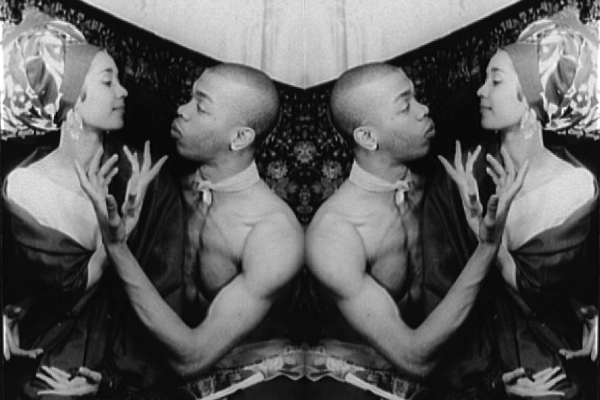
 

We Stand On The Edge Of The World And Dance

Geoffrey And Carmen Our Legaci
Geoffrey Holder and Carmen de Lavallade – Library of Congress – Carl Van Vechten Collection – Photo Enhancement by OurLegaci

While riding the tides of turmoil, Black identity can seem overwhelming. We are cloaked in a wondrous mystic that the world both consumes and rejects. Yet, still a dancing spirit overrides hopelessness. The inner joy of elder generations that proclaimed, “The world didn’t give it, the world can’t take it away,” resounds more than ever.

I’ve felt this throughout my childhood.

During summer break, my mother made me read books to keep my mind sharp. History books and short stories were among my favorites. There was one book in particular called, Eyewitness Negro History. My eyes widened as I read about revolts, the Great Migration and anything Zora wrote.

Church also played a crucial role in crafting the vividness of black identity.

Before church service, the elders would sing old negro spirituals, the kind you don’t hear anymore. The really old ones. Though I hated going to church so early, I secretly loved this part. “We Are Climbing Jacob’s Ladder”, “He’s A Lily In The Valley”, “You Don’t Know What The Lawd Tole’ Me”, “Come On In the Room” and “I Know I’ve Been Changed.”

On some songs, before every verse an elder sings the first few lines and then everyone joins in. You won’t find this on television. It isn’t for entertainment or show, it was just what we did.

Even then, I saw that we danced on the edge of the world.

I loved it all. It made me feel eternal. Connected. It was history. It was spirit. It was us. It was Blackness. There was no “proper” talk or no code switching.

“Jesus is my docta’ and he writes out alla my ‘scriptions.”

“The angels in heaven done signed my name.”

I was listening to a lively spiritual people.

Yet, this inner force was more than religion.

It was jazz, funk, soul, theater, poetry, story, dance and all the moving energies.

It was all the stories I read, watching them play out in my generation. It was Zora singing again. It was Carmen and Geoffrey. It was Maya’s Still I Rise.

It was everyone in the Gypsy Song performance.

http://www.youtube.com/watch?v=slb3EqGZMEY

It was my father’s Uncle Trouble.

It was the fact that people still cooked rabbit, coon and corn puddin. And it was Mother Burrell showing me how to do the  Suzie Q, they way she did it in Harlem.

It was the defiance of erasure, the boldness to live fiercely and joyously in spite of being marginalized and appropriated.

It was Langston‘s words :

They send me to eat in the kitchen
When company comes,
But I laugh,
And eat well,
And grow strong.

Tomorrow,
I’ll be at the table
When company comes.
Nobody’ll dare
Say to me,
“Eat in the kitchen,"
Then.

It was us still building for tomorrow. But until then, we stand on the edge of the world and dance.

Spread The Word. Share This Post!


IMG_0054-ZF-7906-35913-1-001-006Jessica Ann Mitchell is the founder of OurLegaci.com & BlackBloggersConnect.com. To reach JAM, email her at OurLegaci@gmail.com. Follow Jessica @TweetingJAM.

Follow OurLegaci at Facebook.com/OurLegaci.


The Subtleties of Mammy Honoring Ceremonies


The Subtlety Front

Kara Walker’s The Subtlety has attracted widespread acclaim but has serious conflicts that need to be discussed. 

Artist Kara Walker’s first large-scale public project is officially titled, “At the behest of Creative Time Kara E. Walker has confected: The Subtlety or the Marvelous Sugar Baby 
an Homage to the unpaid and overworked Artisans who have refined our Sweet tastes from the cane fields to the Kitchens of the New World on the Occasion of the demolition of the Domino Sugar Refining Plant.”

Having read interviews featuring Walker’s explanation of the piece, it appears to possess elements of both success and missed opportunities. The Subtlety is recognized by many as a sphinx built in the image of a “Mammy” like caricature. The sphinx is jarring. It makes people want to pay attention or at least ask questions. Her explanations are continuing a conversation about the horrors of the sugar industry’s past.

In a recent interview with The Brooklyn Rail, Walker provided further prospective about the massive “sugar baby” :

She is basically a New World sphinx. A New World thinking of the sugar plantations, the Americas, the trans-Atlantic slave trade, that sort of Rolling Stones-y brown sugar dovetailing of sex and slavery as it reaches the American imagination.

Walker was featured on NPR’s All Things Considered as well:

She’s doing what she does best: drawing you in with something sweet, something almost charming, before you realize you’ve admired something disturbing. In this case, that’s the horror-riddled Caribbean slave trade that helped fuel the industrial gains of the 18th and 19th centuries; a slave trade built to profit from an insatiable Western market for refined sugar treats and rum.

“Basically, it was blood sugar,” Walker says. “Like we talk about blood diamonds today, there were pamphlets saying this sugar has blood on its hands.”

She explains that to make the sugar, the cane had to be fed into large mills by hand. It was a dangerous process: Slaves lost hands, arms, limbs and lives.

“I’ve been kind of back and forth with my reverence for sugar,” Walker says. “Like, how we’re all kind of invested in its production without really realizing just what goes into it; how much chemistry goes into extracting whiteness from the sugar cane.”

The problem with Walker’s sphinx is that the acts of oppression during the slave trade were disturbing but the enslaved Africans were not themselves disturbing. So why continue the distortion of their image? She ends up reinforcing what she seeks to dismantle. How do we honor people who lost “hands, arms and limbs and lives” with further misrepresentations of their identities?

When critically looking at this work of art, we recognize Walker as an artistic genius. Yet even in this framework, when discussing the legacy and horrors of the sugar industry she chose to magnify the mythical overly used “Mammy” imagery. We keep coming back to something that was never truly us.

However, this issue is deeper than Kara Walker’s work. It’s been done before…this mammy honoring ceremony.  This issue speaks to the internalized limitations of imagination among artists and writers when it comes to the African descended lived experience. Lingering onto falsehoods, attempting to manipulate structures in its honor is counterproductive and often representative of an internalized glass ceiling of thought.

We can be something different because we are something different.

I’m not suggesting an attempt at ignoring the history of the “Mammy” caricature but instead I’m interested in what it would look like if Walker went beyond the restraints of this mythical being when it comes to examining the lives of enslaved African artisans.

Subtlety Back

To a certain degree, I understand the appeal of the exaggerated features of the half woman, half beast sphinx. The history of the extravagant sugar sculptures called subtleties, that were bolstered through slave labor is very important. Furthermore, featuring the genitalia of the sphinx can be viewed as taking a jab at the presumed asexuality of the “Mammy” caricature, while also perhaps conjuring images of both sexual abuse and desire. It’s crude and perhaps it’s meant to be.

Yet, the symbolism of this piece is stifled by it’s misplaced distortion and a missed opportunity to unearth what’s often hidden. In this case it would be the Black woman undistorted and unexaggerated. A jewel in her own right, without the need of leaning on identity stripping myths for significance or shock value. We can be both beautiful in our nakedness and whole in our humanity while also critiquing disturbing histories.

Showing Black women as full human beings in a holistic framework is more revolutionary than torturing old caricatures like “Mammy” ever could be…and far more valuable. When we unearth and magnify our ancestors’ true identities, outside of modes of mass societal miseducation, it will be a powerful day.


Please do not republish this article without specific, written permission from Jessica Ann Mitchell.

JamAllen2-nb-smallJessica Ann Mitchell is the founder of OurLegaci.com & BlackBloggersConnect.com. To reach JAM, email her at OurLegaci@gmail.com.

Follow OurLegaci on Facebook at Facebook.com/OurLegaci.


The Subtlety display is available for public viewing until July 6th. Full details available here