Gabourey Sidibe makes her directorial debut with ‘Four Women’ a film based on the song by Nina Simone. The short film follows four women that are facing life’s crossroads. The women ultimately embrace their truths and work towards healing.
Read the film’s description below as published by Refinery29:
“Inspired by Nina Simone’s ‘Four Women,’ Gabourey Sidibe’s directorial debut is a multi-layered story that spans one day in the life of four different women who are connected through their quest for love, agency and redemption. This 20-minute film interweaves four stories of race-based violence and fatal encounters with the police through a female’s perspective.
As a director, Sidibe touches on the importance of bringing black females on screen, at a poignant time where people are demanding a dialogue on race relations in our country.”
Jessica Ann Mitchell Aiwuyor is the founder of OurLegaci.com. To reach Jessica, email her at OurLegaci@gmail.com. Follow her on Facebook at Facebook.com/JAMAiwuyor.
I started this blog in 2009 with one intention – write about issues pertaining to people of African descent from a place of love. It’s been a long time since my very first blog post and I’m happy to say that along this journey over 2 million people have read the articles on Our Legaci.
Though I’ve had marginal success with this blog. I’ve felt restricted in a way by the digital landscape. Though blogs are great mechanisms for sharing thoughts and ideas quickly – I feel that they are not the best mechanisms for enduring topics that require more in-depth discourse. I’ve also found that while whatever you post on the internet lasts forever – blog posts and their responses are often fleeting. Especially when discussing a hot topic or current event. The internet pretty much goes with the tide.
Additionally, I’ve found that countless Black writers are sharing amazing stories and driving intellectual thought online with little to no historical account or credit. Meanwhile, writers previously approved by gatekeepers analyze/recap these thoughts and reap the benefits of “credibility” and academic acclaim. Though much of the internet’s pool of ideas drives pertinent discussions – physical books published by reputable publishing houses ultimately hold more clout in the long run.
Due to its relatively easy accessibility, the internet has all but trampled traditional literary gatekeepers – except for with print books (though it’s trying). After much research I’ve found that Black voices are at a severe disadvantage in the publishing industry. The literary world is already tough and full of competition for authors. But for Black authors, it’s even more difficult.
Publishers often focus on stories that they believe are most likely to sell. Many people of African descent have stories that often fall outside of the perceived traditional / easy to compartmentalize/ mass appeal boxes. There are Black literary agents that help to soothe this gap by introducing publishers to promising Black writers. However, this is an extremely small pool of agents that are often overwhelmed by a flood of inquiries. Similarly, the pool of independent Black owned publishing houses is also very small and at capacity. Thus, generations upon generations of Black writers go unpublished, unheard and forgotten.
So what is a Black writer to do? Where do we go and who will publish our stories?
Well, I’m glad you asked.
It’s time to take Our Legaci to the next level. So I’m launching Our Legaci Press. The goal of Our Legaci Press is to support, publish and promote Black storytellers from around the world. We will specialize in non-fiction anthologies that showcase various aspects of the Black experience.
Stories by Black writers are essential to the development and growth of upcoming generations. Thus, we need more stories, more dialogue and definitely more books.
I will continue to use OurLegaci.com to promote the initiatives of Our Legaci Press and share information about our upcoming books and events.
I hope you join me on this new journey. I’m looking for potential editors, affiliates, outreach coordinators, partners and of course writers! We’d also love to partner with organizations and initiatives that align with our goals.
Learn more about the next chapter of Our Legaci Press at OurLegaciPress.com. If you have any questions or want to learn how you can support this initiative email info@OurLegaciPress.com.
Jessica Ann Mitchell Aiwuyor is the founder of OurLegaci.com. To reach Jessica, email her at OurLegaci@gmail.com. Follow her on Facebook at Facebook.com/JAMAiwuyor.
I’m a huge advocate of Black-owned businesses for a number of reasons.
Because I’m Black and I want to see other Black people succeed. The success of Black entrepreneurs is interconnected to the overall success and upward mobility of our local communities.
Because many Black-owned businesses fulfill needs that mainstream society usually avoids, doesn’t care about or hasn’t discovered.
Read number 1 again.
So, I just wanted to take a moment to spotlight 10 Black-owned businesses (and non-profits) that are making Black joy a priority and part of their core mission. This list includes a diverse set of health, arts, entertainment, entrepreneurial and culturally focused Black-owned businesses. Some are well known. Some are lesser known. But all are amazing. Check them out.
1. Afro Flow Yoga owned by Leslie Salmon Jones
Located in Cambridge, MA
Business synopsis (link):
Afro Flow Yoga infuses electrifying dance movements of the African Diaspora with a meditative yoga sequence of gentle yet powerful stretches. Deeply connect with the soulful rhythmic drums, energize your chakras, gain strength and flexibility and rejoice in the bliss of feeling renewed, grounded and peaceful!
2. Black Earth Products owned by Taliah Waajid
Located in Smyrna, GA
Business synopsis (link):
Taliah Waajid has always been at the very core of the natural hair movement. These days her company is still leading the way in innovation and education. For 20 years Taliah Waajid products have set the standard in the natural hair community. That includes the largest consumer trade show that celebrates natural hair, health and beauty, known as naturalhairshow.org. Natural hair isn’t a trend for Taliah Waajid, it is a lifestyle that encompasses everything the consumer cares about.
3. The Urban Movie Channel created by Robert L. Johnson
Located in Silver Spring, MD
Business Synopsis (link):
Urban Movie Channel launched in November 2014, and was created by Robert L Johnson, Chairman of RLJ Entertainment, Inc. (NASDAQ: RLJE) and founder of BET. UMC is a premium subscription-based video streaming service exclusive to RLJE and is devoted to the acquisition of feature films, comedy specials, stage plays, documentaries, music, and entertainment for African American and urban audiences, with plans to move into future development and production. New titles are added weekly in addition to the more than 200 titles in the UMC library!
4. Compton’s Grocery Outlet owned by Kia Patterson
Located in Compton, CA
Business Synopsis (link):
Grocery Outlet is the nation’s largest extreme value Grocery Store with 270+ independently operated stores in California, Idaho, Nevada, Oregon, Pennsylvania, and Washington.
5. Shades of Afrika owned by Renee Quarles
Located in Long Beach, CA and Corona, CA
Business Synopsis (link):
Shades of Afrika began with a concept when we noticed that there were too few places that offered affordable Afrikan Art, Afrikan made products, and even fewer book stores. There seemed to be a pressing need to tell our story, establish ourselves in the community, and provide a positive environment for businesses in our community.
There were lots of Afrikan writers, artists, jewelry makers, seamstresses, and entrepreneurs, in the area and they helped bring Shades of Afrika to life…
Shades of Afrika has evolved from being a small retail store to a cultural center that hosts a variety of social and educational events, lectures and study groups.
6. NuVegan Cafe owned by Vernon and Lynn Woodland
Located in College Park, MD and Washington, DC
Business Synopsis (link):
NuVegan Café was created through a process of evolution and change. It started with a union which produced a dream that evolved into an idea that 2 young hardworking individuals could combine their expertise to create the perfect business concept. One would possess the formal training, while the other would bring much of the product knowledge to the table. They met at the age of 19 and knew instantly that they were meant to be together. They were unaware of the extent of this connection or even where it would take them, but it was evident that a power much greater, had already preordained this union.
With a bond that seemed to supersede time, what they discovered, was that a common love for cooking would be the main reason their destinies were intertwined. Vernon’s background in food was more practical, while Mickiyah’s was inherited. His decision to explore the culinary arts was influenced by a school presentation (after hearing the odds for the future of young black males within the arena of sports) that would eventually lead him to advanced studies within the culinary arts program in New England. She would find her “place” in the kitchen by way of upbringing. Born and raised as a vegan, her love for nutrition and food preparation was developed through her involvement in her family’s own vegan restaurant in Bermuda.
7. Afriky Lolo founded by Diádié Bathily
Located in St. Louis, MO
Non-profit Synopsis (link):
Afriky Lolo, founded and led by Diádié Bathily, is a West African dance non-profit corporation that is committed to bringing West African dance and culture to the St. Louis, Missouri, community through teaching and performing. Bathily is a Master dancer from the Cote d’Ivoire, West Africa. He immigrated to the United States in 1998. He has a strong personal and professional desire to share the beauty, culture and passion of West African dance with Americans, especially African Americans.
8. I Love Being Black founded by Kumi Rauf
Located in Oakland, CA
Business Synopsis (link):
Mission: To increase positivity, awareness and action amongst Black people worldwide.
Established in 2003, iLoveBeingBlack.com entered the fashion scene with I love being Black apparel and accessories. These products are sold online and at marketplaces, festivals, expos and trade shows.
9. Noirbnb co-founded by Stefan Grant
Located EVERYWHERE
Business Synopsis (link):
Noirbnb is a global travel community that provides experiences and events with a focus on including and celebrating travelers of color. Our accommodations take our guests all around the world to popular destinations and events inspired by the African diaspora. Noirbnb was born in October 2015 after our co-founder, Stefan’s experience while booking a stay in Atlanta. We realized Stef’s experience was not an isolated case and more importantly, that there was an opportunity to create a better, safer experience for travelers of color. Joining our community is a pledge to treat all members of Noirbnb with respect, regardless of their race, gender, religion, ethnicity, nationality, ability, age, or orientation.
Simply, Noirbnb was designed to be a game-changer in travel, events, and lifestyle by curating authentic experiences for the Black traveler. Whether it’s monetizing your space for additional income, booking a trip, finding your next vibe or connecting with people who share your interests, Noirbnb is your home away from home.
10. Happy Black Woman owned by Rosetta Thurman
Located in San Diego, California
Business synopsis (link):
Rosetta Thurman is the Founder & CEO of Happy Black Woman, a global personal development company dedicated to educating, inspiring and empowering black women to create their ideal lives. She is committed to helping black women all over the world experience happiness, success and freedom in business and in life. Through training, coaching and mentoring, Rosetta teaches black women how to transform their mindset so that they can achieve their big goals faster than they ever thought possible.
Know some great Black-owned businesses in your area? Share them below.
Jessica Ann Mitchell Aiwuyor is the founder of OurLegaci.com. To reach Jessica, email her at OurLegaci@gmail.com. Follow her on Facebook at Facebook.com/JAMAiwuyor.
I really don’t want to spend the next three years writing and responding to Donald Trump. In an attempt to maintain my composure – I’ve opted to take frequent breaks from theorizing our current state of affairs. However, one thing that recently struck me was Trump’s insistence that the violence in Charlottesville, VA at a white supremacist rally was caused by “both sides.” He was referring to white supremacy advocates versus their opponents – people that are anti-hatred.
Throughout American history, people in opposition to progress have always blamed the “other side” for violence that ensues when countering oppression. The issue isn’t that the “other side” is violent. The issue is that the other side won’t be passive, won’t accept things the way that they are and won’t fearfully bide in silence.
Thus, they are labeled trouble makers for their insistence that society must make positive and progressive changes.
Harriet Tubman was labeled a thief and an outlaw.
Martin Luther King Jr. was beaten and jailed.
Fannie Lou Hamer was beaten and jailed.
Angela Davis was labeled a fugitive and jailed.
Nelson Mandela was imprisoned and labeled a terrorist.
Medgar Evers and countless others were murdered.
They were the “other side.” Today, history is on their side.
Playing the blame game is an old tactic and I’m not surprised at all. So to members of the “other side” – keep dreaming, keep pushing, and keep disrupting.
Keep on being the “other side.” We need you.
Jessica Ann Mitchell Aiwuyor is the founder of OurLegaci.com. To reach JAM, email her at OurLegaci@gmail.com. Follow her on Facebook at Facebook.com/JAMAiwuyor.
Recently Dylann Roof, the white gunman that murdered 9 Black church members during a bible study, was sentenced to death. Honestly speaking, my heart felt that anything less would have been insufficient. Yet, the death sentence itself is still unsatisfactory. There is no joy here. No ease away from pain, knowing that the final minutes of the victims’ lives were engulfed in terror as they were slain in their sanctuary.
If it were up to me, perhaps Roof would be sentenced to life in prison and forced to watch an endless loop of family videos and photos of all the beautiful people he murdered every single day for the rest of his life. He would wake up and recite their names, ages, and the number of loved ones they left behind. He would hear their stories. His life would be inundated with their existence, his atmosphere would be permeated with their spirits. Every single day. And it still wouldn’t be enough.
Knowing the evil of what he has done can easily lead many to the rightful conclusion that he does not deserve to enjoy life. And yet with his sentencing, there is a constant ringing in the back of my mind that prevents me from feeling like any justice has been served. There is a Dylann Roof. A man that we all know without a shadow of a doubt is a racist murderer.
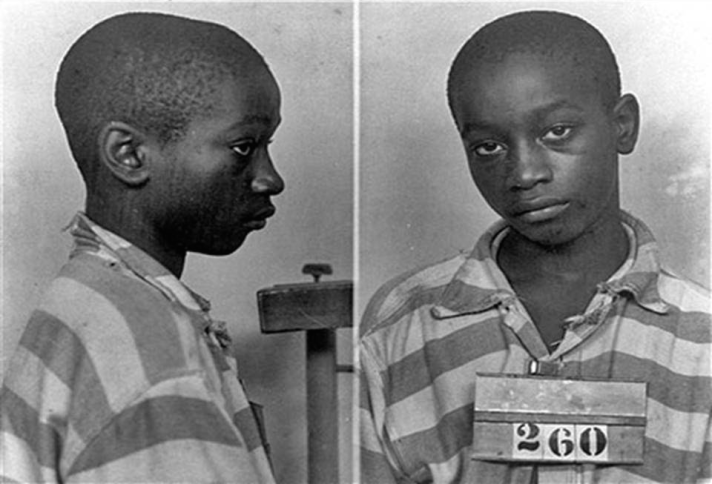
Then there is George Stinney, Jr., a young Black boy that was sentenced to death and electrocuted for a crime he did not commit. There was Lena Baker, a Black woman that was tortured by an employer, fought back in self defense, then sentenced to death. More recently there was Larry Griffin, Troy Davis and countless other Black and Brown people that were unjustly convicted of murder and sentenced to death. There have been a large number of unaccounted for state sanctioned killings of innocent Black people under the death penalty.
A study published in 2014 titled, “Rate of False Conviction of Criminal Defendants Who Are Sentenced to Death,” found that one in every 25 people on death row are innocent. Furthermore, with the high number of racial profiling, wrongful arrests, and false convictions the Innocence Project states that 63% of individuals exonerated by DNA evidence have been African Americans. Additionally, “An analysis of the 297 DNA exonerations reveals minorities make up approximately 70% of those proven innocent through DNA testing. (Innocence Project, 2014)”
This showcases a massive racial inequality in terms of wrongful sentencings and executions. And this is one of the key reasons that I am against the death penalty. The unknown number of innocent Black and Brown people that have been wrongfully executed is chilling. Curing this ill would require an end to racial profiling, prejudice and racial inequality – which is no small feat. So in the meantime, ending the death penalty could save a great number of innocent lives as our criminal justice system works through a number of much needed reforms.
Being human, I want Dylann Roof punished to the fullest extent of the law. However, in a society where innocent people are systematically imprisoned and killed simply due to their racial makeup in the name of “law and order” – it’s hard to see the shine of justice here. While Dylann Roof is sentenced to death, the criminal justice system continues to unjustly ruin and take the lives of the same people he terrorized. There is overt terrorism and covert terrorism but it is terror just the same.
It’s a troubling paradox that is hard to grapple with.
The one death sentence of Dylann Roof neither makes up for the deaths of the innocent lives he took or the trove of innocent Black and Brown people being executed along with him. I’m not sure what justice is in this case but I know for sure that the death penalty is no friend of my tribe and never has been.
“The fate of millions of people—indeed the future of the black community itself—may depend on the willingness of those who care about racial justice to re-examine their basic assumptions about the role of the criminal justice system in our society.” ― Michelle Alexander
Jessica Ann Mitchell Aiwuyor is the founder of OurLegaci.com. To reach JAM, email her at OurLegaci@gmail.com. Follow her on Facebook at Facebook.com/JAMAiwuyor.
For many people, 2016 ended with a great number of mixed feelings, anxiousness and anxiety. This is especially due to the fact that Donald Trump was elected President of the United States and has went about bringing every elitist, racist, and womanizing lawmaker along for the ride. It’s easy to get bogged down with the imagery in front of us.
There are legitimate fears that many could lose much needed healthcare, immigrant families could be split apart and police could starting fulfilling a renewed mandate to further the criminalization of Black and Brown people.
However, as I am reminded by older generations, if they could survive Reagan – we can survive Trump. Furthermore, if our ancestors could mobilize in the face of chattel slavery and Jim Crow, surely we can find some ways to utilize the modern tools in front of us to continue the push for social justice in all forms.
At a time when reading was still illegal for enslaved Africans in America, Frederick Douglass was publishing The North Star, an abolitionist newspaper that advocated for freedom and the plight of enslaved persons in America.
At a time when Jim Crow was in its prime and women did not yet have the right to vote, Mary Mcleod Bethune started a school to ensure the education of future generations Black children (at the supreme disapproval of the KKK).
At a time when African Americans faced stiff, often deadly backlash to civil rights and social justice initiatives, Ella Baker worked as a key grass roots organizer for the National Association for the Advancement of Colored People, the Southern Christian Leadership Conference and the Student Nonviolent Coordinating Committee.
Times can appear hopeless, but history serves as a reminder that the same energy used to overcome past oppressive forces continues onward. So with this new year, let us be comforted and empowered knowing that the never-ending strength of grassroots “people power” remains unwavering.
Here are a few ways you can be a social justice advocate in 2017.
Read Indivisible.
Indivisible is a document created by former congressional staffers that contains information on how to organize a group in your local community to put pressure on your elected officials and representatives. Described as, “A practical guide for resisting the Trump agenda”, tactics in this document help to make sure your representatives hear your grievances and vote in your best interest.
Join the Movement for Black Lives.
The Movement for Black Lives is a collective of Black organizations joining together to protect the lives of people of African descent across the country. They are currently organizing to “build safe and vibrant communities for all Black people.” The collective has issued a call to action for those who want to get involved.
Join the NAACP.
Members of local NAACP Alabama branches, led by NAACP president Cornell Brooks, were recently arrested during a sit-in protesting the nomination of Senator Jeff Sessions for the role of Attorney General. Sessions has a well known anti-civil rights record. The NAACP will be fighting against Sessions’ nomination and working to continue the struggle for civil rights.
Grow your own movement.
There may be something you’re passionate about starting yourself. Team up with friends, family members, and other community organizers to work towards collectively building an organization that will meet an unfilled need of your community. There are a huge number of opportunities to work with other activists and grow. Idealist.org and WorkForGood.org are two websites that can serve as a starting point for finding volunteers and other activists in your area.
In conclusion, the above listed are just a few ways to get started working on social justice and civil rights in 2017. The opportunities are endless and the power is waiting.
“Each generation must, out of relative obscurity, discover its mission, fulfill it, or betray it.” – Frantz Fanon
Jessica Ann Mitchell Aiwuyor is the founder of OurLegaci.com. To reach JAM, email her at OurLegaci@gmail.com. Follow her on Facebook at Facebook.com/JAMAiwuyor.
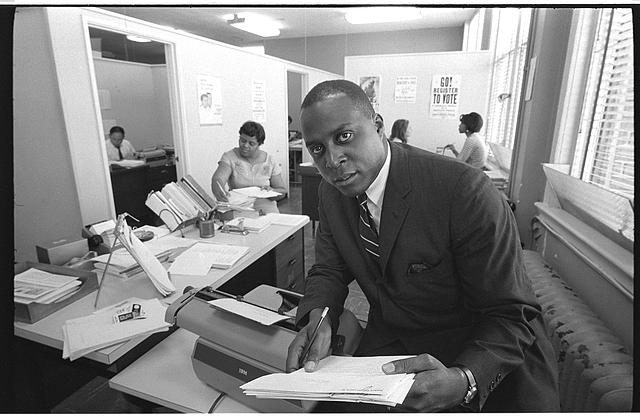
(African-American lawyer Vernon E. Jordan working on a voter education project, seated at a desk with a typewriter at the Southern Regional Council, Atlanta, Georgia) – Library of Congress
Today is election day. It seems like it took forever for this day to finally come. Last year, I had imagined this day a bit differently. Perhaps I was a bit naive about our progress as a society but I did not foresee such a lack of choice and diversity amongst the presidential candidates. Furthermore, the rise of blatantly racist, sexist, elitist Donald Trump mentally stumped the majority of the American public.
In the media whirlwind infatuation with Trump, local races have been all but ignored. Unfortunately, many will see the names of local election candidates for the first time today. Before stepping into the booth, take time to look up candidates for your local Board of Education, circuit courts, senate, congressional races and etc. Start with a simple Google search of articles that discuss the candidates’ records and stance on important issues.
These are the people who will be determining keep aspects of our lives. Electing the right local candidate can ensure funding for public schools in need, a quality justice system that uplifts instead of criminalizing, and legislation that accurately represents the needs and wants of the local community.
We’re so focused on the possible negative outcome in the presidential election that we sometimes forget the very important outcomes of local races. Local elections matter too. Don’t just pick a name. Even if it’s just a few minutes, take some time to research so that you can vote responsibility when voting local. Your everyday life depends on it.
Jessica Ann Mitchell Aiwuyor is a poet, writer and social justice advocate. She’s also the founder of Our Legaci.
There are so many different rivers to cross for writers. Writing is a field that presents rejection as a rite of passage. At every turn, writers are expected to present our work to gatekeepers for approval, acknowledgement, and accolades. The chase to be accepted is never ending and at times can be overwhelming. This, in turn, can halt progress. So much looming rejection, can lead us to forget why we’re writing in the first place. Truth be told, most writers didn’t first pick up a pen thinking about whether or not their structured thoughts would be accepted into a literary journal.
We started writing because we had a passion for something. We had a voice that needed to be released. We had a purpose that needed to be fulfilled. In the digital age, there is more flexibility than ever for writers to both hone their skills and move forward with their careers, without first needing the approval of gatekeepers. Some see this new found freedom negatively, desperately touting the need for restrictions. However few acknowledge that the current publishing industry is built on exclusionary, elitist practices that traditionally marginalize writers from under-privileged groups.
Are we to stop writing if our work is not welcomed with opened arms into prestigious literary circles?
If you have an idea for a book, get started. If you want to create your own syndicated column, podcast or video series there is nothing stoping you but you. Hone your craft, listen to your gut and move forward. There will always be time to submit to journals and send out proposals. Don’t let this process halt your progression.
Stop waiting for permission to be yourself and fulfill your purpose.
Jessica Ann Mitchell Aiwuyor is a poet, writer and social justice advocate. She’s also the founder of Our Legaci. Rant or rave to JAMAiwuyor@gmail.com. Don’t forget to join our mailing list!
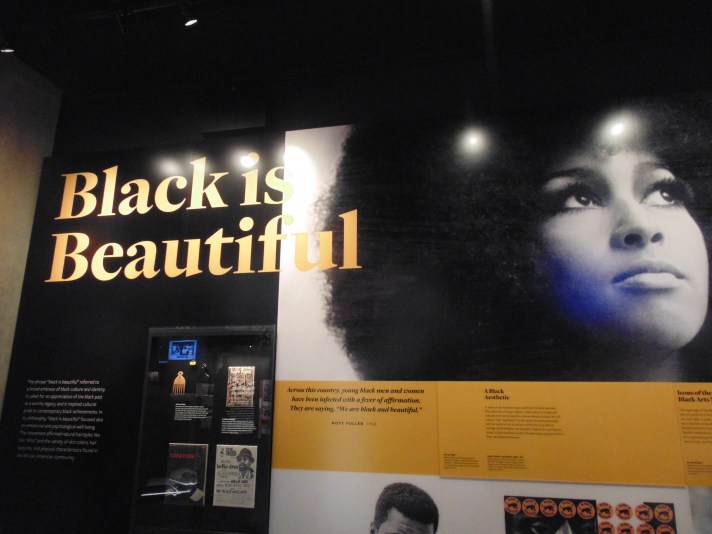
From the moment I first learned about its development, the National Museum of African American History and Culture held a special place in my heart. After the last few years of construction, it finally opened this fall.
A major attribute of people of African descent (and in this case African Americans specifically) is our standing glory and liveliness. Whenever there is an upcoming Black cultural experience, I always hope for a layered approach. One that embraces the complexity of our existence, which is often laced with joy and creativity in spite of attacks or marginalization. Walking in the National Museum of African American History and Culture is like walking into a bubble of Black self-love and never wanting to come out. It’s where we can come face-to-face with our truths and stand in awe of everything we have been through, everything we have accomplished and everything the future holds for us.
There was a deep ache in the room that housed pieces of slave ships and shackles. The voice narration lingered throughout the air, speaking of slave traders raping girls not older than 10 years old. It spoke of people throwing themselves off of ships, starving themselves in hopes that with death, they will return home to Africa.
There was a rumble in the room that housed Emmett Till’s casket, while a video of his mother played on rotation. She spoke of her son, how playful he was, how much joy was inside of him. And she spoke of how he had been butchered. She recounted how murderers tried to chop off his neck, how his right eye dangled from the socket down to his cheek. She spoke of how she wanted the world to see what had been done to her son. “Let the people see what I’ve seen.”
This is the pain, the grief that in the era of Black Lives Matter, we instinctively relive as a collective. This is not because we want to but because in many instances death associated with anti-Blackness continues to be a cruel reality.
And yet, we are still vibrant. The walls are lined with quotes from Black artists, scholars, and activists reminding us of our humanity while rejoicing in our colorful splendor. Many things were stolen from us, still many parts of us can never be stolen. I never wanted my visit to this historic museum to be about pain. Yet, the pain that I had initially set out to not feel became the catalyst for gratefulness and pride. I became more and more enamored with each step.
The greatest experience during my visit was seeing and hearing the reactions of youth.
One little boy exclaimed, “Gosh, they were strict. I’m glad I wasn’t born back then.”
A little girl read a quote on the wall about the slave blocks. She reached up high to rub the words with her fingers. She then looked down and told her sister,”They sold women and children.”
Another little girl, when seeing a hat from modern day Liberia, said her friends “Our African heritage!”
Then there was the child, that was completely in awe of Huey P. Newton’s photo displayed in the Black Power/Black Arts Movement section.
Finally, at Emmet Till’s casket, there was a teenaged girl sobbing in her father’s arms.
Just around the corner, these same children then saw Public Enemy’s bright red banner, Oprah’s stage, huge photos of the Obamas, beautiful pieces made by artisans in the 1700-1800s, Nat Turner’s bible, Langston Hughes words towering over visitors, Fannie Lou Hamer’s voice ringing and so much more.
The children are seeing, hearing, and feeling. They are literally touching the walls absorbing history, Black history…America’s history. The museum’s ability to transport children back in time to experience the tragedies and triumphs, while ushering them into a vibrant future is perhaps it’s greatest attribute of all.
This is a place where children touch the walls.
Jessica Ann Mitchell Aiwuyor is a poet, writer and social justice advocate. She’s also the founder of Our Legaci. Rant or rave to JAMAiwuyor@gmail.com. Don’t forget to join our mailing list!
Can I admit that I’m tired of talking about Birth of a Nation? Even though I plan on writing my own collection of thoughts concerning the film and its surrounding controversy, I’ve noticed that all of the attention towards it, good and bad, has unintentionally pulled away from much needed discussions about other Black films and shows.
So here are 6 Black films and shows to discuss other than Birth of a Nation:
1. Queen of Katwe starring Lupita Nyong’o
This film has received many great reviews. It’s based on the true story of Phiona Mutesi, an international chess champion that learned to play chess at the SOM Chess Academy in Kampala, Uganda. Though she’s already a world hero, Ms. Mutesi is still a young lady with big dreams.
Film synopsis:Queen of Katwe is the colorful true story of a young girl selling corn on the streets of rural Uganda whose world rapidly changes when she is introduced to the game of chess, and, as a result of the support she receives from her family and community, is instilled with the confidence and determination she needs to pursue her dream of becoming an international chess champion.
2. Issa Rae’s Insecure now on HBO
I fell in love with Issa Rae’s work while watching the first 3 minute episode of AwkwardBlackGirl. She captured the everyday plight of so many quirky Black women with awkward tendencies. This is what made her show a hit. She tapped into a market and audience that had been either ignored or deemed non existent. Her new show on HBO is just has hilarious, with the same quirky, cringe worthy, laugh out loud moments. Insecure is definitely a must watch.
Show synopsis: Watch the half-hour comedy series Insecure, starring Issa Rae, Yvonne Orji, Jay Ellis and Lisa Joyce, looks at the friendship, experiences and tribulations of two black women. Created and executive produced by Issa Rae, this eight-episode series is also executive produced by Prentice Penny, Melina Matsoukas, Michael Rotenberg, Dave Beck, Jonathan Berry, and Larry Wilmore as a consultant.
This is a movie I’m extremely excited for. I wish we all knew more about the history behind Black women and the NASA program. As the mother of twin girls, movies showcasing the scientific and mathematical talents of Black women is a must watch in my book.
Film synopsis:Hidden Figures is the incredible untold story of Katherine G. Johnson (Taraji P. Henson), Dorothy Vaughan (Octavia Spencer) and Mary Jackson (Janelle Monáe)—brilliant African-American women working at NASA, who served as the brains behind one of the greatest operations in history: the launch of astronaut John Glenn into orbit, a stunning achievement that restored the nation’s confidence, turned around the Space Race, and galvanized the world. The visionary trio crossed all gender and race lines to inspire generations to dream big. In theaters – January 13, 2017.
4. The 13th directed by Ava DuVernay on Netflix
As an undergrad, one of our professors pointed out that the 13th amendment to the U.S. Constitution did not end slavery. “Neither slavery nor involuntary servitude, except as a punishment for crime whereof the party shall have been duly convicted, shall exist within the United States, or any place subject to their jurisdiction.”
She directed us to the line that states: except as a punishment for crime.
Thus, slavery took on a new form. The new National Museum of African American History and Culture has an entire display dedicated to showing the connections between slavery and mass incarceration. Apparently, everyone in my circle has watched The 13th except me. But fear not, I will be watching over the weekend. Anything Ava DuVernay touches is gold.
Film synopsis: The title of Ava DuVernay’s extraordinary and galvanizing documentary 13TH refers to the 13th Amendment to the Constitution, which reads “Neither slavery nor involuntary servitude, except as a punishment for crime whereof the party shall have been duly convicted, shall exist within the United States.” The progression from that second qualifying clause to the horrors of mass criminalization and the sprawling American prison industry is laid out by DuVernay with bracing lucidity. With a potent mixture of archival footage and testimony from a dazzling array of activists, politicians, historians, and formerly incarcerated women and men, DuVernay creates a work of grand historical synthesis. Now Streaming on Netflix.
5. Atlanta produced by Donald Glover on FX
Where do we start? The fact that this show centers around Black men in Atlanta chasing the rap career dream already leads us down the road to authenticity. The admiration of lemon pepper chicken wings, saying “bet” instead of “sure,” working at the airport – so Atlanta.
Yet the most interesting aspect of Atlanta is it’s unflinching willingness to explore societal shifts, along with layered portrayals of Black life. The most widely discussed episode so far has been episode 7. The episode included a number of satirical commercials featured on a fictional tv network, parodying BET called “Black American Network.”
During the episode, rapper Paper Boi is shown on a tv panel grappling with understanding transsexuality. Then the episode shifts to a discussion of transracial identity. Instantly audiences picked up on the false equivalency that was often leaned upon during the real life uproar concerning Rachel Dolezal- a white woman determined to embody blackness through activism, hair weaves and tanning.
On Atlanta, they flip the script showing a young Black man that identifies as a 35-year-old white man, that is both transphobic and homophobic (taking a jab at Caitlyn Jenner’s contradictory homophobic statements).
Atlanta is unconventionally brilliant. There are so many things to digest here. There could be an entire article dedicated to breaking down the children’s cereal commercial in episode 7 that put the spotlight on police brutality.
Show synopsis: Two cousins work through the Atlanta music scene in order to better their lives and the lives of their families. Donald Glover serves as Executive Producer, along with Paul Simms and Dianne McGunigle. Atlanta is produced by FX Productions.
6. Queen Sugar on OWN
Like I said earlier, everything Ava DuVernay touches is gold. I recently wrote about how Queen Sugar’s underlying theme is “rebirth, rejuvenation and resilience.”You can view more of my thoughts here.
Film synopsis:Queen Sugar chronicles the lives and loves of the estranged Bordelon siblings in Saint Josephine, Louisiana: Charley, the savvy wife and manager of an NBA star; Nova, a worldly-wise journalist and activist; and Ralph Angel, a formerly incarcerated young father in search of redemption. After a family tragedy, the Bordelons must navigate the triumphs and struggles of their complicated lives in order to run an ailing sugarcane farm in the Deep South.
Again, I will be writing my own commentary about Birth of a Nation. However, for now I’d just like to bask in the glory of all the greatness featured above.
If there is a film or show you think should be included, add it in the comments below.
Jessica Ann Mitchell Aiwuyor is a poet, writer and social justice advocate. She’s also the founder of Our Legaci. Rant or rave to JAMAiwuyor@gmail.com.






 Jessica Ann Mitchell Aiwuyor is a poet, writer and social justice advocate. She’s also the founder of Our Legaci.


 Our Legaci with J.A.M. Aiwuyor