Positive Change and Transformation

Positive Change and Transformation

By Zhana

We have amazing power.

Every day, we experience racism and racist oppression.  For example, this morning on the BBC News, I saw a Louisiana brother who had been imprisoned on death row for many years before a retrial reduced his conviction to manslaughter.

Many people have been completely exonerated for crimes for which they have been convicted and sentenced to death.  Not all of them are Black, but a  disproportionate number of them are.

We work so hard to battle these injustices. Yet they never seem to decrease. So what can we do?

My work is all about creating a more positive future.

The Law of Attraction tells us that whatever we put our energies into, increases in our lives. This is very similar to the Law of Increase, which I write about in my book Success Strategies for Black People.

Although our intention is to bring about positive change, we need to be aware that these universal laws are constantly working. They can work for us or against us. We can use them in our favor – or not.

In other words, the more energy we put into battling a problem, the more energy we are giving to that problem.

Blame then becomes a distraction from what will bring about the real changes we deserve.

We need to turn our focus to the solution rather than the problem.

Cases of people who have been wrongly convicted may often respond to Spiritual Response Therapy (SRT). I write about SRT and the Higher Self in Success Strategies.

I also write about Nonviolent Communication (NVC) as well as other highly effective methods.

These are transformative methods. I have seen miracles happen in my life and in the lives of others. This is why I wrote Success Strategies. I want to make these methods available to as many people of African heritage as possible. We can use these methods and other things I cover in Success Strategies to heal ourselves, our families and our communities. And we can use them to achieve much, much more.

I am passionate about the work I do because I have seen the difference it makes in people’s lives.

As Black people, we often get into victim mentality. This is because we have been victimized for so many generations.

Those of us of a political bent say, “Organize! Fight back!”. And of course, there is a time to organize. There is a time to fight, to defend our communities.

However, in order to bring about real positive, effective change and transformation, we need to turn our focus inward.

Human beings in general tend to blame others for our problems, difficulties and issues. This is a basic human tendency. And others are often to blame.

The problem with this is that it locates the solution outside of us. If only “they” would treat us better. If only he, she or they would stop doing whatever it is they are doing and do what we want them to do. Then everything would be okay.

Please note, I am NOT trying to take the blame for racism and racist violence off of white people.

I am just saying that, whether we blame ourselves or other people, blame is not a solution. And I am interested in solutions.

Instead of focusing on what is going on on the outside, and what others are doing, we need to focus within.  That is where our power lies.

As I said at the beginning of this article, we have amazing power. We need to use this power to bring about the changes we need.

I am a pragmatist. I am committed to doing what works.

Zhana is a writer, publisher and Transformational Growth Consultant.
To read her book Success Strategies for Black People, go to:  http://www.blacksuccess1.com/achieveyourgoals.htm
To keep in touch with Zhana, join the Nurture Success online community.  http://nurturesuccess.multiply.com/

The U.S. Black Woman Experience

The U.S. Black Woman Experience

by Zakiya Lasley

In truth, specific oppressions (male domination, white supremacy, class exploitation, etc.) rarely work singularly. Instead, oppressions feed off of each other, their dynamics changing according to specific contexts. The current challenge for anti-rape organizers is to develop solid analyses of rape and rape culture that recognize a multiplicity of oppressions that constantly shape and influence each other.

Throughout history Black women have taken deadly risks in confronting rape under extreme fear and terrorism. Black women who were slaves participated in concentrated and deliberate instances of retaliation of rape by their white male slave owners. Documented in many autobiographies and biographies are horrifying accounts of female rebellion manifesting itself in the poisoning of rapists, burning of property, and assassination of their white slave owners. Also in instances of desperation enslaved rape survivors who were mothers often killed their girl children as a form of resistance to slave rape.

Looking at anti-rape activism done on the part of Black slave women forces us to think about rape in a much more complex way. Rape is not only a tool for male domination over women; Rape is also a tool for economic exploitation and white supremacy. The example of rape survivors killing their babies to keep them from being raped is also resistance to the use of rape to promote the institution of chattel slavery after the banning of the Mid-Atlantic slave trade. We can see the dominating forces of capitalist and white superiority dynamics within rape not only in the case of the rape of thousands of black slaves, but also currently in global issues such as “mail-order brides” and global sex-trafficking.

Another anti-rape movement headed by Black women is the anti-lynching movement in the late 19th and early 20th centuries. During post-Reconstruction, southern white people were determined to regain control over Black people. As a result, they instituted a system of lynching Black women, men, and children when they “got out of line.” Lynching was a sexualized form of murder. Often, the justification for lynching Black men was that they raped white women. The issue of rape was utilized as a scare tactic geared directly towards white women. As a result, many southern white women supported lynching efforts instead of recognizing that sexual violence towards white women, by anyone, is deeply connected to sexual violence towards Black people (as well as other forms of oppression). When Black men were lynched, the mobs would often torture them before hanging them, cutting off sexual parts of their anatomy in particular. When Black women were lynched, they were often raped first.

Ida B. Wells-Barnett, an activist and writer during this time, spoke openly against rape and did not defend Black men who were, in fact, guilty of rape. But after she researched and investigated 728 lynchings that had taken place during the 1890s, she found that only a third of murdered Black people were even accused of rape, much less guilty of it. Spurred by her investigation, hundreds of Black activists at the time, (including the NAACP and Black intellectuals) developed an anti-lynching movement for which activists were burned out of their homes and businesses, run out of town, and murdered.

In my assessment of the anti-lynching movement, I never stopped to look at the moment as an anti-rape movement because the goal of these activists were not specifically to end rape, but to end lynching. Nonetheless, it is so profoundly an anti-rape movement because the theory and activism work the organizers produced challenged all forms of racialized sexual violence. Deconstructing the myth that Black men are overwhelmingly “more desirous” of white women was critical in order for white women to eventually reflect on the sexual violence being done to them by white men as well as their own sexual freedom. Most importantly the anti-lynching movement forced America’s hand in recognizing that other manifestations of oppression are inseparably linked to sexual violence. There is no genuine way to discuss rape and organize against rape without being committed to deconstructing complex ways that race, ability, religion, age, economics, and sexuality are integrated into rape.

This next phase of anti-rape organizing in the 21st century must be able to hold on to the complexity of rape culture with all of its degrees of oppression. The time for thinking about rape as merely a tool of male domination is over. We must be able to mindfully articulate spaces where anti-rape organizing is inseparably linked to organizing against police brutality, for labor rights, and for immigration rights. And we must show up to these other types of organizing work as allies moving towards liberation.

Living The Words of Audre Lorde

Living The Words of Audre Lorde

By Zakiya Lasley

     How fitting at a time like this in my life is the concept of this question. A topic that up until recently I tried my best to stay clear of. Before this year, I felt I had strategically and carefully averted the blatant racism/prejudice/homophobia that exists on this campus. Of course this is my conscious mind talking, fully aware that there is no escape from the vices of racism, the penetrating glare of homophobia, or the disturbing and downright exasperating nature of prejudice. “Every woman has a well-stocked arsenal of anger potentially useful against those oppressions, personal and institutional, which brought that anger into being” (The Uses of Anger” Women Responding to Racism,” Sister Outsider: 127). Yes, we do, I respond. Until recently, I had only toyed with my feelings of anger, and unfairness, unwilling to accept that these feelings existed, always there bubbling at the surface waiting for the perfect moment to unleash. My freshman year of College I wanted to set forth goals that I knew may or may not be achievable,  yet in the long run would not only provide me with a genuine liberal arts perspective, but an education worthy of my Ivy League peers. In achieving this goal, one of the ways I wanted to implement a unique experience was by studying a critical language. In this case I selected Chinese. Not only because of the spiritual reasons that connect me to the teachings and philosophies of East Asia, but also due to my natural curiosity and love of learning. Needless to say, my first memories of Chinese class were very unpleasant, uncomfortable, and embarrassing. Finding myself not at the head of the class or even in a position of authority, I felt off-balanced and un-centered.                                   

      Automatically I relied on my personal strengths, frustrations, and anger to carry me through the semester. Apparently this was not enough. One day in my 120 Chinese Class second semester of my Freshman year. I returned to class upon using the restroom to find two of my pages torn from my Chinese book (which cost $100.00), and characters (written symbols) in the margins of my open pages. I was shocked; I had only left the room for five minutes. At first I thought it was a joke played on all of us, quickly searching the materials (and faces) of my classmates, to find nothing. Not even an incriminating sound. So I did what I felt at the time was appropriate given the cruelty of the situation. I sat down, closed my book, and waited silently for my professor to return. Unfortunately, in the Chinese department we have all visiting professors one-year, two years at the most.  Men and women who dedicate themselves to teaching students a critical language. I immediately deflated. How can I approach this woman, who might not have any clue as to what I’m experiencing? Later, as I asked my Chinese native-speaking friends what the characters meant. I realized they were not the common epitaphs I expected from a predominantly white class “Black bitch…nigger” were among some of my cynical assumptions. I quickly learned that my case had suddenly become an attack on my sexual orientation. Which at that point I hadn’t realized had become such public knowledge.

     I immediately felt ashamed, and stupid. Eventually I notified my professor who discussed it with the head of the department. The final result was a deduction in everyone’s grades, given the fact that my classmates refused to come clear. As humiliating and stupid as the situation was. I found myself laughing, commenting that whoever took the time to learn the characters for Dyke must have learned something in the process. Yet the anger that surrounded me throughout the semester only served to motivate me and support my decision to stick with a language that everyone seemingly felt I would ultimately fail.

            Institutionally speaking, I now find myself in a situation where I have come to terms with my own responsibility in a matter of Academic Dishonesty. I find myself straddling a fence of depression, shame, embarrassment, yet mostly outrage. The outrage stemming from the unshakable belief that there are practices and systems in place at predominantly white institutions, to not only break the student of color, but destroy them. The system of institutional racism I have come into contact here at Hamilton has left me more depressed than any “real-world” experience I have encountered in my short lifetime. I feel the reason for this is the knowledge that even in my academic naïveté, I believe in higher education to overcome the barriers and blockades of racism. Sadly, my own faith in the educational system has been tried to the utmost. However, I have not given up all hope, since in this instance; my anger is my most powerful tool. I realize that ultimately the decisions made by my white peers, administrators, and professors will not be overturned in the immediate future. Yet I know that any action that occurs between now and my “gentle separation” from the college will result in a change of the power and oppression that exists in my eyes as the most transformative department at any college or university; the Women’s Studies Department. In reading Audre Lorde’s essays, specifically ‘The Uses of Anger: Women Responding to Racism”, I now realize that anger is not just a reactionary emotion to an oppressive system but a mechanism of change and solidarity. I hope that in my future studies I continue to utilize anger until all my sisters of color understand the precarious legs of support that come from these predominantly white institutions.

How Climate Change Affects Black Women

Photo © 2005 Anissa Thompson

How Climate Change Affects Black Women

By Jessica Ann Mitchell

In 2005, the Congressional Black Caucus Foundation and Redefining Progress released a research report called, African Americans and Climate Change: An Unequal Burden. The report noted that climate change is already in the process of attributing to 160,000 deaths annually. Furthermore, African Americans are prone to respiratory problems in that over 70% of African Americans live in districts that are violating “federal air pollution standards”(2005 p.5). There are 44 recognized major U.S. metropolitan areas. In all of them, African Americans are more likely to be subjected to levels of toxic air pollution that are higher than those whites maybe subjected to. Thus, hospital visits and deaths caused by asthma are more likely to occur among African Americans to the rate of 3 times that of other races (CBCF 2005). In the northern states it is predicted that heat waves due to climate change will affect New York City, Philadelphia, Chicago, and Detroit. As stated earlier, an increase in diseases such as malaria are predicted to affect the southern states. All of these areas are known to be inhabited by large concentrations of African American people. Yet white Americans are 50 times more likely to have health insurance than African Americans. Furthermore, African American homes emit fewer amounts of greenhouse gases into the atmosphere in comparison to other races at the rate of 20% less (CBCF 2005).

The same can be said for African and other developing countries whose CO2 emissions are profoundly lower than the emissions of European countries. All countries on the African continent combined only attribute to 3.5% of all CO2 emissions in the world in comparison to the 22% emitted by the U.S. alone (UNEP 2000, EIA 2005). Yet it is estimated that Africans numbering from 75 to 250 million will face water shortages in 2020 (IPCC 2007). This will also affect 50% percent of agricultural crops that are dependent on water for nourishment (IPCC 2007). In Latin America, there are 150 million African descendants, making them the largest group of Africans outside of Africa. In Brazil alone, there are 80 million African descendants. They make up 48% of the Brazilian population, yet 78% of these 80 million African descendants are below the poverty line (Morrison 2007). Twenty six percent of the Colombia population is African descendants, yet they make up 75% of the impoverished in Columbia (Morrison 2007). Due, to climate change, Latin America will also be hit by water and food shortages in the near future (IPCC 2007). The people mostly affected by these shortages will be the poor, meaning the African descendants.

Climate Change is an issue that is dramatically affecting the world as we know it but even more specifically, the Pan-African World. The problem here is that these issues have not been studied in-depth by those in the field of Pan-Africanism and Black Studies. Both Africans on the continent and African descendants throughout the Diaspora have already begun to unjustly reap the negative consequences of climate change; which has been mainly caused by the greenhouse gas emissions of industrially advanced and or developed nations. One of the causes of climate change includes the burning of enormous amounts of fossil fuel. (Uwaza, 2003). The earth’s atmosphere then becomes oversaturated with Carbon Dioxide (CO2) which causes an enhancement of the widely discussed greenhouse effect.

The greenhouse effect is described as the process in which heat is trapped in the earth’s atmosphere. This, in turn, causes a warming of the planet. Part of this process is natural and part of it is human induced through the burning of natural gas, oil, and gasoline (EPA 2007). Sixty four percent of the greenhouse effect is attributed to Carbon Dioxide levels (Uzawa, 2003). Consequently, the temperatures begin to rise to unusual levels (EPI, 2005). As Uzawa (2003) states, “an excess concentration of atmospheric carbon dioxide would warm the globe significantly” (p. 11). The top five countries that emit the most CO2s into the atmosphere are: the United States, China, the Russian Federation, Japan and India (Oak Ridge National Laboratory, 1998).

According to the Center for Disease control (2007), climate change is going to have damaging effects on the sustainability of humanity. The effects of climate change include stronger hurricanes and other storms, flooding, rising sea levels, droughts in some areas, and extreme rainfall in others (Uwaza, 2003). This will in turn cause a rapid spread of disease, heat strokes, drowning, asthma attacks, and etc. It is also noted that the people who will be affected by these changes the most are likely to be those with low socio-economic statuses (CDC, 2007).

Developing countries, with their low participation in contributing to global warming, will also be heavily affected. In fact, developing countries will be more affected than developed countries that sometimes benefit from global warming (Uwaza, 2003). Thus, people of color who have historically faced world wide discrimination based on racism and classism are even more at risk when it comes to climate change. Many communities with people of color have been marginalized globally and endure inequalities that affect the quality of their lives and the ability to sustain life. Any economic challenges or increases in economic disparities could have devastating effects on their everyday lives, especially in relationship to climate change. People with low socio-economic statuses do not possess the economic power to combat climate change. Furthermore, the burden of enduring the negative effects of climate change is placed on their shoulders by those nations, companies, and organizations that have contributed substantially to this problem and possess the economic capacity to stop this injustice.

Women of color specifically face a particular type of oppression when it comes to climate change because of the intersection of racism, sexism, and classism (Malveaux 1986). In the mist of Climate Change, for example, African American women in Atlanta, GA struggle against rising costs of living, including rising food prices and medical bills. Still, African Americans emit lower amounts of CO2 emissions than other races in the U.S (CBCF 2004). On the other hand, African women of Imbaseni village of Maji ya Chai, Tanzania struggle against the rising costs of living, including the cost of fertilizers, the inability to render crops for sale, and medical expenses. This is because irregular changes in the climate alter the success of agriculture. Yet, the entire continent of Africa is only responsible for 3.5% of the world’s CO2 emissions (UNEP 2000, EIA 2005). Thus, African and African descended women similarly face increased hardships due to climate change and already existing economic inequalities.

For more information about this topic, email Jessica Ann Mitchell at ourlegaci@gmail.com.

The Good Shepherds: African American Museums

The Good Shepherds

by Henry Duncan

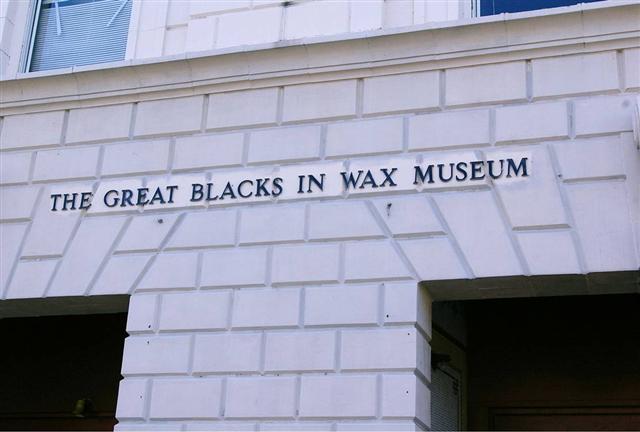
I have to thank Dr. Joanne Martin, co-founder of the National Great Blacks In Wax Museum and Mr. Ivan Henderson, curator of education & public programming of the African American Museum of Philadelphia for helping me with this article. Without their assistance this article would not be possible. Many of the names, dates and, statistics quoted in this article came from information given to me by Mr. Henderson and Dr. Martin. Many thanks for your help.

There are about 200 museums that specialize in the history of Black people here in America. However, these museums had very humble beginnings. Many of these museums started in the houses of their respective founders. For example, Dr. Margaret Burroughs who, along with her husband, founded the DuSable museum of African American History in Chicago on the ground floor of their house in 1961. Drs. Elmer and Joanne Martin did the same when they founded the National Great Blacks In Wax Museum, in Baltimore, MD in 1983. They only had 4 wax figures constructed with wax heads and mannequins as the body. Now these museums have evolved into institutions that have great exhibits that preserve our history. Though these museums have far surpassed there origins, they need our help before they are on par with museums that don’t specialize in Black history.

These museums have taken on the awesome task of gathering and preserving, not only our history in America, but our African history as well. The National Great Blacks in Wax Museum has over 135 wax figures and features the exhibit Into the Hold: The Slave Ship Experience which replicates the slave experience of the Middle Passage and includes a replica of a slave ship. The African American Museum of Philadelphia (AAMP) features an interactive exhibit called Audacious Freedom. This exhibit examines the history of Black people in Philadelphia and the surrounding areas from 1776 to 1876. African American museums also host many traveling exhibits like 381 Days: The Montgomery Bus Boycott Story currently at the AAMP which features a timeline of events that surrounds a small seating area that shows a documentary of the Civil Rights Movement.

Dr. Joanne Martin sent me an excerpt of an article by her late husband Dr. Elmer Martin; written around 2001 entitled Black Museums that articulates the past and current problems that Black Museums face. In this article, Dr. Martin identifies the problems Black Museums faced in their early stages and the problems they face today. After reading Dr. Martin’s article, it is evident that there are three major problems that Black museums face 1.) generating interest in black museums, 2.) acquiring the necessary funds to maintain themselves and, 3.) fighting the invasion of larger institutions into the realm of Black history. Though this article was written nearly 10 years ago you still find examples of this today. For example, here in Philadelphia, the Franklin Institute, a museum that doesn’t specialize in Black history, is currently showing the Cleopatra exhibit which The Franklin Institute estimates will generate 1.5 million visitors. Cleopatra was the queen of Egypt which means she is a part of our history, but how many Black museums have the resources and connections to host such a grand exhibit? The cheapest ticket to view the Cleopatra exhibit costs $19.50, which means this exhibit will potentially generate $29,250,000 in revenue. Let’s compare those numbers of the AAMP. According to Mr. Henderson, the African American Museum in Philadelphia averages about 60,000 visitors annually. Adult admission into this museum is $10 which gives them $600,000 in potential revenue. In other words, it would take 25 years for the African American Museum in Philadelphia to match the visitors of one exhibit of the Franklin Institute and about 49 years to generate the equivalent revenue. There is no lack of effort and sacrifice on the part of the staff of these museums, as mentioned earlier, many of these museums were started in personal residences and with personal funds. With so much dedication on their part why don’t we show more support? With over 40 million Black people in America the least we can do is pay the $10 – $15 admission and help to support the institutions that have sacrificed so much to preserve our history.

Written by Henry Duncan

This article is one of our feature articles in our newsletter, The Seed. The Seed goes out only once a month and features timely articles like the one you just read. To sign up for the our monthly newsletter Click Here. We also have a blog where often times we offer a chance to engage in dialogue about the topic in the article. Check out our blog here

The Drum As An Indicator of Cultural Unity In The African World

The Drum as indicator of cultural unity in the African World: from Hip Hop to Africa

By Remy Johnson


Introduction

Cultural unity exists throughout the African World. The cultural diversity in the African World can be contributed to regional conditions such as lifestyle, resources, and environment. In this way cultural diversity is closer to regional variations of ‘African culture’ rather than differences. It is imperative to focus on cultural unity in the African World to create the foundation for Pan African consciousness in the African World. To test this theory of “regional variations” in the African World I will compare the role of the drum in indigenous West/Central African cultures and Hip Hop in the United States.

Talking Drum in Africa  

            The drum is the oldest known instrument in the world dating back to 4000 BCE in Kemet on the northeast corner of Africa (Sowande, 1969). It is present throughout every region of Africa playing different roles amongst the various peoples (Bebey, 1975). Perhaps, more than any other object the drum has become a ‘cultural emblem’ of the African World culture. This is not a mistake, as Leonard Barrett states, “the drum is Africa” (Ani,1980). To understand the profound role of the drum in the African World we must consider it a tool of communication. The loud boom of a drum draws the attention of any person, but the ‘talking drum” speaks ‘to’ and ‘for’ African peoples.

The drum is used to communicate with the “supernatural” world as in the case of the Yoruba of Nigeria (Bebey,1975). Davis (1992) wrote, “Drums are known to transmit messages between God and people, and also an essential instrument in the ritual healing” (34). It is plays a prominent role in ceremonies, rituals, and rites as pace setter for dance and praise. The people follow the drum’s rhythm and their collective energies creates a ‘unseen’ link with the ancestors (Sowande, 1969).

Practical uses of the drum included signaling the start of the day, lead celebrations, and notifying the public of important information (Bebey,1975). The jeli (teacher/griot) uses the drum as musical backdrop to recite ‘historical poetry’ to educate the masses. The rhythm of the ‘drum’ forms a link between the listener and the griot while making learning as the child associates the knowledge with a particular rhythm. This is an effective form of education because children of African descent tend to retain information as result of their right brain cognitive learning style. (Hale, 1982).

Drums were used to communicate between villages and towns. This form of communication was not just random beats, but a ‘drum language’. Each group’s ‘drum language’ is influenced by the geographic topography, the style of drum, material, number of drums, size of the drum, and rhythm/beat pattern (Bebey,1975). Regional variations can be seen in the drum languages of African culture that are influenced by the peoples struggle with environmental conditions (Bebey,1975).

Talking Drum in the ‘New World’

Africans brought the knowledge of the “drum” to the Americas via the Maafa/Trans-Atlantic Slave Trade (Ani,1980). As a result many Diasporic traditions share fundamental cultural values with Africans from Sengambia, Central and Southern Africa (Bebey,1975). This includes the Oyo, Yoruba,, Dahomey, Fon, Bantu, and Ewe all of which are recognized by scholars as being the majority of enslaved Africans (Bebey,1975). The drum’s cultural “paper trail” is a virtual “Hansel and Gretel” type of deal where the Ancestors left cultural indicators as an inalienable way back to our origins.

Africans in the Diaspora also have practical uses for the drum similar to those on the continent. Maroon societies in the Caribean and Brazil used drums to notify, start a charge, and over long distances to synchronize guerilla operations (Rath, 2005). Africans in the U.S. played drums in public displays of dance, relief, praise, and expression the most notable of these places is Congo Square. The importance of the drum in communication is perhaps best judged by the establishment of the ‘drum laws’ in the 16th and 17th throughout the Americas as Europeans began to fear the ‘talking drum’ (Rath, 2005).

Diasporic religions worship similarly to African religions. Both use the drum to tap the participant’s inner spirit to induce a trance like state that culminates with a danced expression. The use of the drum to induce spirit possession is present throughout the diaspora: ‘Voodoo’ (Haiti, and Americas), Santeria (Cuba), Canbomble (Brazil), and Rastafari (Jamaica) (www.wikipedia.com). This phenomenon can also be seen in the southern Black church in the U.S. where it is known as catching the ‘holy ghost’, but similar it is brought on by a combination of drums and praise songs.

Diasporic music traditions including ‘Reggae’ in Jamaica, ‘Samba’ in Brazil, and Ramba in Cuba use the drum for similar purposes of African traditions. These genres share the basic musical concepts with African music traditions including the “2 – 4” beat pattern; syncopated beat rhythm that aims to emphasizes the lyrics; drum/beat maintain ‘timing’ relationship with vocals; initiating and synchronizing dancer; leads call and response; and repetition throughout the track (Sowande,1969;Davis,1992). This is known as the “heterogeneous ideal” where the core underlying concepts of the African world music are apparent in Diasporic music (Greenwald, 2002). If these core concepts survived in the ‘New World’ it is possible that knowledge of the drum as a tool of communication may have transmitted to the Hip Hop generation.

The Talking Drum in Hip Hop

Hip Hop was created on the streets of the South Bronx, NY in the 70s (George, 1998). Hip Hop developed as a cultural expression and medium for marginalized urban youth in the United States to express their disapproval of the government, poverty, police, violence, and as a means of collective resistance (George,1998). The genre has spread like wildfire as youth all over the world realize the source of their struggles, the system, and begin to communicate with each other across national and racial boundaries.

It follows the African American (e.g. B.A.M) artist/oratory tradition that demands the “orator” express personal and communal convictions while maintaining African aesthetic forms (Keyes, 1996). The godfathers of this genre are Kool Herc, Afrika Bambaata, and Gil Scott Heron (George,1998). It is important to note that each ‘god father’ employed drums in their performances. Kool Herc brought the drum knowledge from Jamaica, Gil Scott Heron contributed drum knowledge as a Griot of the B.A.M, and Afrika Bambaata ‘consciousness’ of African heritage as a historian are the material “links” of drum knowledge. These links forms the basis for the use of the drum as tool of communication in Hip Hop.

There are four elements of Hip Hop: (1) the emcee (MC); (2) the DJ (Producer); (3) graffiti (visual art); (4) and breaking (dancing). The most influential is the DJ. He is responsible for communicating with the remaining three elements (Greenwald,1996). He also initiates moments of call and response with the crowd. The DJ is able to accomplish this through the administering of the beat similar to the drummer in Africa (Greenwald, 1996).

It is important to understand the transformative process that the drum under went in the United States. Conditions in the U.S. were not accepting of African cultural forms. This is seen in the establishment of “drums laws”, lack of access to natural resources, and various forms of racism. Perhaps the skill of making drums was lost, or simply phased out during these times of infamy. However, technology has filled this gap by transforming drum into the ‘beat’ via the beat machine, e.g. 808 (George, 1998). Hip Hop share concepts and musical forms with the drum in Africa including: 2/4 beat pattern; syncopated rhythm to pace dancers; repeats in integral parts of songs; signal call and response; repetitive beat pattern, and relationship to emphasizing the words of the orator (Keyes, 1996).  

The DJ uses the beat machine, a keyboard shaped machine with hundreds of drum sounds, to make the ‘beat’. The beat machine allows the DJ/Producer to make an overlapping rhythm pattern that is guided by a variety of percussion instruments usually the bass, snare drums, and cymbals. The beat then forms the foundation for other instruments, sounds, and/or ad-libs that act as the musical backdrop of the Rap lyrics (Greewald,1996). The beat communicates to and for the MC as it serves to accentuates his lyrics/ punch lines and paces him throughout the song. This all contributes to Hip Hop’s reputation as percussion heavy music (Greenwald, 1996).

It is through the beat the DJ communicates with concert participants. This seen in ‘call and response’ moments that also allows the MC to rest. The ‘beat’ is also used to communicate by persons of the Hip Hop culture. ‘Hip Hop heads’ place huge speakers in their cars and the bass produced by the beat in the song signals their arrival at parties, events, clubs, concerts, etc. Telling the public ‘I’m here’.

The beat also communicates with the subconscious of listeners. This is accomplished through the implementation of excerpts from hit songs looped over a new beat. This is called sampling (Greenwald, 1996). The familiar ‘beat’ forms sparks ‘memory’ and forms an unseen link between the DJ and the listener. The DJ exploits this link as he wields power of suggestion over the crowd. He is able to coerce the crowd to the dance floor or settle a riled up crowd waiting for a late performance (Greenwald, 1996). Sampling used properly is very effective as it works as a Trojan Horse method of introducing new artist to fans under the past success of a predecessor. This is an affective method of communicating to the subconscious via the beat.

Conclusion

As a tool of communication the drum is Africa’s telegraph system (Bebey,1975). It is through the implementation of the drum via the beat that makes Hip Hop the CNN of Black community (Chuck D, 1997). The drum has allowed and continues to allow African peoples all over the world to communicate. In Hip Hop culture it’s called from ‘hood to hood’ (neighborhood) as the Ghetto Boys state, ‘the world is a ghetto’. Our ancestors used the drum to communicate from village to village across the savannahs, mountains, and deserts of Africa. Now the urban youth in the Diaspora use the beat to talk across the oceans, hills, prison bars, and urban concrete jungles throughout the world.

Works Cited

1. Ani, M. (1980). Let the Circle be Unbroken: The implications of African Spirituality in the Diaspora. New York: Nkonimfo Publications.

2. Bebey, F. (1975). African Music: A People’s Art. New York: Lawerence Hill Books.

3. Cullen-Rath, R. (2005). How Early America Sounded. New York: Cornell University Press.

4. Chuck D. with the assistance of Yusuf Jah. (1997). Fight the Power. New York: Delacorte Press.

5. Davis, S. (1992). Reggae Bloodlines: In search of the music and culture in Jamaica. New York: De Capo.

6. George, N. (1998). Hip Hop America. London: Penguin Books.

7. Greenwald, J. (2002). Hip Hop Drumming: The Rhyme may define, but the Groove makes you move. Black Music Research Journal. Vol. 22, No. 2. Autumn. pp. 259 – 271.

8. Hale-Benson, J. (1982). Black Children, Their Roots, Culture, and Learning Styles. Maryland: Brigham Young University Press.

9. Keyes, C. (1996). At the crossroads: Rap music and its African Nexus. Ethnomusicology, Vol. 40, No.2. Spring-Summer. pp. 223 – 248.

10. Sowande, F. (1969). The Role of Music in African Society. A speech given at Howard University in Washington, D.C.

Introduction

Cultural unity exists throughout the African World. The cultural diversity in the African World can be contributed to regional conditions such as lifestyle, resources, and environment. In this way cultural diversity is closer to regional variations of ‘African culture’ rather than differences. It is imperative to focus on cultural unity in the African World to create the foundation for Pan African consciousness in the African World. To test this theory of “regional variations” in the African World I will compare the role of the drum in indigenous West/Central African cultures and Hip Hop in the United States.

Talking Drum in Africa  

            The drum is the oldest known instrument in the world dating back to 4000 BCE in Kemet on the northeast corner of Africa (Sowande, 1969). It is present throughout every region of Africa playing different roles amongst the various peoples (Bebey, 1975). Perhaps, more than any other object the drum has become a ‘cultural emblem’ of the African World culture. This is not a mistake, as Leonard Barrett states, “the drum is Africa” (Ani,1980). To understand the profound role of the drum in the African World we must consider it a tool of communication. The loud boom of a drum draws the attention of any person, but the ‘talking drum” speaks ‘to’ and ‘for’ African peoples.

The drum is used to communicate with the “supernatural” world as in the case of the Yoruba of Nigeria (Bebey,1975). Davis (1992) wrote, “Drums are known to transmit messages between God and people, and also an essential instrument in the ritual healing” (34). It is plays a prominent role in ceremonies, rituals, and rites as pace setter for dance and praise. The people follow the drum’s rhythm and their collective energies creates a ‘unseen’ link with the ancestors (Sowande, 1969).

Practical uses of the drum included signaling the start of the day, lead celebrations, and notifying the public of important information (Bebey,1975). The jeli (teacher/griot) uses the drum as musical backdrop to recite ‘historical poetry’ to educate the masses. The rhythm of the ‘drum’ forms a link between the listener and the griot while making learning as the child associates the knowledge with a particular rhythm. This is an effective form of education because children of African descent tend to retain information as result of their right brain cognitive learning style. (Hale, 1982).

Drums were used to communicate between villages and towns. This form of communication was not just random beats, but a ‘drum language’. Each group’s ‘drum language’ is influenced by the geographic topography, the style of drum, material, number of drums, size of the drum, and rhythm/beat pattern (Bebey,1975). Regional variations can be seen in the drum languages of African culture that are influenced by the peoples struggle with environmental conditions (Bebey,1975).

Talking Drum in the ‘New World’

Africans brought the knowledge of the “drum” to the Americas via the Maafa/Trans-Atlantic Slave Trade (Ani,1980). As a result many Diasporic traditions share fundamental cultural values with Africans from Sengambia, Central and Southern Africa (Bebey,1975). This includes the Oyo, Yoruba,, Dahomey, Fon, Bantu, and Ewe all of which are recognized by scholars as being the majority of enslaved Africans (Bebey,1975). The drum’s cultural “paper trail” is a virtual “Hansel and Gretel” type of deal where the Ancestors left cultural indicators as an inalienable way back to our origins.

Africans in the Diaspora also have practical uses for the drum similar to those on the continent. Maroon societies in the Caribean and Brazil used drums to notify, start a charge, and over long distances to synchronize guerilla operations (Rath, 2005). Africans in the U.S. played drums in public displays of dance, relief, praise, and expression the most notable of these places is Congo Square. The importance of the drum in communication is perhaps best judged by the establishment of the ‘drum laws’ in the 16th and 17th throughout the Americas as Europeans began to fear the ‘talking drum’ (Rath, 2005).

Diasporic religions worship similarly to African religions. Both use the drum to tap the participant’s inner spirit to induce a trance like state that culminates with a danced expression. The use of the drum to induce spirit possession is present throughout the diaspora: ‘Voodoo’ (Haiti, and Americas), Santeria (Cuba), Canbomble (Brazil), and Rastafari (Jamaica) (www.wikipedia.com). This phenomenon can also be seen in the southern Black church in the U.S. where it is known as catching the ‘holy ghost’, but similar it is brought on by a combination of drums and praise songs.

Diasporic music traditions including ‘Reggae’ in Jamaica, ‘Samba’ in Brazil, and Ramba in Cuba use the drum for similar purposes of African traditions. These genres share the basic musical concepts with African music traditions including the “2 – 4” beat pattern; syncopated beat rhythm that aims to emphasizes the lyrics; drum/beat maintain ‘timing’ relationship with vocals; initiating and synchronizing dancer; leads call and response; and repetition throughout the track (Sowande,1969;Davis,1992). This is known as the “heterogeneous ideal” where the core underlying concepts of the African world music are apparent in Diasporic music (Greenwald, 2002). If these core concepts survived in the ‘New World’ it is possible that knowledge of the drum as a tool of communication may have transmitted to the Hip Hop generation.

The Talking Drum in Hip Hop

Hip Hop was created on the streets of the South Bronx, NY in the 70s (George, 1998). Hip Hop developed as a cultural expression and medium for marginalized urban youth in the United States to express their disapproval of the government, poverty, police, violence, and as a means of collective resistance (George,1998). The genre has spread like wildfire as youth all over the world realize the source of their struggles, the system, and begin to communicate with each other across national and racial boundaries.

It follows the African American (e.g. B.A.M) artist/oratory tradition that demands the “orator” express personal and communal convictions while maintaining African aesthetic forms (Keyes, 1996). The godfathers of this genre are Kool Herc, Afrika Bambaata, and Gil Scott Heron (George,1998). It is important to note that each ‘god father’ employed drums in their performances. Kool Herc brought the drum knowledge from Jamaica, Gil Scott Heron contributed drum knowledge as a Griot of the B.A.M, and Afrika Bambaata ‘consciousness’ of African heritage as a historian are the material “links” of drum knowledge. These links forms the basis for the use of the drum as tool of communication in Hip Hop.

There are four elements of Hip Hop: (1) the emcee (MC); (2) the DJ (Producer); (3) graffiti (visual art); (4) and breaking (dancing). The most influential is the DJ. He is responsible for communicating with the remaining three elements (Greenwald,1996). He also initiates moments of call and response with the crowd. The DJ is able to accomplish this through the administering of the beat similar to the drummer in Africa (Greenwald, 1996).

It is important to understand the transformative process that the drum under went in the United States. Conditions in the U.S. were not accepting of African cultural forms. This is seen in the establishment of “drums laws”, lack of access to natural resources, and various forms of racism. Perhaps the skill of making drums was lost, or simply phased out during these times of infamy. However, technology has filled this gap by transforming drum into the ‘beat’ via the beat machine, e.g. 808 (George, 1998). Hip Hop share concepts and musical forms with the drum in Africa including: 2/4 beat pattern; syncopated rhythm to pace dancers; repeats in integral parts of songs; signal call and response; repetitive beat pattern, and relationship to emphasizing the words of the orator (Keyes, 1996).  

The DJ uses the beat machine, a keyboard shaped machine with hundreds of drum sounds, to make the ‘beat’. The beat machine allows the DJ/Producer to make an overlapping rhythm pattern that is guided by a variety of percussion instruments usually the bass, snare drums, and cymbals. The beat then forms the foundation for other instruments, sounds, and/or ad-libs that act as the musical backdrop of the Rap lyrics (Greewald,1996). The beat communicates to and for the MC as it serves to accentuates his lyrics/ punch lines and paces him throughout the song. This all contributes to Hip Hop’s reputation as percussion heavy music (Greenwald, 1996).

It is through the beat the DJ communicates with concert participants. This seen in ‘call and response’ moments that also allows the MC to rest. The ‘beat’ is also used to communicate by persons of the Hip Hop culture. ‘Hip Hop heads’ place huge speakers in their cars and the bass produced by the beat in the song signals their arrival at parties, events, clubs, concerts, etc. Telling the public ‘I’m here’.

The beat also communicates with the subconscious of listeners. This is accomplished through the implementation of excerpts from hit songs looped over a new beat. This is called sampling (Greenwald, 1996). The familiar ‘beat’ forms sparks ‘memory’ and forms an unseen link between the DJ and the listener. The DJ exploits this link as he wields power of suggestion over the crowd. He is able to coerce the crowd to the dance floor or settle a riled up crowd waiting for a late performance (Greenwald, 1996). Sampling used properly is very effective as it works as a Trojan Horse method of introducing new artist to fans under the past success of a predecessor. This is an affective method of communicating to the subconscious via the beat.

Conclusion

As a tool of communication the drum is Africa’s telegraph system (Bebey,1975). It is through the implementation of the drum via the beat that makes Hip Hop the CNN of Black community (Chuck D, 1997). The drum has allowed and continues to allow African peoples all over the world to communicate. In Hip Hop culture it’s called from ‘hood to hood’ (neighborhood) as the Ghetto Boys state, ‘the world is a ghetto’. Our ancestors used the drum to communicate from village to village across the savannahs, mountains, and deserts of Africa. Now the urban youth in the Diaspora use the beat to talk across the oceans, hills, prison bars, and urban concrete jungles throughout the world.

Works Cited

1. Ani, M. (1980). Let the Circle be Unbroken: The implications of African Spirituality in the Diaspora. New York: Nkonimfo Publications.

2. Bebey, F. (1975). African Music: A People’s Art. New York: Lawerence Hill Books.

3. Cullen-Rath, R. (2005). How Early America Sounded. New York: Cornell University Press.

4. Chuck D. with the assistance of Yusuf Jah. (1997). Fight the Power. New York: Delacorte Press.

5. Davis, S. (1992). Reggae Bloodlines: In search of the music and culture in Jamaica. New York: De Capo.

6. George, N. (1998). Hip Hop America. London: Penguin Books.

7. Greenwald, J. (2002). Hip Hop Drumming: The Rhyme may define, but the Groove makes you move. Black Music Research Journal. Vol. 22, No. 2. Autumn. pp. 259 – 271.

8. Hale-Benson, J. (1982). Black Children, Their Roots, Culture, and Learning Styles. Maryland: Brigham Young University Press.

9. Keyes, C. (1996). At the crossroads: Rap music and its African Nexus. Ethnomusicology, Vol. 40, No.2. Spring-Summer. pp. 223 – 248.

10. Sowande, F. (1969). The Role of Music in African Society. A speech given at Howard University in Washington, D.C.